 Osho Yoga: The Alpha & The Omega Vol.6 Osho Yoga: The Alpha & The Omega Vol.6
 Osho Yoga: The Alpha & The Omega Vol...
  turiya
4 m
498
turiya
4 m
498
1. PATANJALI YOGA SUTRAS VOL.1 6. PATANJALI YOGA SUTRAS VOL.6
2. PATANJALI YOGA SUTRAS VOL.2
3. PATANJALI YOGA SUTRAS VOL.3
4. PATANJALI YOGA SUTRAS VOL.4
5. PATANJALI YOGA SUTRAS VOL.5

Once it happened...
I was in the mountains with a few friends. We went to visit a point known as Echo Point; it was a beautiful spot, very silent, surrounded by hills. One of the friends started barking like a dog. All the hills echoed it. The whole place appeared as if full of thousands of dogs. Then, somebody else started chanting a Buddhist mantra: "Sabbe sanghar anichcha. Sabbe dhamma anatta. Gate, gate, para gate, para sangate. Bodhi swaha."
The hills became Buddhist; they re-echoed it. The mantra means: "All is impermanent, nothing is permanent; all is flux, nothing is substantial. Everything is without a self. Gone, gone, finally gone, everything gone -- the word, the knowledge, the enlightenment too."

I told the friends who were with me, "Life is also like this Echo Point. You bark at it, it barks back at you; you chant a beautiful mantra, life becomes a reflection of that beautiful chanting. A life is a mirror."

There are millions of mirrors around you -- every face is a mirror; every rock is a mirror; every cloud is a mirror. All relationships are mirrors. In whatsoever way you are related with life, it reflects you. Don't be angry at life if it starts barking at you. You must have started the chain. You must have done something in the beginning to cause it. Don't try to change life; just change yourself, and life changes.
These are the two standpoints. One I call communistic, which says, "Change life, only then can you be happy." The other I call religious which says, "Change yourself, and life suddenly becomes beautiful." There is no need to change the society or the world. If you move in that direction you are moving in a false direction which will not lead you anywhere. In the first place, you cannot change it -- it is so vast. It is simply impossible. It is so complex and you are here only for a short while; and life is very ancient, and life is going to be for ever and ever. You are just a guest; an overnight stay, and then you are gone: gate, gate -- gone, gone forever. How can you imagine to change it?
To say life can be changes is sheer stupidity, but there is much appeal in it. The communistic standpoint has a deep appeal in it. Not because it is true; the appeal comes from some other source; its because it does not make you responsible. That is the appeal. Everything else is responsible except you; you are just a victim. "The whole of life is responsible. So change life." This is appealing for the ordinary mind, because no mind wants to feel responsible.
Whenever you are feeling miserable, you like to throw the responsibility on somebody else. Anyone will do, any excuse will do, then you are unburdened. Now you know you are miserable because of this man or that woman, this type of society, this government, this social structure, this economy, or something. Or finally, God is responsible, or it is fate. These are all communistic standpoints. The moment you throw the responsibility on others, you have become a communist; you are no longer religious.
Even if you throw the responsibility on God, you have become a communist. Try to understand me, because communists don't believe in God, but the whole standpoint of throwing responsibility on somebody else is communistic -- then God has to be changed.
That's what people go on doing in temples; they go and pray to change God. These people are all communists. They may be hiding in religious garbs, but they are communist. What are you saying with your praying? You are saying to God, "Do this, don't do that"; "My wife is ill, make her healthy." You are telling to the whole, "You are responsible." You are complaining; deep down your prayer is a complaint. You may be talking very politely, but your politeness is false. You may even be buttering him up, but deep down you are saying, "You are responsible -- do something!"
This type of attitude, the attitude that "I am not responsible; I am a victim. The whole of life is responsible," I call: having the communist attitude.
The religious attitude says, "Life simply reflects." Life is not a doer; it is a mirror. It is not doing anything to you, because the same life behaves with Buddha in a different way. The life is the same; it behaves with you in a different way. The mirror is the same, but when you come before the mirror it reflects your face. And if your face is not that of a buddha, what can the mirror do? When Buddha comes before the mirror, it reflects buddhahood.
When I say this to you, I say so because that's how I have experienced it. Once your face changes, the mirror changes; because a mirror has no fixed standpoint. The mirror is just echoing, reflecting. It does not say anything. It simply shows -- it shows you. If life is miserable you must have started the chain. If everybody is against you, you must have started the chain. If everybody feels enmity, you must have started the chain.
Change the cause. And you are the cause. Religion makes you responsible -- and that's how religion makes you free because then it is your freedom to choose. To be miserable or to be happy -- it is up to you. Nobody else has anything to do with it. The world will remain the same; you can start dancing, and the whole world dances with you.
They say, "When you cry, you cry alone. When you laugh, the whole world laughs with you." No, that is also not true. When you cry the whole world reflects that; when you laugh then too the whole world reflects that, too. When you cry the whole world feels like crying. When you are sad, look at the moon -- the moon looks sad; look at the stars -- they look like very great pessimists; look at the river -- it doesn't seem to flow, gloomy, dark. When you are happy then look at the same moon -- it is smiling; and the same stars -- dancing; and the same river -- flowing with a song, all gloom has disappeared.
There are no hells and no heavens. When you have a heaven within you, this world.... And this is the only world there is! Remember, there is no other. When you are filled with heaven within, the world reflects it. When you are filled with hell, the world can't help, it reflects it.
If you feel responsible yourself, you have started moving in a religious direction. Religion believes in individual revolution. There is no other -- all others are false, pseudo-revolutions. They look like they are changing; they change nothing. They create much fuss about changing -- nothing changes. It is not possible to change anything unless you have changed.
These are the sutras about this responsibility: individual responsibility. In the beginning you will feel a little burdened, that "I am responsible." And you cannot throw the burden on anybody else. But know well, if you are responsible, then there is hope; you can do something. If others are responsible then there is no hope, because what can you do? You may be meditating, but others are creating trouble; you will suffer. You may become a buddha, but the whole world remains a hell. You will suffer. In the beginning every freedom is felt as a burden -- that's why people are afraid of freedom.

Erich Fromm has written a beautiful book, The Fear of Freedom. I love the title. Why are people so much afraid of freedom? One should think otherwise; they should not be afraid of freedom. On the contrary, we think everybody wants freedom, but this is my observation also: deep down nobody wants freedom -- because freedom is a great responsibility. Then only you are responsible. Then you cannot throw responsibility on somebody else's shoulders. Then you don't have any consolation. If you suffer you suffer for your own causes, for your own self; you have caused it.

But through that burden a new door opens and you can throw the suffering out. If I have been causing my miseries, I can drop causing them. I have been riding the bicycle and I am feeling miserable on it, and I am tired. I go on saying, "Stop it," and I go on pedalling.... It is for me to stop pedalling, and the bicycle would stop. Nobody else is pedalling it.
This is the deepest meaning of the theory of karma - that you are responsible. Once you understand it deeply, that "I am responsible," already half the work is done. In fact, the moment you realize, "I have been responsible for all that I have been suffering & enjoying," you have become free, free from the society, free from the world. Now you can choose your own world to live in. This is the only world! Remember it. You can choose now. You can dance, and the whole dances with you.
Life is a Mirror turiya
4 m
471

These sutras of Patanjali are very significant.
Many things are implied. First, in India we have never used the word "love." We always use "nonviolence" -- "ahimsa" pratishthayam. Jesus uses "love"; Mahavir, Patanjali, Buddha, they never use "love" -- they use "nonviolence." Why? "Love" seems to be a better word, more positive, more poetic. "Nonviolence" looks like an ugly word, negative. But there is something to it. When you say "love," you have moved in a subtle aggression. When I say, "I love you," I have moved from my center towards you. The aggression is beautiful, but it is aggression. Patanjali says "nonviolence." It is a negative state, a passive state: I only say, "I won't hurt you," that's all.
Love says, "I will make you happy" -- which is impossible. Who can make anybody happy? Love promises. All promises are false. How can you make anybody happy? If everybody is responsible for his own self, how is it possible even to think that you can make somebody be happy? When I say, "I love you," I am creating so many promises, I am showing you so many beautiful gardens... I am calling you towards dreams. No, Patanjali will not use the word, because deep down I am saying, "I will make you happy. Come near me; come close to me. I am ready to make you happy" -- which is impossible. Nobody can make anybody happy. At the most I can say, "I will not hurt you." That is for me, not to hurt, but how can I say, "I will make you happy"?
That's why all love leads to frustration. Lovers promise each other -- knowingly, unknowingly -- beautiful roses, paradise; and each one thinking about the promise -- and then it is never fulfilled. Nobody can make you happy -- except yourself. If you fall in love: the man is thinking the woman is going to give him a beautiful life, an enchanted, a magical world; and the woman is also thinking that the man is going to lead her towards the last paradise. Nobody can lead anybody. That's why lovers feel frustrated: the promise was false. Not that they were deceiving each other, they were deceived themselves. Not that they were deliberately deceiving each other, they didn't know. They were not aware what they were saying.
Mahavir, Buddha, Patanjali, they use an ugly word: nonviolence, ahimsa. Does not look good, is simply negative -- it says "no violence," that's all. "I will not hurt you" -- that much can be fulfilled. Even then, there is no absolute guarantee that you will not feel hurt. "I will not hurt you," that's all; then too there is no absolute necessity that you will not feel hurt. Still you can feel hurt because you create your own wounds, you create your own misery. "I will not be a party to it," that's all Patanjali can say -- "I will not participate in it. I will not hurt you."
"When the yogi is firmly established..." In this attitude of nonviolence, that he will not hurt anybody,
Such a man, who is not in any way thinking, dreaming consciously, unconsciously, has no desire to hurt anybody -- in his presence, abandonment of enmity happens. But before you conclude it, many more problems arise.
Jesus was crucified; enmity was not abandoned. That's why if you ask Jainas they will not say that he was enlightened, because people could crucify him. But the same has happened to Mahavira. After his enlightenment he was stoned. To Buddha the same has happened -- not crucified, but stoned, insulted. People tried to kill him. Then how to understand it? Jainas, Buddhists, they have explanations. If it is a question of Jesus, they will say he is not enlightened -- simple explanation, finished. But if it is a question of Mahavira they say that he is closing his accounts of his past lives. Both are wrong. Both are wrong because when one becomes enlightened he has closed all accounts. He has finished all karmas; now nothing is there.
Still, there have been cases. Jesus has been crucified; Socrates poisoned; al-Hillaj Mansoor killed, murdered very brutally; Mahavira stoned many times, insulted, thrown out of villages; Buddha, many times murder was attempted. Then how to explain Patanjali's sutra? If the sutra is true then these things should not happen. If these things happen then there are only two possibilities: either all these persons -- al-Hillaj Mansoor, Jesus, Mahavira, Buddha -- are not enlightened, are not really established in nonviolence, or there are some exceptions to the rule.
There are a few exceptions. In fact whenever a man is established in nonviolence, all of life -- except for human beings -- becomes absolutely nonviolent towards him. It is because man is a perverted being. The mirror of man is not clear. Life, meaning trees are nonviolent towards a buddha, and the animals are nonviolent.
It happened...
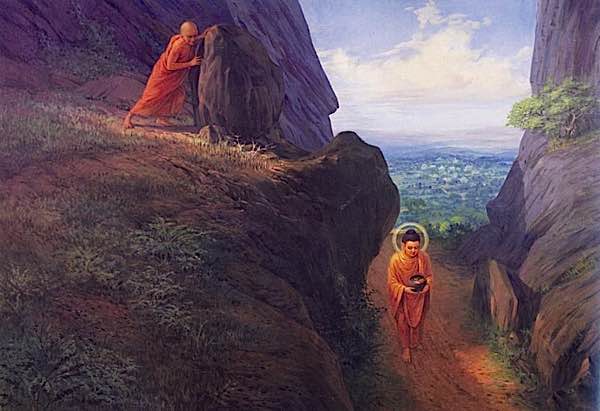
One of Buddha's cousin-brothers, Devadatta, was in deep competition with him -- unnecessarily, because a buddha is nobody's competitor -- he was continuously thinking, "Buddha has become so great a man, and I am left behind. I am a nobody." He tried in every way to gather disciples and declare himself, that he is a buddha, but nobody would listen to him. But of course a few fools gathered. He became very antagonistic towards Buddha; he tried to kill him.
It is said Buddha was meditating under a tree near a hill, and Devadutta, Buddha's cousin-brother, rolled a big rock from the hill. There was every possibility that Buddha would have been crushed, but somehow the rock changed its path. Buddha remained untouched.
Somebody asked, "What happened?" Buddha said, "A rock feels more than does Devadutta, my brother. She changed her route."
On another occasion...

A mad elephant was released against Buddha by Devadutta. The elephant was mad; he rushed forward. The disciples completely forgot about Buddha & escaped, Buddha remained silently sitting under the tree. The elephant came near, and something happened -- the mad elephant bowed down at Buddha's feet.
People asked, "What happened?" And Buddha said, "A mad elephant is also not so mad as Devadutta. Even this mad elephant has some sanity left in him."

One of the greatest psychologists working and doing deep research on the human brain is Delgado. He has tried an experiment using electrodes. Delgado placed electrodes in the brain of a bull. Those electrodes could be manipulated from anywhere by radio, wireless.

Thousands of people had gathered to see him push the button. By pushing the button the electrode pressed the center in the brain from where anger arises. The bull became angry and mad. He came in a rage; he rushed towards Delgado. People stopped breathing, because this was certain death. Just a foot away, Delgado pushed another button and suddenly something happened inside and the bull stopped -- just a foot away, death just a foot away.
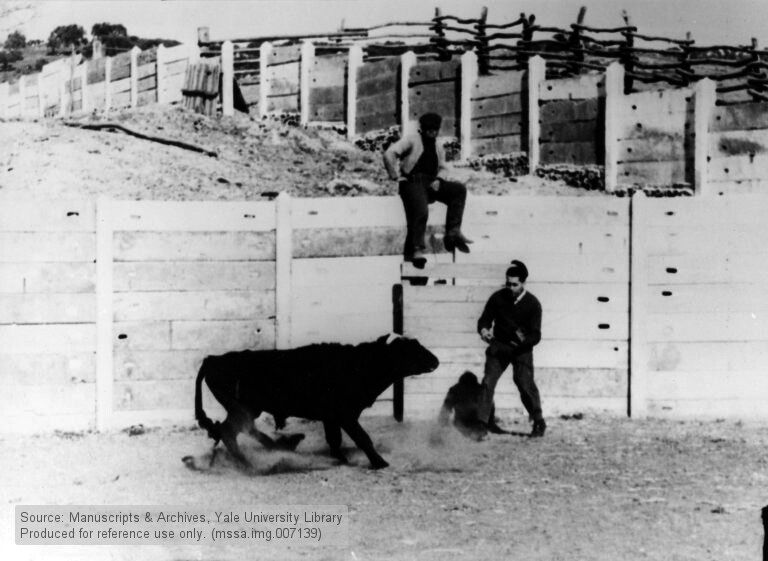
Something like that must have happened when the elephant stopped and bowed down to Buddha. Delgado has done it with electric instruments, but the same is the possibility: Buddha has not done anything, but it happened -- a deep nonviolence, and something triggered in the brain of the elephant. He was no longer mad; he understood. He felt it; he bowed down.
Humanity is no longer a right mirror. Humanity is not so pure as the echoing hills. Humanity is perverted, so it is possible. I don't find any explanation in past lives. I don't find any explanation in denying that Jesus was an enlightened man, no. The explanation is this: that life can reflect only when life is alive. And man has become so dead. People don't feel. Even you, if you come to meet a buddha, you don't feel much. You say he is just a man as any other. Of course the bones are the same and the skin the same and the body the same, the boundary is the same -- but who is in the boundary, that flame?
You can feel it only if you have felt it already within yourself. Otherwise, how can you feel it? You can recognize a buddha only when you have recognized a certain quality of buddhahood within yourself; from there is the bridge. If you have not realized any buddhahood within yourself, any divineness in you, it is impossible for you to recognize a buddha -- to recognize his nonviolence, to recognize that he has transcended, that he is no longer part of your madness.
That's why Mahavira was stoned by human beings who had become completely perverted. A natural law didn't function with them; otherwise the law is absolutely perfect. If you are silent and you come near a buddha, suddenly you will feel a great change happening within you. You cannot feel enmity.
That's why there is a fear of coming near a buddha. You can feel enmity when you are far away from him. If you come face to face with him it becomes difficult, more and more difficult. If you are in his presence, even if you are mad, the possibility exists that his presence may work as a magnetic force. The possibility exists that even with you, in all your madness, may be changed and transformed. That's why people have always been avoiding buddhas -- Mahavira, Patanjali, Jesus, Lao Tzu. People don't come near them. They gather things about them in the marketplace and they start believing in rumors, but they won't come near. They won't come to see what has happened with them.
By the time they come, they have gathered so much rubbish, so much rot around themselves that they are already dead. They have so many fixed attitudes that their mirror no longer functions. Their mirror is covered with dust. Of course a mirror mirrors, but if it is covered with dust then you can go on looking and your face will not be reflected.
Animals, trees, birds, even they have understood. It is said that when Buddha became enlightened flowers bloomed out of season. And it has not happened only with Buddha; it has happened many times. It is not a myth. The trees became so happy. That's why Buddhists have been preserving the tree, the Bodhi tree, under which Buddha became enlightened. It carries something -- it has witnessed one of the greatest happenings in the world. It is the only witness left. It carries the real history of what happened on that night when Buddha became enlightened.
Now scientists say that the Bodhi tree is the most intelligent tree in the world. It has some chemicals which are absolutely necessary for intelligence, without which the mind cannot be intelligent. Other trees are there, but nothing like the bodhi tree, the bo tree. It has the greatest quantity of those chemicals which make the mind intelligent. Maybe it is the most intelligent tree in the world. It has witnessed Buddha flowering into a different dimension. It has known one of the greatest peak hours of the whole of existence.
But man's mirror is covered with dust -- the dust of beliefs, of ideologies.
Just two, three days ago, a family took sannyas. The small boy of the family also took sannyas. I gave him one of the very beautiful names, Swami Krishna Bharti. But he said, "No. This name is girlish."
The family is Jaina, they don't have any feelings for Krishna. The name looks girlish. Krishna must look girlish to all the Jainas -- his clothing, his dancing, his face, his long hair. It is good he was born in olden days. If he was born now any government would have cut his hair. He would have looked like a hippie with long hair and with a flute.
The boy said, "The name is girlish. Give me something else, some other name."
If a Jaina comes to meet Krishna, he won't realize who he is. If a Hindu comes to see Mahavira, he won't recognize who he is. Beliefs are dust gathered all around -- you cannot see rightly; your vision is lost. If you are a Mohammedan you cannot read the Gita. If you are a Hindu, you cannot read the Koran -- impossible. Your Hinduism will always be coming in between. Even Gandhi who used to say that all religions are the same has chosen passages from the Koran which are absolute translations -- look like translations -- of the Gita; other passages he has left. He has read the Geeta and the Koran and chosen those passages which can fit with his ideology, and then he says everything is okay. But real passages which go against the Geeta, that make the Koran a Koran -- those are left out.
The mind, with beliefs, ideas, concepts, systems, philosophies, is a paralyzed mind -- no longer free to move, too much fettered, too much in bondage, a slave. And to look at a buddha you need freedom -- a mind moving absolutely in freedom, with no bondage, no prejudice, with no beliefs around it.
The sutra is perfect:
Suddenly, a love arises for no visible cause. Just his presence functions, just the way he is; you move under his energy field, and you are no longer the same.
That's why before such people, the masses have always felt that they are somehow being hypnotized. Nobody is hypnotizing you, but hypnosis happens. Their very quality of being is soothing. Their very quality of being silences you; your inner talk stops in their presence. You don't feel yourself; you feel somehow changed. When you return home, again you are the same as before, the same old one. Then you look back retrospectively and you feel you were hypnotized, or what? Nobody is hypnotizing, but this has always been like this -- Buddha hypnotizes, that Jesus hypnotizes. Nobody is hypnotizing you. Its just that their very being is so soothing that you feel sleepy, so relaxed. You have not slept well; their very being relaxes you.
Under their energy field, something which has been hidden comes up and something which has been up goes down. You are no longer the same; your very structure changes. If you can understand the process then you can understand the word Hindus have been using; the word is satsang: just to be in the presence of the enlightened ones. Nothing else is needed. The West is almost incapable of understanding it, that just the presence is enough. Satsang means just to be in the presence of one who has attained to truth -- to be with him, to be in his energy field, to feed on his energy.
On the last night, when Jesus was departing from his friends, he broke bread and gave it to his disciples and said, "Eat it; this is me." It is possible. When a man like Jesus takes the bread in his hand, the bread is no longer the same; it has become sacred. And when Jesus says, "It is me," he means it literally. To be in the presence of a master is to eat him, literally. To be with him is to be in him.
In fact, old Hindu scriptures say that to be with a Master is to be in his womb. That energy field is his womb, and when you are in his womb you are being transmuted, transformed, transfigured; a new being is born. Through the master, one attains to a new birth. One becomes dwij, twice-born. One birth is attained through the father and the mother, the parents -- that is the birth of the body. Another birth is attained through the master -- that is the birth of the spirit, the soul.

To be in the presence of a buddha is to be on the way to becoming a buddha. Nothing else is needed. If you can imbibe the presence, if you can allow the presence to work, if you can remain passive in the presence, feeding on it, receptive -- everything will happen.
Hindus have two words. One is satsang, which is impossible for the Westerners to understand because they say some teaching should be given. Hindus say presence is enough, no other teaching is needed. Another word is darshan. That too is difficult to understand: just to see a Master is enough; just to look into his eyes is enough; just to see is enough. Darshan means to see. Westerners come to me; they come for questions. When they remain here for a few more days then they understand; then they start feeling that questions are useless. Then they start coming and they say, "I have nothing to say... just to be here." It takes time for them to feel that just to be with me is enough.

To bring a question is to bring a barrier; to come with questions is to come with a barrier. Just to come with no questions -- nothing to ask, just to be -- is to come without barriers. Then energy floats, meets, merges -- you can become a part of my womb; I can float in you. But if you have a question then the mind is upper - the shield is up. When you don't have a question, your being is there, open, vulnerable & accessible.

This is even more difficult. When the yogi is established in truth: satya pratishthayam. You have to be alert from the very beginning that when Eastern scriptures say "truth" they don't mean just speaking the true, no. "Established in truth" means to be authentic, to be oneself -- not a single iota of falseness inside. Of course such a person speaks truth, but that is not the point. Such a person lives in truth, that is the point. In the West, truth means truthfulness, to speak the true, that's all. In the East, it means to be the truth. Speaking will follow by itself, that is not the point at all -- it is a shadow. But to be in the truth means to be absolutely oneself, with no mask, with no personality, just to be the essence.
The word personality is meaningful. It comes from a Greek root, persona. Persona means mask. In Greek drama actors used masks; those were called personas. The real is hidden behind and persona is all that is known to the world -- the face. Without any personality, just the essence. Zen people say, "Find out your own face -- the original face." That is what meditation is all about. They said to their disciples, "Move back and find out the face that you had before you were born. That is truth." Before you were born -- because the moment you are born, falsity starts. The moment you become part of a family, you have become part of a lie. The moment you become part of a society, you have become a part of a greater lie. All societies are lies -- beautifully decorated, but lies. You have to seek the face that you had before you entered into the world, the original virginity.
One has to move back and in. One has to come to feel the center, the essence of your being, where there is no possibility to go beyond it. One has to go on eliminating; the body you are not, the body goes on changing; the mind you are not, mind is always in a flux -- thoughts and thoughts and thoughts -- it is a process; emotions you are not, they come and they go. You are that which remains and remains and remains. The body comes and goes, the mind comes and goes. That which remains always hidden behind, that is the truth. To be that is the meaning of satya pratishthayam, one who is established in truth.
Here you can understand what Lao Tzu has been saying. If you become attuned to the truth of your being, you need not do anything -- things just happen. Not that you just lie down on your bed and sleep, no, but you are not the doer. You do things, but you are not the doer; the whole starts functioning through you. You become a function of the whole, instrumental; what Krishna calls nimitt, just an instrument of the whole -- he & his works flow through you. You need not worry about the results; you need not worry about planning. You live moment to moment and the whole takes care, and everything fits well.
Once you are established in your being, you are established in the whole because your being is part of the whole. Your face is part of the society, your personality is part of the world; your being, your essence, is part of the whole. You are deep-hidden gods. On the surface you may be a thief, on the surface you may be a monk, a good man, a bad man, a criminal, a judge -- a thousand and one games & plays -- but deep down you are a god. Once you are established into that godliness, the whole starts functioning through you.
Can't you see? No tree is worried about the flowers, they will come. No river is worried about reaching the ocean, never goes neurotic, never goes to consult a psychoanalyst, but simply reaches to the ocean. Stars go on moving. Everything is moving so smoothly, there is no disturbance and the target is never missed. Only man carries so much burden of worries. What to do, what not to do; what is good and what is bad; how to reach the goal, how to compete -- how to be the first to reach and not allow others to reach. "How to become" -- Buddha has called this the disease of tanha, the disease of becoming.
One who is established in truth has become. Now there is no disease of becoming. He has attained to being. Becoming is disease; being is health. And being is available right now if you move withinwards. Only a look is needed.
I have heard about a Zen monk. He was a minor officer in the government service before he became enlightened. He came to his Master and he wanted to become a monk, he wanted to renounce the world. The Master said, "There is no need, because the being can be attained anywhere. There is no necessity to come to the monastery. It can be attained wherever you are. Remain, just allow it to happen."
The man started meditating, and meditation was nothing but just sitting silently, not doing anything. Thoughts come and go. One just witnesses, does not condemn, does not appreciate -- no valuation -- just simply looks at them, aloof, indifferent.
Years passed. One day he was sitting in his office doing some official work.
Suddenly -- it was just the beginning of the rains -- a sudden clash of thunder, and he was shocked and thrown into his being: and he started laughing. And it is said then he never stopped laughing.
He went laughing to the Master and he said, "A sudden clash of thunder, and I awoke, and I looked within... and the old man was there in all his at-home-ness. And I have been seeking and seeking this old man, this ancient one, and he was just sitting there within me completely at home, at ease."
A sudden clash of thunder.... You just have to be in a receptive mood, then anything can trigger it. Just a shout from the master, a hit from the master, a look from the master -- a sudden clash of thunder -- and something. You are that which you are seeking. The only thing needed is to look within. One becomes established and one becomes a function of the whole. And to become the function of the whole is all. Nothing else remains then. Then your river flows towards the ocean, your tree goes on blooming, flowering.
Then there is nothing to be done; everything happens. Not that you don't do -- remember it -- but the whole does it; you are not the doer.
Life is a Mirror turiya
4 m
593

You have always been seeking and seeking treasures, and they elude you. They are mirages that appear and when you reach after long journeys, they are not there -- because the real treasure is hidden behind you. It is you! There is no other treasure; you are the treasure.
When one is established in honesty: asteya pratishthayam. The word asteya literally means "no-theft." That has to be understood. Honesty doesn't carry that meaning. Of course honesty is part of it, one of the components, but no-theft is very different.
You may not be a thief, but if you are jealous of others' possessions you are a thief. If you see somebody's car passing by and envy arises, jealousy arises, or ambition arises -- a desire to possess that car -- you have committed a theft. No court can catch you, but in the court of the whole, you are caught. A theft has been committed. "No-theft" means a nondesiring mind, because how can you be a nonthief with desiring? The mind goes on trying to possess more and more -- and whenever you want to possess you have to take it from someone else. It is a theft. You may not commit it, but the mind has already committed it.
"No-theft" means a mind who is not jealous, not competitive. When this no-theft is there in your being, a great revolution happens. Suddenly, you fall into your own treasure, because when you are a thief -- competitive, ambitious, jealous -- you are always looking to others' treasures. That's how you are missing your own treasure. The eyes are always moving and looking at others' treasures -- who is carrying what, who is having what. When you are trying to have more, you are missing that which you already have. Because in that more, you are always on the move and never in a rest where you can discover your own being.
Your own treasure can be discovered only in a certain space. And that certain space is available when you are not jealous, envious, when you are not bothering about what others have. You close your eyes; the world doesn't matter. Having more & more is no longer meaningful. Then being is revealed.
There are two types of people. There are people interested in having more, and people interested in being more. If you are interested in having more, whatsoever is the object of having more of, it makes no difference -- you can go on collecting money, you can go on collecting knowledge, you can go on collecting prestige, power, you can go on collecting whatsoever you want -- but if you are interested in having, you will miss. There is no need for this continuous effort to have. You already have the treasure within you.
Brahmacharya pratishthayam veerya labha.
To translate Sanskrit is almost impossible. After centuries and centuries of refinement, of spiritual inquiry, meditation, Sanskrit has attained a flavor of its own which no other language has. For example, it is impossible to translate the word brahmacharya. Literally it means "behaving like a god," being like a god. Ordinarily it is translated as "sexual continence." A vast difference. It is not just celibacy and has to be understood. You can be celibate and you may not attain to brahmacharya, but if you attain to brahmacharya you will be celibate.
Celibacy is repressive -- you suppress your sex energy -- and that suppression never leads to transformation. But there are ways in which your godliness is revealed to you, then suddenly, sex disappears. Not that it is suppressed. In that realization of godliness, the energy takes a totally different form. You become celibate, with no effort on your part; if there is effort then it is going to be a suppression. Celibacy is a consequence of brahmacharya.
Then how to attain to brahmacharya?
If you are firmly established in ahimsa, nonviolence, if you are firmly established in truth, if you are firmly established in nontheft, it is simple to be established like a god. You are a god. When you are not hurting others, you are not creating chains. You are cutting your fetters; you are becoming free. When you are not trying to pose and you are authentic, when you are not trying to have masks around you -- you are true to your very core -- already sex energy will be changing.
Have you noticed that when you are violent there is more sexual energy? In fact, husbands and wives know well that if they fight, that night they can make love better. Why does it happen? Violence creates sex energy. The more violent a person is, the more sexual he will be. Nonviolence transforms sexual energy. If you are not trying to hurt anybody, if you are not interested in hurting anyone, if you have a deep love, affection, compassion towards others, you will find your sexual desire is subsiding.
Sex can exist in a certain company, such as anger, violence, hatred, jealousy, competition, ambition. All of these have to be there; sex can exist as part of the company. If you drop other things, by and by, you find sex has lost that urge. It is becoming more and more affectionate than sex, more and more love than sex, more and more compassion -- the same energy moving higher, on a higher plane.
One becomes established in brahmacharya -- not by celibacy. If watch people who have suppressed their sex, you will find that they have become more angry, they have become more violent. That's why all over human history armies have been forced to remain celibate. Its because, once armies are forced to remain celibate, they become more violent -- the energy that can be released through sex is not released.
In fact psychologists have found a deep association between violence and suppressed sex energy. All violent weappons -- you push a knife or a dagger or a sword into somebody: it is just like sex energy penetrating the woman. The other's body becomes the woman and your weapons become just phallic symbols. It may be a bullet from a machine gun and you may be far away, but it is the same. Whenever your sex energy is suppressed, you will find ways and means how to penetrate others' bodies. Male armies have not been allowed girlfriends. Only the American army is allowed -- they will be defeated, and everywhere. They cannot fight in the world. American soldiers cannot fight. If you are sexually satisfied, the desire to fight disappears. They are connected.
That's why it happens that whenever a culture is very developed it is always defeated by a culture which is not very developed. India was defeated by Huns, Turks, Mohammedans -- they came from a very undeveloped world and they defeated a very developed culture. Whenever a culture is very developed, it is very satisfied, content. Everything is going so good, who wants to fight? When everything is so peaceful, who bothers to kill and be killed? And those who came were just barbarians, absolutely uncultured, and sexually very frustrated. If you want an army to fight well, make the army sexually frustrated. Then they will fight, because then the fight has become a symbolic sexuality.
This has happened recently in Vietnam. It is not that communists have won and America has been defeated; it is simply that a higher culture is always defeated. A lower culture, a poor country, in every way unsatisfied -- sexually in a very deep repressive state -- is bound to win. Whenever a poor country gets in a fight with a rich country, the rich country will be defeated finally. You can see it easily: if a rich family starts fighting with a poor family, the rich family will be defeated -- because when you are rich, satisfied, the very urge to fight disappears; and in fighting you are going to lose, so you avoid fighting. And the poor has nothing to lose -- why should he avoid fighting? In fact he enjoys it. He has everything to gain, nothing to lose.
The same happens in individuals' lives. If you become nonviolent, if you become established in truth, if you become established in nontheft, suddenly you find sex has lost the lust. It is no longer a mad passion. You can enjoy it if you like it, but the passion is no longer mad. It has become softer, and finally it disappears.
When it disappears, the energy that was encaged in sex is released. That energy becomes your reservoir. That's why Patanjali says,
Tremendous energy is gained. Not that you become a great athlete or you become a boxer, no. That energy has a totally different dimension. That energy is not to fight. That energy is not of this world. That energy is not really male; that energy is feminine. All yogis who have attained to it become more feminine. Look at Buddha, his face, the body, the roundness of it, the softness of it, it looks feminine.

Hindus have done well -- they have never painted Buddha, Mahavir, Krishna, Ram, with moustaches, beards, no. Not that they were in any way lacking in hormones and they didn't have any moustache and beard -- they must have had beautiful beards and moustaches -- but Hindus have dropped the idea because with moustaches and beards they look more male, and the whole idea has to be expressed in a feminine way -- the roundness of Buddha's body, the softness. And the marble helped tremendously; the marble gives it a feminine quality. Nietzsche criticized Buddha and Jesus, has called them "womanish." His criticism is absolutely absurd, but he has hit a right point at least in calling them womanish -- they are.
When the sexual energy disappears, where does it go? It does not move out; it becomes an inner pool. One simply feels full of power and energy. Not that he uses it and goes fighting with it; now there is no urge to fight. One is so strong that in fact to fight is not possible. Only weaklings fight. Those who are afraid of their strength -- they fight to prove that they are strong. Really strong people don't fight. They look at the whole thing as a game, childish.
"When the yogi is established in nonpossessiveness..." When he possesses nothing except himself; he may be a king, he may live in a palace, but he does not possess it. If it is lost, not a ripple will arise in his mind.
There is a story of a great yogi; his name was Janak. India has worshipped him for centuries, and India has not worshipped anybody else like him because he is unique in one way. Buddha left his palace, kingdom; Mahavir left his palace and kingdom; Janak never left. Buddha and Mahavir are in the thousands, the whole history is full of them -- Janak seems to be unique. He did not follow the pattern. He remained in the palace; he remained a king.
It happened...

A young seeker was told by his master, "Now, you go to Janak. Your last initiation will be done by him. Whatsoever I could teach I have taught you, but I am a beggar. I don't know anything about the world; I have renounced it. You must go to a man who knows about the world. This is going to be your last initiation. Before you renounce you must ask somebody who knows the world. I don't know it, so go to Janak the king."
The disciple was a little hesitant because he was ready to renounce and he didn't believe that this Janak can be an enlightened man. If he is enlightened, then why is he in the palace? Ordinary logic says he should renounce everything. He should not possess anything because that is one of the basic things -- to become nonpossessive, to remain in nonpossessiveness, in pure austerity of nonpossessiveness. One becomes so simple, so innocent, why is he living as a king? But when the Master said, he had to go. Hesitantly, reluctantly, he reached Janak's palace.
In the evening he reached, Janak invited him to the court. There was much jubilation. Beautiful girls were dancing, there was wine and women, and everybody was almost drunk. This young man from an ashram could not believe his eyes, and he could not believe his old Master. "Why that fool has sent him here. For what?" He was disturbed so much that he wanted to leave immediately.
But Janak said, "That will be insulting. You have come; be here at least one night. Tomorrow morning you can leave. And why are you so disturbed? Rest a little while. In the morning I will ask you for what purpose you have come."
The young man said, "Now there is no need to ask anything. I have seen with my own eyes what is happening here."
Janak laughed. The young man was taken care of -- fed well, given a good massage and a bath, given a beautiful room, very costly bed.
The young man was tired, coming on foot from the jungle monastery to the capital, and he wanted to rest. The moment he lay down on the bed, he saw a sword hanging just above him by a very thin thread. He could not believe what was the point of it all, and he has been received so well and now why this joke. The continual fear made it impossible for him to sleep the whole night. He could not enjoy the bed, he could not enjoy the palace -- the sword was hanging over him.
In the morning the king inquired, "Did you sleep well?"
He said, "How could I sleep? What nonsense are you talking to me? Everything was okay, but that sword just hanging by a thin thread -- any moment it can fall. Just a breeze, and I will be killed."
So the king said, "You couldn't enjoy the bed? It is the most beautiful we have in this palace, and the room that I have given to you is the most luxurious."
The young man replied,He said, "I don't even remember that room and that bed. I have never been in such suffering -- because of that sword."
The king said, "Then it is better you don't go. I am in this palace, but the sword is hanging over me -- the sword of death. And the thread is thinner than this. Any moment I can die."
When one remembers death, how can one possess anything? The place is there, the palace is there, the kingdom is there -- but death is more there than anything else. How can one possess? When death is there, and one remembers it, one becomes nonpossessive. Then one knows, "I can possess only myself. Death will take everything else."
When one becomes nonpossessive, the energy is no longer moving outward. It is moving outwardly because of the desire to possess. When you are aware that nothing can be possessed -- you come in the world and you go out of it; the world was there before you, it will be there after you.... Nothing can be possessed; the very idea to possess is stupid.
The moment you are aware of death, suddenly, the whole of your energy that had been moving outwardly in a thousand and one directions to possess the world, it then moves inwards, and, Patanjali says,
And then you know from where you have come, who you are. Then you come to face the original source of life, existence. Then you are face to face with the source, the very source. That source is God: the beginning and the end, the alpha and the omega.
Enough for today.
Discrimination in All Things turiya
4 m
659
The First Question:
No. Because to be in the presence too much can be an overdose. Rather than helping it can hinder you. Everything should always be in proportion and in balance. It is possible when something is sweet that you can eat more of it than you should. You can forget your need; you can overstuff yourself. And satsang is sweet. It is the sweetest thing in the world. In fact it is alcoholic; you can become a drunkard. That will not liberate you, that will create a new bondage.
Being near a Master can either become a bondage or a liberation, it depends. Just by being near, there is no necessity that you will be liberated. You can get indigestion; and you can become addicted to the presence. No, that is not good. Whenever I feel that somebody needs a space of their own, whenever I feel that somebody needs to go away from me, I send him away. It is good to create hunger, then satiety goes deep. And if you are with me too much you may become even oblivious of me. Not only indigestion, you may completely forget me.
Just the other day Sheela was saying that when she was in America she was closer to me. Now that she is here she feels thrown far away. How it happens? She was much troubled, puzzled. It is simple. When she was in America she was constantly thinking about me, of coming here to be near me. She was living in a dream. In that dream she felt close to me. Now that she is here, how can she dream? I am there in reality; dreams are no longer needed. And I am so much here that she has started forgetting about me. That's why she is feeling so far away.
Things are complex. Sometimes I send you away to feel me more. It is needed. A separation is needed so that you can come close again. There must be a rhythm of being with the Master and not being with the Master. In that rhythm many possibilities open because, finally, you have to be on your own. The master cannot be with you forever and forever. One day, suddenly, I will disappear -- "dust unto dust." You will not be able to grope around me. Then, if you have become too addicted to me and you feel you cannot be without me, you will suffer, unnecessarily suffer. I am here not to give you suffering; I am here to make you capable of more and more bliss. It is good sometimes that you go far away in the world, have your own space, move in it, live in it.
And whatsoever you have gained here with me, test it in life, because an ashram is not in life. An ashram at the most can be a discipline; it is not an alternative life. At the most it can be a school where you have a few glimpses. Then you carry those glimpses into the world. There is the criterion, the test. If they prove real there, only then were they real.
Living in an ashram, living with a liberated man, living in his energy field, you may many times be deceived that you have attained something. It may not be your attainment. It may be just because of the magnetism that you touch new dimensions. But when I am not there and the atmosphere of the ashram is not there and you move into the ordinary day-to-day world, the world of the market, the office, the factory -- if you can carry the goal that you have attained here and it is not disturbed, then really you have attained something. Otherwise you can live here in a dream, in an illusion.
No, even if it were possible for me to have you all here, then too, I would have send you. I would have actually to do as I am doing now; there would have been no change. This is exactly helpful as it is.
Don't feel hurt when I send you away -- you need it. And don't feel too elated when I tell you to be here -- that too is a need. Both are needs. And don't make a fixed principle, because things are very complex, and every individual is unique.
Sometimes I allow somebody to be here because he is so dead he takes a long time to evolve. If someone evolves so soon, then within weeks I say, "Go." So just being here, don't feel elated, and don't feel hurt if I send you away. Sometimes, I retain somebody because he is very balanced and there is no fear yet that he will eat too much, fall the victim of the disease of overdose; then I allow him to stay.
Sometimes when I feel someone has attained something, then too, I send him away because only the world can be the proof of whether you have attained or not. In the isolation of an ashram, in a different atmosphere, you may have glimpses because you become part of the collective mind that exists here. You start riding on my waves; they may not be yours. But when you go home you have to ride on your own waves. They may be small, but better because they are your own, truer to you. And finally, they alone have to take you to the other shore. I can only indicate the way.
A master should not become a bondage. It is very easy for a master to become a bondage. Love can always be converted into bondage. It can always become an imprisonment. Love should be a freedom. It should help you to be liberated from all fetters and bondages. So I have to keep myself continuously alert: who has to be sent, who has to be allowed to stay here, and how much.
A rhythm is needed. Sometimes being with me and sometimes not being with me. A day will come, you will feel the same. Then I will be happy with you.
Whether with me or not with me you remain the same. Whether here in the ashram, meditating, or working in the marketplace, you remain the same. -- nothing touches you. You are in the world, but the world is not in you. Then you make me happy. Then you are fulfilled.
-------------------//-------------------

The Second Question:

This is from Anurag.
To me, marriage is a dead thing. It is an institution, and you cannot live in an institution. Only mad people live in institutions. It is a substitute for love. Love is dangerous. To be in love is to be in a storm, constantly. You need courage and you need awareness, and you are to be ready for anything. There is no security in love; love is insecure. Marriage is a security: the registry office, the police, the courts are all behind it. The state, the society, the religion -- they are all behind it. Marriage is a social phenomenon. Love is individual, personal, intimate.
Its because love is dangerous, insecure.... And nobody knows where love will lead. It is just like a cloud moving with no destination. Love is a hidden cloud, whereabouts unknown. Nobody knows where it is at any moment of time. Unpredictable -- no astrologer can predict anything about love. But about marriage? Astrologers are very, very helpful; they can predict.
Man had to create marriage because man is afraid of the unknown. On all levels of life and existence, man has created substitutes. For love, there is marriage; for real religion, there are established religious sects -- they are like marriages. Hinduism, Mohammedanism, Christianity, Jainism -- they are not real religion. Real religion has no name; it is like love. But because love is dangerous and you are so afraid of the future, you would like to have some security. You believe more in insurance companies than in life. That's why you have created marriage.
Marriage is more permanent than love. Love may be eternal, but it is not permanent. It may continue forever and forever, but there is no inner necessity for it to continue. It is like a flower: blooming in the morning, gone by the evening. It is not like the rock. Marriage is more permanent; you can rely on it. In old age it will be helpful.
It is a way to avoid difficulties, but whenever you avoid difficulties and challenges you have avoided growth also. Married people never grow. Lovers grow, because they have to meet the challenge every moment -- and with no security. They have to create an inner phenomenon. With security you need not bother to create anything; the society helps. Marriage is a formality, a legal bondage. Love is of the heart; marriage is of the mind. That's why I am never in favor of marriage.
But the question is pertinent, relevant, because sometimes I tell people to get married. Marriage is a hell, but sometimes people need it. What to do? So I have to tell them to get into marriage. They need to pass through the hell of it, and they cannot understand the hell of it unless they pass through it. I am not saying that in marriage love cannot grow; it can grow, but there is no necessity for it. I am not saying that in love marriage cannot grow; it can grow, but there is no necessity, no logical necessity in it.
Love can become marriage, but then it is a totally different kind of marriage. It is not a social formality, it is not an institution, it is not a bondage. When love becomes marriage it means two individuals decide to live together -- but in absolute freedom, nonpossessive of each other. Love is nonpossessive; it gives freedom. When love grows into marriage, marriage is not an ordinary thing. It is absolutely extraordinary. It has nothing to do with the registry office. You may need the registry office also, the social sanction may be needed, but those are just on the periphery; they are not the central core of it. In the center is the heart, in the center is freedom.
Sometimes out of marriage, love can also grow, but it rarely happens. Out of marriage, love rarely happens. At the most, a familiarity. At the most, a certain kind of sympathy, but not love. Love is passionate; sympathy is dull. Love is alive; sympathy is just so-so, lukewarm.
But why do I tell people to get married? When I see that they are after security, when I see that they are after social sanction, when I see they are afraid, when I see that they cannot move into love if marriage is not there, then I tell them to go into it. But I will go on helping them to go beyond it. I will go on helping them to transcend it. Marriage should be transcended; only then real marriage happens. Marriage should be forgotten completely. In fact the other person you have been in love with should always remain a stranger and never should be taken for granted. When two persons live as strangers, there is a beauty to it, a very simple, innocent beauty to it. And when you live with somebody as a stranger.... And everybody is a stranger. You cannot really know a person.
Knowledge is very superficial; a person is very profound. A person is an infinite mystery. That's why we say everyone carries a god within. How can you know a god? At the most you can touch the periphery. And the more you know about a person, the more humble you will become -- the more you will feel that the mystery is untouched. In fact the mystery becomes more and more deep. The more you know, the less you feel that you know.
If lovers are really in love, they will never reduce the other person to a known entity, because only things can be known -- people never. Only things can become part of knowledge. A person is a mystery, the greatest mystery there is.
Transcend marriage. It is not a question of legality, formality, family -- all that nonsense. It is needed because you live in a society, but transcend it; don't be finished with it there. And don't try to possess a person. Don't start feeling that the other is the husband, because then you have reduced the beauty of the person into an ugly thing: a husband. Never say that this woman is your wife, because then the stranger is no longer there; you have reduced her to a very profane level, to a very ordinary level of things. Wives and husbands belong to the world. Lovers belong to the other shore.

Remember the sacredness and holiness of the other. Never impinge on it; never trespass it. A lover is always hesitant. He always gives you space to be yourself. He is grateful; he never feels that you are his possession. He is thankful that sometimes in rare moments you allow him your innermost shrine to enter and to be with you. He is always thankful.
But husbands and wives are always complaining, never thankful -- always fighting. And if you watch their fight it is ugly. The whole beauty of love disappears. Only a very ordinary reality exists: the wife, the husband, the children, and the day-to-day routine. The unknown no longer touches it. That's why you will see dust gathers around -- a wife looks dull, a husband looks dull.
Life has lost meaning, vibrancy, significance. It is no longer a poetry; it has become gross.
Love is poetry. Marriage is ordinary prose, good for ordinary communication. If you are purchasing vegetables, good; but if you are looking at the sky and talking to God, not enough -- poetry is needed. Ordinary life is proselike. A religious life is poetrylike: a different rhythm, a different meter, something of the unknown and the mysterious.
I am not in favor of marriage. Don't misunderstand me -- I am not saying to live with people unmarried. Do whatsoever the society wants to be done, but don't take it as the whole. That is just the periphery; go beyond it. And I tell you to get married if I feel that this is what you need.
In fact if I feel that you need to go in hell I would allow you -- and push you -- to go in hell, because that is what you need, and that is how you will grow.
Discrimination in All Things_ turiya
4 m
527
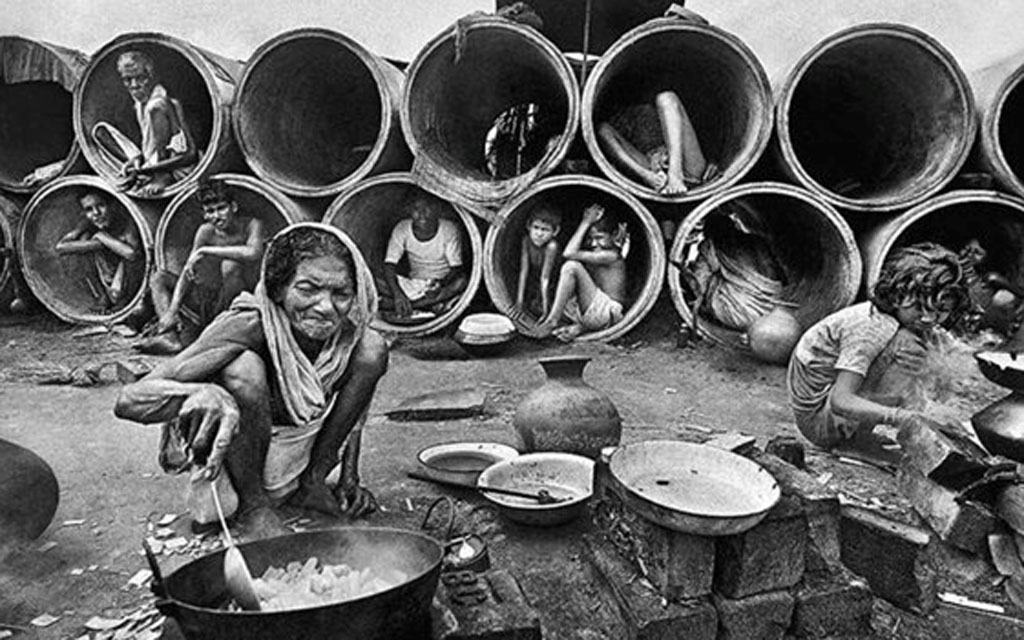
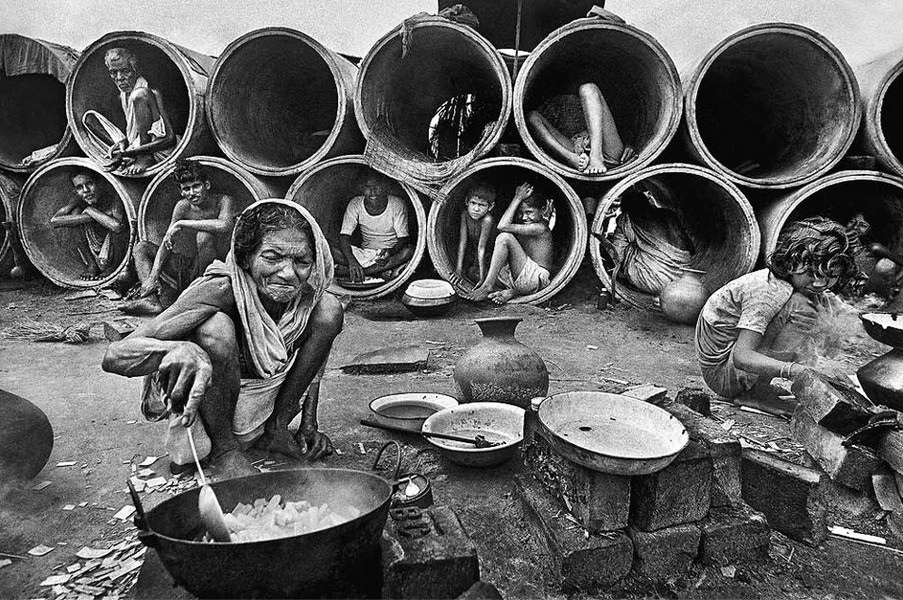 To Be in the World, but to Not have the World Be in You.
The Third Question:
I have said already, and I have answered this question. If you are here for some inner search then, please, for a few days while you are here with me, forget the world. But it seems that it is difficult. So now there is only one way -- get miserable, as miserable as you want. Go and sit with the beggars on the streets and cry and weep and be miserable, and be finished with it. If you want hell, go into hell. This is a very egoistic attitude. You must be thinking that this is compassion. This is foolishness -- because just by your getting miserable, no beggar is helped on the street. If there were a hundred miserable people, your getting miserable makes them one hundred one. How can you help by being miserable? This is some ego deep in you which feels good: "I am so kind, so compassionate. I am not like other hard stony people; I have a heart. When I pass through the streets I get miserable because I see so much poverty around." This is pious egoism. It looks very holy, but deep down is very unholy. But if you have to pass through it, pass through it. What can I do?
You are here to seek your own self. Don't miss the opportunity. Beggars will always be there; you can get miserable later on. They are not going to leave the world so soon. Don't be afraid. You will always find them. If nowhere else, in India you will always find them. Don't be worried: you can always come to India and get miserable; there is no hurry about it. But I will not be here forever, remember.
The next time you come the beggars will still be there -- I may not be here. So if you are a little alert, use this opportunity to be with me. Don't waste it foolishly. But if you feel that you cannot get out of it, then the only way is forget me and go and be with the beggars and get miserable -- as much as you can. Maybe that's how you may come out of it. You need help; go into it. I will be waiting. Come back when you are finished with it.
-------------------//-------------------

The Fourth Question:
There is no secret to it. Because I love you, you are not so many. My love surrounds you, you become one. I am not working really on individuals, then it would have been difficult. When I see you, I don't see you at all. I see you as just a fragment of the whole. In my love, you are one. The moment you surrender you disappear as an ego and you become part of a vast phenomenon. You are like a drop. When you surrender you become part of the ocean. I work on the ocean, not on drops. There is no secret to it.
And really, to say that I work is not good. This is the way I am. It is not a work. It is simply the way I am. It is happening. I cannot do otherwise. Once you allow your heart to throb with me, it starts working. In fact it is a question for you to decide. If you want me to work, simply allow. I am working already.
You may be twenty-five thousand all around the world -- you can become twenty-five lakhs, that will not make any difference. My work remains the same.
Even if the whole world is converted to sannyas, my work remains the same. It is just like a light burning in a room: one person enters -- the light functions for one; then, ten persons enter into the room. Not that the light is more burdened -- when there was nobody then too the light was burning, in absolute silence and loneliness. One entered: he could see. Now ten enter: they can see. Millions enter and they can see. The light is always burning there; when there is nobody, then too it burns.
If nobody is there I will go on functioning in the same way. It is not a question of numbers, and there is no secret to it. And, in fact, it is not a work. It is simply love. When you have attained to a state of love, you have attained to a state of light. It goes on burning. The flame is there: anybody who is ready to open his eyes can be benefited.
-------------------//-------------------

The Fifth Question:
Many things have to be understood; they will be helpful. The first thing: I have no duty to fulfill towards anybody. Duty is a dirty word, a four-letter word to me, the dirtiest. Love is not a duty. You enjoy, when you love helping people. It is not a duty, not a burden. Nobody is forcing me to do anything. I am not obliged in any way to do it -- just love functioning.
When love dies, duty enters. You say to people, "It is my duty to go and work in the office because I got married and I have children and the duty has to be fulfilled." You don't love your wife, you don't love your children -- hence the word duty becomes meaningful. Your old mother is dying and you say, "This is a duty, to go and serve her." You don't love her. If you love, how can you use the word duty?
A policeman standing on the road is fulfilling his duty. Right, he does not love the people who are creating chaos in the traffic. When you go to your office, you are doing a duty, a job, but if you say that you are fulfilling your duty towards your children, you are committing a sin by using the word. You don't love the children; you are already burdened.
No, I have no duty to fulfill. I love you, hence many things happen. There is nothing even to be thankful towards me for because I am not doing any duty. When I am doing a duty, you will have to be thankful towards me. This is simply love.
In fact, I am thankful to you that you allowed my love to shower on you. You could have rejected. And this is the secret of love: the more you love, the more it grows. The more you share it, more and vital springs are opening and more is flowing and is ready to be shared. The more you give, the more you have. I am not tired. I am not in any way weighed down by it. It's beautiful.
The first thing: I have no duty to fulfill towards you. If you want a guru who has a duty to fulfill, you have come to a wrong person. Go somewhere else. There are many gurus who are fulfilling great duties. I am simply enjoying myself. Why should I fulfill any duty? I delight in myself, and whatsoever I do is a delight, a celebration.
If the idea has come, you have already left. Physically you may be hanging around here, that is meaningless. If you say, "I would have left you had I not taken sannyas from you," you have already left and the sannyas is worthless. Please return it back -- because that is a bondage. You say, "I would have left" -- now, that sannyas is creating fetters on you. Drop it. I am here to liberate you, not to fetter you. Forget about it.
That is for you to decide. You can go to a new master if the old will not accept you, or you can go and try again. If the old was really a master he will accept a thousand and one times, because when a disciple betrays, it is nothing much to fuss about. It is almost natural. More cannot be expected from ignorant persons. Go and try the old master. Maybe he is waiting for you. And if he cannot forgive he is not a master; then find one somewhere else.
And,
You have already lost it. In fact you never had it, because once you have faith how can you lose it? Difficult to understand, but once you have faith you cannot lose it. It is nothing which can be taken back. Who will take it back? Faith means you surrender the ego. This can be the last act of the ego. Surrendered, how can you take it back? If you can take it back, the surrender was not surrender at all -- you were playing with the word, but you don't know what it means. If you surrender, to be a surrender it has to be total and final -- utterly final. There is no way going back.
Why is this idea arising? You don't have faith; you have already lost it. In fact you never had it. This will look like a paradox, but this is true: Only that faith can be lost which was never there in the first place. If you don't have faith you can lose it; if you have, there is no possibility. It is utterly impossible to lose it, because in faith you have lost yourself. Now nobody is standing behind who can take it back and go home.
You are hankering; otherwise what is the need to cling to my feet? My feet are worthless. Why cling to them? What are they going to give to you? Deep down a hankering. Maybe now more subtle, more garbed, not so gross, but it is still there.
But why? What have my feet done to you? What wrong? Why should you be so against my feet? What is the need? What is the point?
Just two days before, one very stupid woman came to see me. Stupid because she said, "I am in search of God." I asked her why she is searching for God, what wrong has God done to her. I asked her, "You must be searching for something else -- happiness, bliss, ecstasy...?" She said, "No. I am not interested in happiness, bliss, et cetera. I am searching for God." But for what? She got so angry because I asked, "For what?" She left immediately.
Why should one search for God? What is the point? Looks absolutely stupid. One searches for God to be blissful. One searches for self realization to be ecstatic, to not be miserable. One searches for truth to be eternally in bliss.
In fact, everyone is a hedonist and there is no possibility to be otherwise. People who say that they are not hedonists are stupid in some way or other. They don't understand what they are saying. Your hedonism may be this-worldly, your hedonism may be other-worldly -- that doesn't matter -- but everyone is a hedonist. Everyone is seeking his own happiness, and everybody is selfish deep down. Otherwise is not possible. I am not condemning it - remember it. It is how it should be.
People come to me and they say they want to serve people. For what reason? If you think you have helped the man, served him, and risked your life, and are a great altruist, you are not going very deep. Helping the man you felt very happy. Not helping him you would have felt guilty. If you had gone, indifferent, your heart would have carried a guilt forever and forever. You would have felt miserable. Again and again, in your dreams you would have seen that man drowning and you couldn't save him -- and you could have saved him.
When you save a man from the river you feel happy. Really you should be thankful to the man: "You are really wonderful. You were drowning in the right moment, when I passed by. You gave me such happiness, such deep happiness, such deep satiety that I could help a man. I could be of some use. I am not a useless garbage on the earth. I feel good." Your steps would have a dance after it, your eyes would have more light. You would feel more centered. You would feel more enhanced in your own eyes. It is simply hedonism.
Nobody helps anybody else -- they cannot. Everyome is searching for their own happiness. Enlightenment is nothing but absolute happiness which once attained cannot be lost. To attain to that state, how can you drop the hankering? It is there, otherwise why should you cling to my feet?
Be alert. Learn alertness about your own desires because when you are alert, only then can you understand. And through understanding there is mutation.
I know this. Until all hankering drops, enlightenment is not possible. And I have been telling you so. So, now you say you don't hanker. Then what are you doing here? If you understand you will not say, "I don't hanker." You will not say, "I hanker." If you understand, hankering disappears without a trace. It does not leave the opposite behind; you don't say, "I don't hanker." Hankering simply disappears and you are full of light, full of bliss, uncontaminated by any desire.
For that you have to be continuously alert because desire will take many shapes and will deceive you in many, many ways. Desire can become so subtle that you can almost forget that it is desire. It can pretend to be something else. Desire can even pretend desirelessness. But understand this: when someone is not in any desire, there is nothing to ask. One simply is, and allows existence to take him wherever it wills. When you drop desire, then the whole takes you. You float with the river. Then you don't have a private goal.
Just a few days before, I was telling you the meaning of the word idiot. It comes from a Greek root. The Greek word is idiotiki. It means, a private goal. A man who has a private goal. A man who has a private world -- against the whole -- is an idiot.
When you are with the whole, not even swimming in the river, but just floating with the river wherever it leads -- then, each moment you live in enlightenment. When the hankering for enlightenment disappears, enlightenment appears. It has not appeared to the questioner yet. Hankering must still be there. Be watchful.
Discrimination in All Things turiya
4 m
839
The Sixth Question:
This is from "Pathik the Pathetic." He unnecessarily goes on becoming pathetic. Now, "How to stop worrying?" What is the need to stop worrying? If you start trying to stop worrying, you create a new worry: how to stop worry. Then you start worrying about the worries, then you double them. There is no way.
And if somebody says, as there are people.... Dale Carnegie has written a book: How To Stop Worrying And Start Living. These people create more worries because they give you a desire that worries can be stopped. They cannot be stopped, but they disappear. That, I know. They cannot be stopped, but they disappear! You cannot do anything about them. If you simply allow them and don't bother a bit, they disappear. Worries disappear, they cannot be stopped. When you try to stop them, who are you, then? The mind which is creating worries is creating a new worry: how to stop. Now you will go crazy, mad; now you are like a dog chasing its own tail.
Watch a dog; it is a beautiful phenomenon. In winter in India you can watch anywhere dogs sitting in the morning sunning themselves, enjoying. Then they suddenly become aware of their tail just by the side. Such temptation, they jump. But then the tail jumps farther back. Of course this is too much for a dog to tolerate, this is impossible. It hurts. This ordinary tail, and playing games -- with such a great dog? He goes mad -- round and round he goes. You will see him panting, tired. He cannot believe what is happening. He cannot catch this tail.
Don't be a dog chasing your own tail, and don't listen to Dale Carnegies. That is the only method they can teach you: chase your own tail and go mad. There is a way, not a method, a way worries disappear. You simply look at them indifferently, aloof; you watch them as if they don't belong to you. They are there; you accept them. Just like clouds moving in the sky, thoughts moving in the mind, in the inner sky. Traffic moving on the road, thoughts moving on the inner road. You just watch them.
What do you do when you stand by the side of the road waiting for a bus? You simply watch. The traffic goes on; you are not concerned. When you are not concerned, worries start dropping. Your concern gives them energy. You feed them, you vitalize them, and then you ask how to stop them. When you ask how to stop them, they have already overpowered you.
Don't ask a wrong question. Worries are there, naturally; life is such a vast and complicated phenomenon, worries are bound to be there. Watch. Be a watcher and don't be a doer. Don't ask how to stop. When you ask how to stop, you are asking what to do. No, nothing can be done. Accept them -- they are. In fact look at them, watch what they are from every angle. Forget about stopping, and one day, suddenly, you realize just by watching, looking, a gap arises. The worries are no longer there, the traffic has stopped. The road is empty, nobody passing. In that emptiness, God passes by. In that emptiness, suddenly you have a glimpse of your buddha nature, of your inner plenitude. And everything becomes a benediction.
But you cannot stop it. You can accept it, allow it, watch it, with a very indifferent, unconcerned look as if they don't matter. They are simply bubbles of thought; they really don't matter. The more you become concerned with them, the more they matter. The more they matter, the more you become concerned. Now you create a vicious circle. Jump out of the circle.
-------------------//-------------------
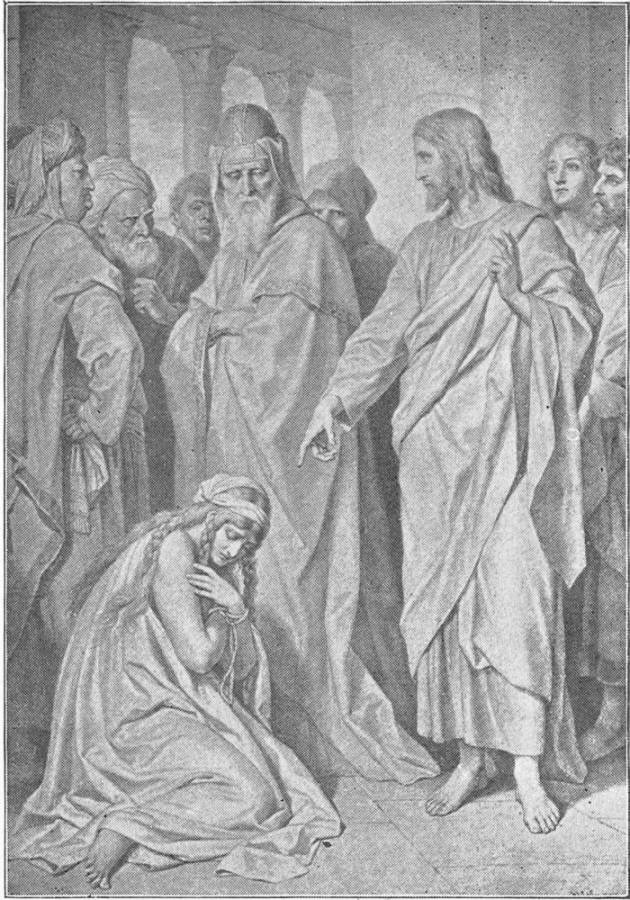
The Seventh Question:
Yes, a vast difference. A judgement comes out of your beliefs, ideologies, concepts; judgement comes out of your past, out of your knowledge. Discrimination comes out of your present, responding alertness.
For example, you see a drunkard. Immediately there is a judgement: "This man is not doing good. He is a drunkard." Immediately a condemnation -- this is judgement. If you don't have any beliefs, what is good and what is wrong, how can you judge so immediately, not knowing the man at all, not knowing his situation, not knowing his problems, not knowing his miseries? How can you judge not knowing the whole life of the man? How can you judge by a fragment? How can you say this man is bad? If he had not been a drunkard, do you think he would have been a better man? It is possible he would have been worse.
This has been my experience with many drunkards. They are good people, very delicate, very trusting, not cunning, simple, with a childlike innocence. Why are they drinking then? The world is too much for them & they cannot cope with it. They are not made for this world; it is too cunning. They want to forget it, and they don't know what to do -- and alcohol comes in handy. With meditation, one has to seek.
This is my observation. All people who are alcoholics need meditation. They are in search of meditation. They are in deep search for ecstasy, but they cannot find the door. Groping in the dark, they stumble upon alcohol. Alcohol is easily available in the market; meditation, not so easily available. But their deep search is of meditation.
All over the world people who are taking drugs are in search of inner ecstasy. They are trying to create the feeling heart and they cannot find the right way, the right path. The right path is not so easily available, and drugs are available. And drugs give false glimpses. They create a chemical situation in your mind in which you start feeling more acutely, more sensitively. They cannot give you real meditation, but they can give you a false impression of it.
This is my understanding. One who is in search may have fallen a victim of a false phenomenon, but he is in search. Someday he will get out of it, because it cannot be a real thing, and it cannot deceive him forever and forever. One day or other he will see that he has been befooling himself through chemicals; but the search is there. People who have never taken alcohol, people who have never taken any drug, people who, in a way, are not bad, but good, respectable people, they are not in search of meditation at all.
So how to judge? How to call the man "bad" who is in search, and how to call the man "good" who is not in search at all? The drunkard may someday find the divine because he is in search of it. In fact, unless he finds the divine he cannot go beyond his alcoholism, because only that can satisfy. Then the false will disappear. The respectable man who goes to the church every Sunday, does not drink. does not even smoke, reads the Bible, the Koran, the Geeta -- this man is not in search at all. So, who is bad? How to discriminate?
Now all over the world there is much concern about drugs, about the new generation. The younger generation, they have all become interested in drugs. What is happening? How to judge? What to say about it? If you are aware, judgement will not be so easy. If you are not aware, you can simply judge that they are wrong, or they are not wrong. Then there are people who are for drugs, Timothy Leary and others, who say, "This is ecstasy." And then there are people - - all the establishments in the world -- who are against drugs. They say, "This is simply destructive."
But what is the actual situation? People who are taking drugs are not creating Vietnams, are not creating Kashmirs, are not creating Middle East conflicts. People who are taking drugs are not creating any war anywhere. They have not killed Mujibur Rahman, they are not killing anybody. Even if you think they are destructive, and they may be destructive to themselves, but not to anybody else. They are not interfering in anybody's life. These respectable people, they are responsible for tremendous violence all over the world. They are respectable people? The people who have killed Mujibur Rahman and his whole family have become the presidents and this and that. And they are respectable people?
Who are the real criminals? Richard Nixon has not taken drugs. Do you know that Adolf Hitler never touched alcohol, never smoked, was a total vegetarian? Now can you find anybody more criminal? He was a perfect Jaina -- vegetarian, nonsmoking, nonalcoholic, and lived a very disciplined life. He moved according to the clock. And created hell on earth. Sometimes, I think it would have been better if had he taken a little alcohol. Then the man would not have been so violent. Had he smoked a little -- a very stupid but innocent game of smoking -- he would not have been so cruel, because smoking is a catharsis.
That's why whenever you feel angry you would like to smoke; whenever you feel irritated you would like to smoke; whenever you feel in some inner turmoil, nervous, you would like to smoke. It helps. There are better things to do. You can use a mantra. Smoking is a subtle mantra. You can say, "Ram, Ram, Ram, Ram...." Smoking is a subtle mantra: you inhale smoke in you exhale smoke out, you breath smoke in, you breath smoke out.... A repetition, a chanting through smoking. You can do "Ram, Ram, Ram" -- that will also help. If you are angry just try chanting "Ram, Ram, Ram." That is a better way, the same, but not much different.
Had this man Adolf Hitler fallen in love with somebody's wife, he would have been condemned as a bad man, but he would not have been so violent. Released, relaxed... the world would have been better off.
So what to say? How to judge? Things are complicated. I am not saying, "Go and become alcoholics, or go and take drugs." I am saying the complexity of life is such that one should not judge. Judgement belongs to stupid minds. They are always ready to judge. Your judgements are like if you come across a small piece of paper which is part of a big novel and you read a few lines, not full, just a few lines, a part of a page, and you judge. That's how you are doing it. A fragment of a man's life comes to your eyes and you judge the whole man -- that he is bad, or that he is good. No, judgement is not for the wise.
That happened with Jesus.

A woman was brought to him; and the whole town was mad. Foolish people are always mad. The crowd is always mad, just for small things, for nothing really. They said, "This woman has committed sin. She has been in a love affair with a man & its illegal. So what should we do with her? The old scripture says stone her to death."
They wanted to kill two birds with one stone -- that woman, and Jesus also.
Because if Jesus says, "Yes, the old scripture is right. Kill her," then they were going to ask, "What about your teachings -- Love the enemy? What about your teachings -- Give the other cheek; if somebody hits you on your cheek give him the other? What about forgiveness? Have you forgotten about it completely?"
And if Jesus is going to say that the old scriptures are wrong, then he is a heretic, a rebel -- he is against religion! He should be killed. The people were ready. In fact, they were not much concerned with the woman; they were more concerned with Jesus. The woman was just an excuse to trap Jesus.
Jesus thought for a while. Judgement is always immediate, in a way, because it is ready made. It looks immediate; it is not immediate. It is ready made: you have already got it. A man of awareness hesitates, looks around, feels, sends his feelers around -- what is the situation? He looked at the poor woman sitting there, tears flowing down. He looked at these angry people. He felt the whole situation, then he said, "Yes, the scripture says stone the woman to death, but the first stone should be thrown by a man who has never committed a sin. If you have not indulged in sexual affairs with women, if you have not indulged in your minds, then take the stones."
They were sitting near a river; many stones were Lying around. People who were just standing in front -- respectable people of the town -- they started moving backwards. They became afraid; now this is too much. By and by people disappeared. Only Jesus was left with the woman. The woman felt Jesus very deeply.
Look at the situation: those respectable people could not feel Jesus, and the sinner felt.
She fell at his feet, and she said, "I have committed sin. Forgive me." Jesus said, "That is between you and your God. Who am I to judge? If you think you have committed something wrong then remember not to commit it again, that's all.
But who am I to judge and say that you are a sinner? That is between you and your God."
A man of understanding responds -- not with judgement, but with discrimination. Jesus did a great deed of discrimination. He said, "Yes, it is right; the scripture is right. Kill this woman." Then he created the discrimination, "Now, those who are not sinners themselves, they should take the stones in their hands and kill her." This is discrimination. It came out of awareness; it was not a dead judgement. He didn't follow the scripture -- he created his own scripture in that moment of awareness! A man of awareness follows no guidebooks; a man of awareness has his own awareness as the guide. And it never fails, I tell you. It never fails. And it is always true, true to the moment.
-------------------//-------------------
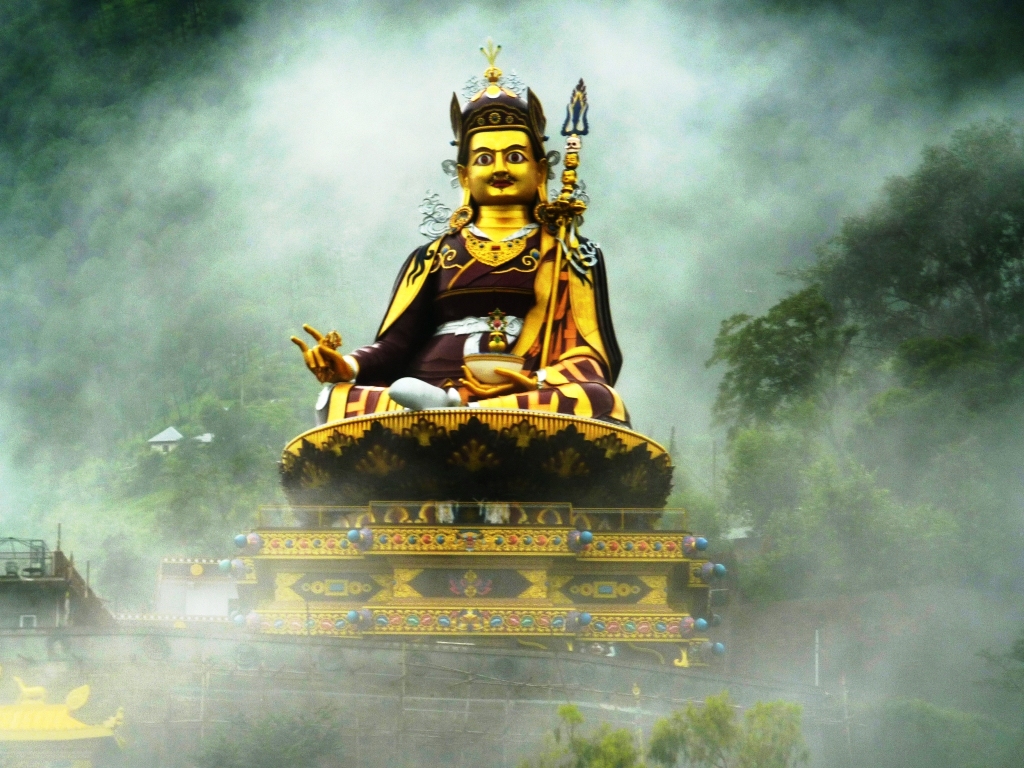
The Eigth Question:
I am not here to fulfill anybody's prophecy. And why should I? It may be Padmasambhava's trip, but why should he force his trip on me? I am here to be myself. I am not a prophet, and I am not here to deliver somebody from their sins. I am not here to bring an age of religion. All these things are mediocre and stupid.
I enjoy myself. If you want to enjoy yourself you can share my delight, that's all.
To me, life is not a very serious affair. Prophets take life very seriously. Saints are innocent! Prophets? -- always dangerous. Buddha is not a prophet; in fact India has not produced prophets. Prophets are a particular phenomenon of Judaism.
Saints we have produced -- millions -- but they are innocent people. Like flowers you delight in, not of much use. Prophets are in fact politicians in religion. They are to change the whole world; they have a mission to fulfill and do this and that.
I have no mission; I am not a missionary. I would like a world without missionaries and without prophets, so that people can be left to live their own lives. Prophets never allow. They are always after you, with judgement. They are always after you, with ideas to be followed, comparisons. They are always there to throw you in hell or award you by heaven.
I have nothing -- no hell to throw you in, and no heaven to give you -- just a delight of being. And that is possible, simply possible. If you allow it to happen it is possible.
To me, life is not a serious affair. In fact life is nothing but a gossip in the eternity of existence, a gossip. I am gossiping here; you are listening, that's all. If you enjoy you are here. If I enjoy I am here. If it becomes difficult to enjoy each other, we separate -- no other bondage.
And I don't allow anybody -- he may even be a Padmasambhava -- to lay his trap on me.
Enough for today.
The Shadow of Religion turiya
4 m
470

Patanjali Yoga sutras continues:
Always keep in mind that nonviolence, nonpossessiveness, no-theft, and authenticity in being, they all give purity. These are not moralistic concepts for Patanjali. In the West they have been taught as morals, in the East as inner hygiene, not as morals. In the West they have been taught as altruistic goals. in the East there is nothing of altruism in them -- it is absolutely selfish. It is your inner hygiene. They give purity to you, and through purity the impossible becomes possible, the unattainable is attained. Through purity your grossness of being is lost. You become delicate, subtle, and soft. Through purity you become a temple of the divine. Through purity, an invitation is sent to the whole to come and drop in you... And one day, the ocean comes and drops into the drop.
When they are taught as moralistic concepts, as in the West -- or in India also, as Mahatma Gandhi has been teaching -- their total quality changes. When you say, "You have to be nonviolent because violence hurts others. Don't hurt anybody. Humanity is one family, and to hurt is to sin," you have diverted the whole thing to a totally different dimension.
Patanjali says, "Be nonviolent. It purifies you. Don't hurt anyone and don't even think of hurting anybody, because the moment you start thinking that way you are falling into impurity inside." The question is not the other, the question is you. Of course, when one is nonviolent others are benefited, but that is not the goal of being nonviolent. That is just a by product, just a shadow.
If you are nonviolent because others should not be hurt, then you are not really nonviolent. Then, you are a good social citizen, civilized, but nothing of religion has happened within your being. Your nonviolence will work as a lubricant between you and others. Your life will be smoother but not purer, because the goal changes the whole quality. The goal is not to protect the other -- the other is protected, that's another thing -- the goal is to become pure so that you can know the ultimate purity.
Eastern religions remain selfish because they know there is no other way to be. When somebody is selfish others are benefited immensely. In fact all altruism, real authentic altruism, flowers out of deep selfishness. They are not contraries, they are not opposites: the flowers of altruism bloom only in a being who has been deeply selfish. To be selfish is just natural. To force people to be otherwise is to make them unnatural. And whatsoever is unnatural is not the way of God. Whatsoever is unnatural is going to be a suppression. It will not bring purity to you.
So this has to be remembered: these are not moralistic goals. In fact in the East, morality has never been taught as a goal. It is a shadow of religion. When religion happens, morality happens automatically, and one need not bother about it. One need not be concerned, it comes on its own accord. In the West morality has been taught as the goal; in fact, taught as the religion. In Eastern scriptures, there exists nothing like the Ten Commandments, nothing like it.
Life should not be a life following commandments, otherwise you will become a slave. Even if you reach paradise through slavery, your paradise is not going to be enough of a paradise, because slavery will remain a part of it. Independence, freedom, should be an intrinsic part of your growth.
So these are hygienic measures. They purify you. They give you inner health.
says Patanjali,
There is some difficulty with the word jugupsa. In all the translations, it has been translated in all the translations as disgust because no equivalent word exists in English. It is not disgust, not at all. The very word is wrong. The very word disgust is disgusting. And to think of a yogi having disgust arises in him for his own body, this is simply unbelievable, because yogis have cared for their bodies as nobody else has ever cared. They look after their bodies as no one else looks after their bodies. They have beautiful bodies. Look at Mahavir or Buddha -- beautiful bodies, very proportionate, like symphonies in matter. No, it is not possible. Disgust is a wrongly translation of the word.

First, it has to be understood, jugupsa does not mean disgust. The meaning is very difficult. I will have to explain it to you. There are three types of people. One type is madly in love with their bodies; in fact obsessed. Particularly women -- absolutely body-oriented. Look at a woman. She is never happier than when she is facing a mirror. Narcissistic -- hours and hours they can devote before the mirror, obsessed. Nothing is wrong in being in front of a mirror, but just being there, for hours, looks like an obsession. This is the first type, who is continuously obsessed with the body; so much so, that they forget that they exist beyond the body. The transcendental is forgotten, they become only the body. They do not possess the body. The body possesses them. This is the first type.

The second type of person is just the opposite of the first: this type is also obsessed, but in the reverse direction. This type is against the body, disgusted with it. This type has broken the mirror, goes on hurting the own body in millions of ways; hates it. The first loves it as an obsession; the second type moves to the other extreme, and hates it, wants to commit suicide.
You can find the second type; they may be pretending to be yogis, but they are not. The yogi cannot hate. It is not a question of any object. The yogi simply cannot hate because hate creates impurity. It is not a question of hating somebody else or something or one's own body. Whatsoever the object of hate, hate brings impurity. The yogi cannot hate his own body. But you can find this type of perverted yogi in the streets of Varanasi, lying on thorns or pointed steel nails, torturing his own body. This is just the opposite of a woman enjoying a narcissistic indulgence before a mirror.
Fasting: fasting in itself can be good, can be bad. It depends. Fasting can be just a way of torturing the body; then it is bad, then it is violence. And this is my observation. People who are not violent towards others, who have suppressed their violence towards others and have become nonviolent -- their violence starts a new way: as a release they start becoming violent towards their own bodies. There are stories of perverted people who destroyed their own eyes so that they could not see any beauty, as in a beautiful woman. Stories of people -- and not exceptional, in thousands.
Before the revolution in Russia, there existed a sect with thousands of followers who had cut off their genital organs, just to be in deep hate with the body. They could not produce children. But then, how to increase the number of the followers? So they were in a difficulty. They would adopt children and cut off their genital organs. A criminal act against one's own body.

In Christianity there have been sects whose only prayer was to flog their own body every morning. And the greatest saint was thought to be one who flogged his body so much that it became blue all over the body with skin broken and blood flowing. It used to be written in the biographies of great saints how many times he hits his body in the morning with a whip -- one hundred times, two hundred times, three hundred times. Just as in India where Jaina monks go on counting their days, how many days they have fasted in the year -- one hundred days, fifty days, how many days. The greater one is who has been fasting, almost starving, his own body.
In Christianity there have been monks who had nails in their shoes intruding in their bodies; and they would walk on those shoes and they would carry continuous wounds in their feet. Blood flowing, puss accumulating -- they were great saints.
If one looks at religion scientifically then ninety percent of it will prove to be pathological. These people needed mental treatment. These people were not religious, not at all. To call them religious is simply foolish. They were not even normal; they were mad.
These are the two types, and then between these two -- just exactly in the middle -- is the third. For whom Patanjali uses the word jugupsa: one who is not disgusted with his own body, not obsessed either. He is in a deep balance. He takes care of the body because the body is a vehicle. He even treats the body as a holy thing. It is -- God created it. And whatsoever God creates, how can it be unholy? It is a temple. It has not to be condemned. It has not to be indulged so madly that you are lost in it.
The temple should not become the image, the temple should not become the shrine. The shrine is the innermost core for which the temple exists. You should not start worshipping the walls of the temple. There is also no need to move to the opposite in which you start destroying the temple.
Just a deep non-identification is needed. One has to know: "I am in the body, but transcendental to the body. I am in the body, but not the body. I am in the body, but not confined to it. I am in the body, but also beyond it." The body should not be a limitation. A shelter, of course, and a beautiful shelter at that. One has to be grateful to it. There is no need to fight with it. It is simply foolish and childish to fight with it. It has to be used and used rightly.
If I have to translate jugupsa, I will say that the yogi is disillusioned with the body. Not disgusted, simply disillusioned. He does not think that the bliss that the soul is seeking is through the body is possible -- no. And, he does not think the contrary either -- that through destroying the body that bliss can be attained. No, he drops the duality. He lives in the body as a guest, and he treats the body as a temple.
When you are in the body too much you are always hankering for contact with other bodies, a lust to be in contact with other bodies -- which you call love, which is not love, which is just a lust -- because the body cannot exist alone. It exists in a network of other bodies.
The child is borne in the mother's womb; for nine months the mother's body feeds the child's body. The child's body grows out of the mother's body, just like branches grow out of a tree. Of course, when the child is ready, he moves out of the womb, but still remains deeply in contact. The child goes on feeding on mother's breast. Not only does the child take the milk, but goes on taking the warmth of her body, which is a physical need.
If a child misses the warmth of the mother, he can never be healthy and his body will always suffer. He may be given every thing that is needed -- food, milk, vitamins -- but if the warmth of the woman is not given to him.... And that, too, in a very loving way, because if you are not loving towards a person, then heat is possible, it may pass from your body to the other person, but not warmth from love. Heat becomes warmth through love. It has a qualitatively different dimension. It is not just the heat. Otherwise, you can give only the heat to the child... Many experiments have been done. You can place the child is in a centrally heated room, but that in itself doesn't help. The mother's body is giving some subtle vibration of love: of being accepted, of being loved, of being needed. That gives roots.
That's why, continuously, the man will be after -- seeking, searching -- a woman's body the whole of his life, and the woman will be seeking a man's body the whole of her life. The opposite sex is attractive because the polarity of the bodies helps; it gives energy. The very polarity gives a tension and energy. You feed through it, you become strong through it. This is natural, nothing is wrong in it, but when one becomes pure -- through nonviolence, nonpossessiveness, authenticity -- when one becomes more and more pure, the focus of consciousness shifts from the body to the being. The being can remain absolutely alone.
That's why a man who is deeply attached to his body can never become free. The very attachment will lead him into many types of bondages, imprisonments. You may love a woman, you may love a man, but deep down you resist also, because the lover is also the bondage. The relationship cripples you, it also feeds you & imprisons you. You cannot live without it, and you cannot live with it. This is the problem of all the lovers. They cannot live separately and they cannot live together. When separate they think of each other; when together they fight with each other.
Why this happens? The mechanism is simple. When you are not with a woman, who will you love and who will love you? You start feeling starved of the warmth that flows from a woman's body. When you are with the woman you are no longer starved, you are no longer hungry, you are well fed. And soon you become fed up. Soon you have taken too much: now you would like to separate and be aloof and alone. All lovers, when together, think, "How beautiful it will be to be alone." And when they are alone, then sooner or later they start feeling the need of the other and they start imagining and dreaming, "How beautiful it will be to be together."
The body needs togetherness; and your innermost soul needs aloneness. That is the problem. Your innermost soul can remain alone -- it is a Himalayan peak standing alone against the sky. Your innermost soul grows when it is alone, but your body needs relatedness. The body needs crowds, warmth, clubs, societies, organizations; wherever you are with many people the body feels good. In a crowd, your soul may feel starved because it feeds on aloneness, but your body feels good. In aloneness your soul feels perfect, but the body starts feeling hungry for relationship.
If you don't understand this in life, you become very, very miserable, unnecessarily. If you understand it, you create a rhythm: you fulfill the bodily need and you fulfill the soul need also. Sometimes you move in relationship, sometimes you move out of it. Sometimes you live together, sometimes you live alone. Sometimes you become peaks -- so absolutely alone that even the idea of the other is absent. This is the rhythm.
But when somebody has attained to aloneness and the focus of consciousness has changed.... That's what Yoga is all about: how to change the focus from the body to the soul, from matter to nonmatter, from the visible to the invisible, from the known to the unknown -- from the world to God. Howsoever you phrase it is immaterial. It is a change of focus. When the focus has completely changed, the yogi is so happy in his aloneness, so blissful, that, by and by, that ordinary hankering of the body to be with others disappears.
When the purity is attained there arises in the yogi a disillusionment for his own body. Now he knows that the paradise that he has been seeking cannot be attained through the body, the bliss that he has been dreaming about is not possible through the body. It is impossible for the body because through the limited you are trying to reach the unlimited. Through matter you are trying to reach the eternal, the immortal. Nothing is wrong in the body, rather, it's your effort that is absurd. Don't be angry with the body, the body has not done anything to you. It is just as if someone is trying to listen through the eyes. Nothing is wrong with the eyes, eyes are made to see, not to listen. The body is made of matter, it is not made of the immaterial. It is made of death. It cannot be immortal. You are asking the impossible. Don't ask that.
That is the point of disillusionment. The yogi simply understands what is possible and what is not possible with the body. That which is possible is okay, that which is not possible, he does not ask. He is not angry. He doesn't hate the body. He takes every care of it because the body can become a ladder; it can become a door. It cannot become the goal, but it can become the door.
A disillusionment for his own body -- and when this disillusionment happens:
Then the need to be in physical contact with others, by and by, withers away. In fact this is the right moment when you can say the man has come out of the womb, not before it.
The Shadow of Religion_ turiya
3 m
444

Some people never come out of the womb. Even when they are dying, their need for others' presence, their need for contact, relationship, continues. They have not come out of the womb. Physically they have come out many, many years before - - the man may be eighty, ninety. Ninety years before, he had come out of the womb, but all these ninety years also he has been living in contact -- seeking, always greedy for body contact. He has lived in a lost womb again and again in his dreams.
It is said that whenever a man falls in love with a woman, whatsoever he thinks, that is not the point. He is again falling in the womb. And maybe, it is almost certain -- I say "maybe" because it is not yet a scientifically proved hypothesis -- that the urge to enter the woman's body, the sexual urge, may be nothing but a substitute for entering the womb again. All sexuality may be a search how to enter the womb again. In all the ways that man has invented to make his body comfortable, psychologists say that he is trying to create a womb outside. Look at a comfortable room: if it is really comfortable it must have something in common with the womb -- the warmth, the coziness, the silk, the velvet -- the inner touch of the mother's skin. The pillows, the bed. Everything gives you a feeling of comfort only when, somehow, it is related with the womb.

In the West they have made small tanks that are womb-like. In those tanks lukewarm water is filled, exactly of the same temperature as the mother's womb. In deep darkness the person floats in the tank, absolutely comfortable -- in darkness, just as in the womb. They call them meditation tanks. It helps, as one feels very, very silent, an inner happiness arising, and you have again become a child. A child in the womb floats on liquid of a certain temperature. The liquid has all the ingredients of the sea, the same salty water with the same ingredients. Because of that scientists have come to realize that man must have evolved from fish, with the same atmosphere of the sea still being maintained in the womb.
All comfort is, deep down, womblike. And whenever you are lying with a woman, curled up, you feel good. Every man, howsoever old, becomes a child again; and every woman, howsoever young, becomes a mother again. Whenever they are in love the woman starts playing the role of the mother and the man starts playing the role of the baby. Even a young woman becomes a mother and an old man becomes a child.
In a yogi this urge disappears. And with this urge, he is really born. We in India have called him "twice-born," dwij. This is his second birth, the real birth. Now he is no longer in need of anybody; he has become a transcendental light. Now he can float above the earth, now he can fly in the sky. He is not earth-rooted now. He has become a flower -- not a flower, because even a flower is earth-rooted... He has become the fragrance of the flower. Completely free. Moves into the sky with no roots in the earth. His desire to come in contact with others' bodies disappears.
This man is so blissful. This man, who has now no need to be in contact with others, is so blissful in his freedom, so cheerful, celebrating -- his every moment is an intense delight. The more you are rooted in the body, the more sad you will be, because body is gross. It is matter, heavy. The more you go beyond the body, the lighter you become. Jesus has said to his followers, "Come, follow me. My burden is light. All those who are heavily loaded, come, follow me. My burden is light, weightless."
If you are sad, if you are always depressed, if you are always miserable, nothing can be done directly to your misery. And whatsoever should be done will prove to be in vain. The East has come to know that if you are sad, miserable, depressed, always moving heavily burdened -- this is not the disease. This is just the symptom of the disease. The disease is that you must be deep down bodily oriented. So the question is not how to dispel your darkness and how to make you happy; that is not the question. The question is how to help you to become unengaged with the body; how to help you so that your entanglement with the body is less and less and less.
People come to me every day. They say, "We are sad, miserable. Every day in the morning it seems again a hopeless day is going to be faced. Somehow we carry ourselves out of the bed -- with no hope. We know, we have lived long, and its the same repetition of sad days. So what to do? Can you give us something so that we can pull ourselves out, out of sadness?" Directly, nothing can be done; only indirectly can something be done. This is symptomatic; this is not the cause. And if you treat the symptom, the disease will not disappear.
The Western psychology has been treating the symptoms. Yoga is the psychology which treats the cause. Whatsoever you say is your symptom, Western psychology goes on taking it for granted and they start removing it. They have not been successful. Western psychology has proved to be a hoax, a complete failure. But now it is such a great establishment that psychologists cannot say it. Their whole life depends on it -- their big salaries. And they are one of the most highly paid professions. They cannot accept the fact -- they have become aware -- that they have not been a help to anyone. At the most they prolong, at the most they give hope, at the most they help you to adjust to your miseries, but no transformation happens through it. As time passes one becomes attuned to the misery, one becomes accepting of the fact that it is there. One is not very worried about it, but nothing has changed.
Now they know it, but psychology is such a growing profession with thousands of people making a living off of it -- and really live luxurious lives. So much has been invested in it -- that who will say it that this whole thing is just a hoax, a fraud, and nobody is helped? It has to be so, because symptoms cannot be changed. You can paint them, but deep down they remain the same. You can give them new names, new labels; that makes no difference.
The cause has to be changed. And the cause is: you will be sad in the same proportion in which you are rooted in the body. You will be cheerful in the same proportion as that which you are not rooted in the body. Freer from the body, the more cheerfulness. When you are completely free from the body you become a fragrance floating in the sky. You become blissful -- the blessedness that Jesus talks of, the benediction that Jesus goes on talking about; the nirvana of Buddha. Mahavir has given it the exactly right word; he calls it kaivalya, aloneness. You have become totally independent and alone. Now nothing is needed; you are enough unto yourself. This is the goal, but the goal can be reached only if you move very cautiously and you don't get entangled with symptoms.
Somebody has a fever, the body is hot, the temperature has gone high -- this is a symptom. The temperature may be a hundred three, a hundred four, five. This is a symptom. Don't start curing the body of the temperature. You can cure it, you can put the man under a cold shower, ice cold. In the beginning it may even appear that things are being helped, but remember, you will not be able to cure him of the disease -- you may cure him of life itself. He will die because the fever is a symptom. The fever simply shows that inside the body there is a great war, an elemental war. Elements of the body are in conflict, that's why heat is created. That's why there is a fever. The body is not at ease. A civil war has broken out inside the body. Some elements of the body are fighting other elements, maybe foreign elements. They are in a conflict. And because of the conflict, the heat has come out.
The heat is just an indication that the war has broken out. The war has to be treated, not the temperature. The temperature is just to give you a message: "Now you should do something; things have gone beyond me." The body is giving you an indication: "Things are now beyond me; I cannot do anything. Do something. Go to the doctor, to the physician. Get help because now it is beyond me. Whatsoever could be done, I have done, but now no more can be done. War has broken out."
Never treat the symptom, and don't waste time in treating the symptom. Always go to the cause. This is not a hypothesis, not a theory. Yoga does not believe in theories and Patanjali is not a philosopher. He is absolutely a scientist of the inner world, and whatsoever he is saying, he is saying because millions of yogis have experienced it. Without any exception, this is so. In ordinary life also have you watched? When you feel cheerful: in ordinary life also if you remain watchful you will become aware that whenever you feel cheerful you forget the body. Whenever somebody is cheerful, he forgets his body. And whenever somebody is sad, he cannot forget the body.
In fact in Ayurveda the definition of health is one of the most significant. No other medical science anywhere in the world has given such a definition. Western medicine has no definition of health. At the most they can say, "When there are no diseases, then you are healthy." But this is not a definition of health. What type of definition, when you bring diseases in to define health? You say, "When there are no diseases you are healthy." It is a negative definition, not a positive one. Ayurveda says that when you are bodiless you are healthy. This is really tremendously beautiful. Videha: when you don't feel the body, you are almost no body.
You can watch it. The head comes in only when the headache is there. Otherwise, who knows about the head? You are never aware of the head. The headache brings awareness, otherwise you are headless. And if you continuously remember your head, there must be something wrong. When breathing is healthy you are not aware at all, but when something goes wrong -- asthma, bronchitis, something goes wrong -- then you are aware. The breathing is there with much sound to it, very noisy and everything. You cannot forget it. When your legs are tired, you know they are. When something goes wrong, only then you become conscious. If everything is functioning perfectly, you forget it. This is the definition of health: when you forget the body completely you are healthy. And who can forget the body completely? Only a yogi.
The Shadow of Religion turiya
3 m
457

We have three words: rogi, bhogi, yogi. The rogi: one who is ill; the bhogi: one who is indulging in the body; and the yogi: one who has gone beyond the body.The bhogi rarely will attain to some moments of Yoga, some moments when he will forget the body. Ninety-nine percent of his life he will belong to the world of the rogi, the ill. Only one percent of his life will be moments, rare moments, when he will become a yogi. Sometimes everything is functioning well, humming -- just like a beautiful, perfectly functioning car hums, sings. Your whole mechanism is humming beautifully well. This happens rarely with a bhogi, never with a rogi, always with a yogi. The rogi is the ill person. The bhogi is one who is indulging in the body too much and falling towards the rogi. Sooner or later he become ill and die. And the yogi is one who has transcended the body, lives beyond it and is cheerful.
The rogi is never cheerful, the bhogi rarely, the yogi always. Cheerfulness is his nature. For no visible cause he remains happy.
With you, the case is just the opposite: for no visible cause you remain unhappy. If somebody asks you, "Why are you so miserable?" you shrug your shoulders. You don't know why. You have taken it for granted, to be misrable is your way of life. In fact, if you see a miserable man, you never ask, "Why are you miserable?" You accept it. When you see somebody happy, very happy, you ask, "What is the matter? Why are you so happy? What has happened?" Misery has been taken for granted, accepted. Happiness has become so rare, so exceptional, that it is almost too good to be true.
It happens, people come to me: when they start meditating, and if they really move in it, things start changing. When they had come they were miserable, sad; then something bursts open -- a cheerfulness starts. They cannot believe it. They come running to me and they say, "What has happened? Suddenly I am feeling very happy. Am I imagining?" They cannot believe that this can be true. The mind says, "You must be imagining. You, such a miserable man, and you can be happy? Impossible." They come to me and they say, "Are we imagining, or have you hypnotized us?"
They never thought when they were miserable that somebody may have hypnotized them. They never thought when they were miserable that maybe they are imagining it, but when they feel happiness, happiness has become so rare a thing, so unbelievably rare that they ask, "Is it true?"
In English you have the phrase "too good to be true"; you don't have the phrase "too bad to be true." The other should be more prevalent, more common, but "good" cannot be believed; that's why the phrase "too good to be true." That phrase should be destroyed, completely forgotten. When somebody says something bad you should say, "Too bad to be true, cannot be believed. You must have imagined." But no, it is not so. Misery seems to be the natural thing; happiness, something unnatural.
People try to concentrate remaining rooted in the body; then concentration is very difficult, almost impossible. You cannot concentrate for a single minute. The mind wavers, a thousand and one thoughts arise, and before you know, you have moved somewhere else: a daydream starts. Whenever you want to concentrate on something... almost impossible. But the reason is that you are much too rooted in the body. If you look through the body, concentration is not possible. If you look beyond the body, concentration is so easy....
It happened...
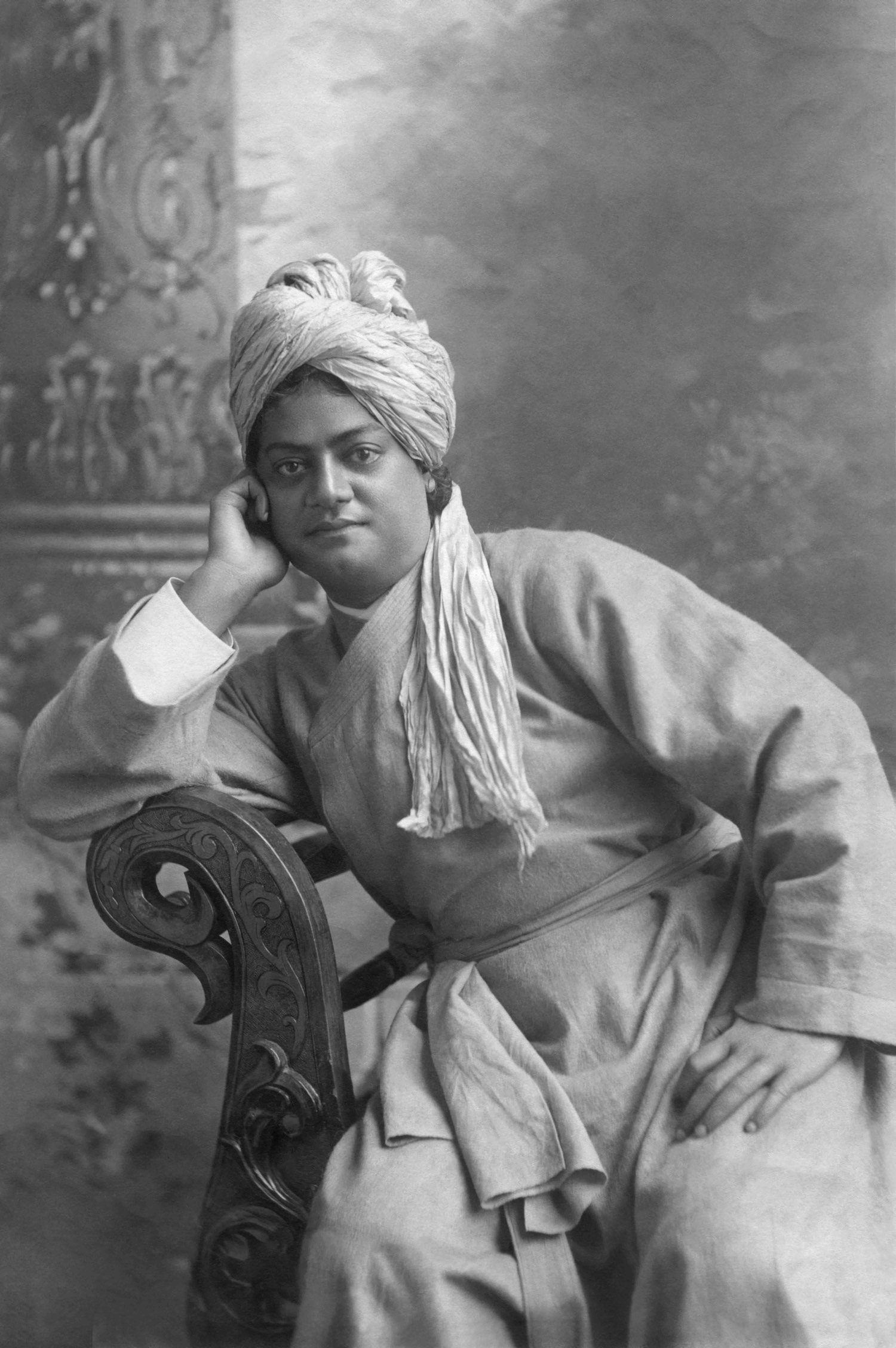
Vivekananda was staying with a great scholar. His name was Deussen, one of the great scholars, who translated Sanskrit scriptures into Western languages. In particular, Deussen was working on the Upanishads. He was one of the most penetrating translators.
A new book had arrived and Vivekananda asked, "Can I go through it? Can I have it to read?" Deussen said, "Yes, you can have it. I have not read it at all."
After half an hour Vivekananda returned the book. Deussen could not believe it; such a big book will need at least one week to read, and if you want to digest it, then even more. If you really want to understand it, it is a difficult book, then even more. He said, "Have you gone through it? Have you really read it, or just looked here and there?"
Vivekananda said, "I have studied it."
Deussen said, "Then I cannot believe it. Then you will have to do me a favor. Let me read the book, and I will ask you a few questions about the book."
Deussen had to read the book for seven days, study it; and then he asked a few questions, and Vivekanand replied so exactly, as if he had been reading that book for the whole of his life. Deussen has written in his memoirs: "It was impossible for me, and I asked,'How is it possible?'
Vivekananda said, "When you study through the body, concentration is not possible. When you are not rooted in the body, you hover on the book directly -- your consciousness directly in touch. No body between the book and you standing like a barrier, then even half an hour is enough. You imbibe the spirit of it."
It is just like a small child reads. He cannot read a big word. He has to cut words into small pieces. He cannot read the whole sentence. When you read you read the whole sentence. If you are really a good reader you can read the whole paragraph -- just a glimpse, it passes. There is a possibility, if the body is not interfering, you can read the whole book just by passing over it. If you read with the body you may forget. If you read without the body there is no need to memorize it. You will not forget it because you have understood it.
Power of concentration arises in a man of pure body, of pure consciousness, of purity.
These are consequences, remember. They cannot be practiced. If you practice, you will never attain to them. They just happen. If the basic cause has been removed, if you are no longer identified with the body, then... control of the senses... Then it is within your control. If you want to think, you think. If you don't want to think, you just say to the mind, "Stop." It is a mechanism that you can put on and off, but mastery is needed. If you are not a master and you try to become a master, you will create more confusion and trouble for yourself and you will be defeated again and again, and the senses will remain the boss. That's not the way to win over them. The way to win over them is to disidentify yourself with the body. You have to come to know that you are not the body. You have to come to know that you are not the mind.

You have to become the witness to all that is around you. The body is there, the first circle; then the mind is there, the second circle; then the heart is there, the third circle. And then just behind these three circles is the center -- you. If you are centered in yourself, all these three layers will follow you. If you are not centered there, then you will have to follow them.
This is how one becomes fit, capable of realizing oneself. Everyone wants to realize oneself, but nobody wants to pass through the discipline. No one wants to mature. Everybody wants it as a magic thing. People come to me and they say, "Can't you bless us so that we can become self-realized?" If it were just that easy, that my blessing will do, then I would have blessed the whole world. Why bother to bless each individual? Bless wholesale, and let the whole world be enlightened. Then Buddha would have done so already, Mahavir would have done so -- finished. All would have become enlightened.
It cannot be done that way. Nobody can bless you, you have to earn that blessing. You have to pass through a deep discipline, you have to change your focus of being, you have to become capable, you have to become a right vehicle. Sometimes it has happened that accidentally someone has stumbled upon the self, but that has been a shock and that has not helped anyone. That will crack down your whole personality, and you may go mad. It is just like a strong current passes through you for which you are not ready. Everything will go wrong. Even, the fuse may blow and you may die.
You have to attain purity, attain non-identification with the body, with the mind. You have to attain a certain quantity of witnessing. Only then, in that proportion only, self-knowledge becomes possible. You cannot get it free. You have to pay for it, and pay for it in terms of being. Not that you can pay for it with money, nothing else will be helpful: you have to pay for it in terms of being.
And this purity, finally, brings contentment. This word is one of the most profound. You have to understand it, feel it, imbibe it. Contentment means whatsoever the situation is, you accept it without any complaint. In fact, you not only accept it without complaint, you rejoice in it with deep gratefulness. This moment is perfect. When your mind doesn't move from it, when you don't ask for any other time, when you don't ask for any other space, when you don't ask for any other way of being, when you don't ask anything, when the asking has dropped, you are simply here-now, rejoicing, like birds singing in the trees, flowers blooming on the trees, stars moving, everything is taken as "This is the all, the whole, the perfect, no improvement is possible in it." When the future is dropped, when the tomorrow disappears, there is contentment. When now is the only time, the eternity, there is contentment, and in that contentment, says Patanjali, ... supreme happiness.
So contentment is the discipline of the yogi. He has to be contented. If nothing can create discontent in you, if nothing can create restlessness in you -- if nothing can push you off your center -- there arises supreme happiness.
Enough for today.
Selfishness: The Only Unselfishness turiya
3 m
522

The First Question:
Love is the most selfish thing in the world. Love is basically love of oneself. If you love yourself, only then can you love somebody else. If you don't love yourself, to love anybody else is almost impossible. The quality of love has to grow within you, only then can the fragrance reach to somebody else. If you don't love yourself you can only pretend that you love others. Your love will be pseudo, false, a deception. In ninety-nine cases out of a hundred this is what is happening, because humanity has been debarred, conditioned. Every child has been conditioned not to love himself, but to love others. That is impossible. That cannot happen; that is not the way things are. Every child has been taught not to be selfish, and that's the only way of being.
If you are not selfish you will not be altruistic, remember. If you are not selfish you will not be unselfish, remember. Only a very deeply selfish person can be unselfish. But this has to be understood because it looks like a paradox.
What is the meaning of being selfish? The first basic thing is to be self-centered. The second basic thing is always to look for one's blissfulness. If you are self-centered, you will be selfish whatsoever you do. You may go and serve people, but you will do it only because you enjoy it, because you love doing it, you feel happy and blissful doing it. You feel yourself doing it. You are not doing any duty; you are not serving humanity. You are not a great martyr; you are not sacrificing. These are all nonsensical terms. You are simply being happy in your own way. It feels good to you: you go to the hospital and serve the ill people there, or you go to the poor and serve them. But you love it. It is how you grow. Deep down you feel blissful and silent, happy about yourself.
A self-centered person is always seeking his happiness. And this is the beauty of it. The more you seek your happiness, the more you will help others to be happy. That is the only way to be happy in the world. If everybody else around you is unhappy, you cannot be happy, because man is not an island. He is part of the vast continent. If you want to be happy, you will have to help others who surround you to be happy. Only then -- and only then -- can you be happy.
You have to create the atmosphere of happiness around you. If everybody is miserable, how can you be happy? You will be affected. You are not a stone. You are a very delicate being, very sensitive. If everybody is miserable around you, their misery will affect you. Misery is as infectious as any disease. Blissfulness is also infectious as any disease. If you help others to be happy, in the end you help yourself to be happy. A person who is deeply interested in his happiness is always interested in others' happiness also -- but not for them. Deep down he is interested in himself, that's why he helps. If in the world everybody is taught to be selfish, the whole world will be happy. There will be no possibility for misery.
If you want to be healthy, you cannot live amongst people who are ill. How can you be healthy? It will be impossible. It is against the law. You have to help others to be healthy. In health, your health becomes possible.
Teach everybody to be selfish because unselfishness grows out of it. Unselfishness is ultimately selfishness. It may look unselfish in the beginning, but finally it fulfills you. And then happiness can be multiplied. As many as are the people around you that are happy, that much happiness goes on falling on you. You can become superbly happy.
But never forget about yourself. You have been taught.... The politicians & priests have been doing that, because that is the only way in the world for politicians and priests to be. If you are miserable, priests will be needed. If you are ill, unhappy, politicians will be needed. If you are unruly, only then rulers are needed. If you are ill, only then doctors are needed. Politicians want you to be disorderly, otherwise on whom will they impose order? Through your disorder, they become the rulers; and they teach you to be unselfish. They teach you to sacrifice yourself for the country, for the god, for the religion -- Islam, Hinduism, the Koran, the Geeta, for the Bible. Any word will do, but sacrifice yourself. If you sacrifice yourself, the priest remains happy, the politician remains happy.
The priests and politicians are in a deep conspiracy. Maybe they are unconscious, not aware what they are doing, but they don't want you to be happy. One thing is certain, they don't want you to be happy. Whenever they see that you are becoming happy, they become alert. Then you are a danger to them, their society, their established world. You are dangerous. A happy person is the most dangerous person in the world. He can prove to be subversive because a happy person is a free person, and a happy person doesn't bother about wars, Vietnams, Israel. To a happy person these things look neurotic, foolish.
A happy person is so happy, he wants to be left alone to be happy. He wants his own privacy to be preserved. He wants to live with the flowers, poetry and music. Why should he bother to go to the wars, be killed and kill others? Why should he be murderous and suicidal? Only unselfish people can do that, because they have never known the bliss that is possible to them. They have never had any experience of what it is to be, what it is to celebrate. They have never danced. They have never breathed life. They have not known any divine glimpse, all those glimpses come from deep happiness, from deep satiety, contentment.
An unselfish person is uprooted, uncentered. He is in deep neurosis. He is against nature, he cannot be healthy and whole. He is fighting against the current of life, being, existence, and he is trying to be unselfish. He cannot be unselfish because only a selfish person can be unselfish. When you have happiness, you can share it, when you don't have it, how can you share it? To share, in the first place one must have it. An unselfish person is always serious, deep down ill, in anguish. He has missed his own life.
Remember, whenever you miss your life you become murderous, suicidal. Whenever a person lives in misery, he would like to destroy. Misery is destructive. Happiness is creative. There is only one creativity, and that is of blissfulness, cheerfulness, delight. When you are delighted you want to create something, maybe a toy for children, maybe a poem, maybe a painting -- something. Whenever you are too delighted in life, how to express it? You create something, something or other. But when you are miserable you want to crush and destroy something. You would like to become a politician, you would like to become a soldier. You would like to create some situation in which you can be destructive.
That's why every now and then war erupts somewhere on the earth. It is a great disease. And all politicians go on talking about peace. They prepare for war; they talk for peace. In fact they say, "We are preparing for war to preserve peace." Most irrational. If you are preparing for war, how can you preserve peace? To preserve peace, one should prepare for peace.
That's why all over the world the new generation is a great danger to the establishment. They are only interested in being happy. They are interested in love, they are interested in meditation, they are interested in music, dance.... All over the world politicians have become very alert. The new generation is not interested in politics -- rightist or leftist. No, they are not interested at all. They are not communists; they don't belong to any 'ism'.
A happy person belongs to himself. Why should he belong to any organization? That is the way of an unhappy person, to belong to some organization, to belong to some crowd. Because he has no roots within himself, he does not belong, and that gives him a very, very deep anxiety that he should belong. He creates a substitute belonging. He becomes part of a political party, of a revolutionary party, a religion or anything. Now he feels he belongs, there is a crowd there in which he is rooted.
One should be rooted in oneself because the way from oneself moves deep down to God, to existence. If you belong to a crowd you belong to an impasse, and from there no further growth is possible. There comes the end, a cul-de-sac.
But politicians depend on your sacrifice. They don't want you to be happy, they don't want your smiles, your laughter. They want you to be miserable, so miserable that you become destructive, angry, in a rage. Then you can be used, for their ends you can be used. They teach you to be unselfish, they teach you to be martyrs. They teach you to "Sacrifice your life for others." And they are teaching the same thing to others also. It seems a big, foolish game.
I don't teach you to be unselfish because I know if you are selfish you will be unselfish automatically, spontaneously. If you are not selfish you have missed yourself, and now you cannot be in contact with anybody else, because the basic contact is missing. The first step has been missed.
Forget about the world, and the society, and the utopias, and Karl Marx. Forget about all this. You are just here for a few years to be. Enjoy, delight, be happy, dance, and love; and out of your love and dancing, out of your deep selfishness an overflowing of energy will start. You will be able to share it with others.
Love, I say, is one of the most selfish things. If you want a still deeper selfish thing then comes meditation, prayer. If you want a still more selfish thing, then comes God. You cannot be related to God through someone else; there is no via media. With God, you have to be face-to-face, immediate, without any media. You alone in your superb aloneness will encounter that supreme experience.
I teach selfishness, but if you understand my selfishness you will understand all that is beautiful, all that is unselfish.
-------------------//-------------------

The Second Question:
If you are aware of yourself you become aware of others. How can it be otherwise? If you are not aware of yourself, how can you be aware of others? Awareness must first happen within you. The light must be lighted there first. The flame must arise within you, only then can the light spread and envelop others. You live in darkness, unawareness, so how can you be aware of others? You go on thinking, you dream, and you are not aware of others.
The husband may say, "I am aware of my wife and her feelings." Simply not possible, because the husband is not aware of himself. He lives in deep darkness and unconsciousness. He does not know from where his anger comes, he does not know from where love arises, he does not know from where comes this existence flows. He is not aware of himself. And that is the closest thing one can be aware of. And yet, he says, "I am aware of my wife and her feelings." Foolishness. He may be thinking, dreaming that he is aware. Everybody lives surrounded in his own dreams. And hidden behind the dreams, one's own projections, one goes on thinking, "I am aware."
Ask the wife, she says, "He is never aware of me." The wife thinks she is aware of her husband, his needs; but those needs that she thinks she is aware of are not her husband's needs. That's what she thinks are his needs. The conflict continues. Both are aware, and both feel for each other and both are careful about each other.
No one can be careful about anybody else, unless one has learned the lesson first in the deeper, inner core of his own being. First, be careful about yourself. That is the nearest, closest point. Learn awareness there; then you will be aware of others. Then, for the first time you will not project. You will not interpret; you will look directly. You will look at the other as he is, not as you would like him to be, or as you think him to be. Then you will look at reality.
When dreams drop from your eyes and your eyes are not full of dreams, only then can you be aware. Otherwise your eyes are filled with many clouds and much smoke exists there. You look, but you look from behind screens, and those screens pervert everything that you see. They distort. They don't mirror, they project. When your dreams have disappeared and you are alert -- alert, aware, mindful -- then your eyes become like the eyes of a camera. You simply see that which is and you don't project. You don't do anything to the reality, you simply allow the reality to be revealed. Your eyes are simple, innocent passages. They simply see. Right now, as you are, you can't see. Your eyes are filled already with prejudice, ideas, conceptions, beliefs. You cannot see. Your eyes are not empty enough to see.
How can you be aware of others? Only a buddha is aware, one who has awakened within himself. But a buddha is a very selfish man, a Mahavira is a selfish man, a Patanjali, absolutely selfish -- but they help millions. They become a benediction to millions. All those who are in need and in search can use their light. But they are alight. That is the meaning of enlightenment: their flame is burning. You can partake of it. You can light your own inner flame through it. You can become a participant.

Awareness has to be learned within. When you awake inside yourself, you awake to the whole world, to the whole existence. Suddenly shrouds fall away. Suddenly, your eyes are no longer filled. They become empty, receptive, naked. You see. You don't project, you don't interpret. You have nothing to project. You have become just empty space, an inner emptiness.
Selfishness: The Only Unselfishness_ turiya
88 d
433

The Third Question:
Hope is one of the greatest barriers because through hope dreams are created, through hope future is created, through hope time exists. When I say become hopeless, I mean be here and now. If you hope, you have moved away from the herenow.
You postpone life through hope and you say, "Tomorrow I will live, when everything is put right." When everything exists as you would like it to exist, when you have enough riches, power, money, prestige -- then you will live. And you hope tomorrow it is going to be there. If not tomorrow then the day after tomorrow. If not this year then next year. And if not in this life then in the next life. In the East, hope has been extended to its very logical end: thousands of lives waiting for you in the future. This is a trick of the mind. Once you allow the mind to hope, it has tricked you.
Life is only in this moment. Life has no other tense; it has only one tense, the present. The past is memory, it is not part of existence. It has gone, it is no longer there. Just imprints on the mind are carried, just scratches in the memory. The future does not exist, it has not come yet. Only this moment, this narrow moment, this small, atomic moment exists. If you have to live, you have to live in this moment. If you want to miss life then you can live in hope.
When I say "hopeless" you can misunderstand me, because by "hopeless" you always mean: when some hope fails, you become hopeless. But when I use the word hopeless, I am not meaning that some hope has failed. I am saying all hope, hope as such, has failed. Then you become really hopeless, and that is a beautiful moment. It is not a depressed state of affairs. It is not that you are sad.
You have felt hopeless many times -- one hope fails. You were in love and the woman betrayed, or the man betrayed you -- one hope failed. But there are other women, other men and the hope can still exist. It can search, seek; it can create new illusions. One illusion has failed, but you have not become disillusioned. You move on one path and there comes an end to it. There is nothing further & an abyss faces you. One path has failed, but there are millions of paths. Life is a labyrinth, you can move in other paths. You have not really become hopeless.
A man becomes hopeless when he faces the whole life in its totality and sees that there is nowhere to go, nothing to dream, nothing to hope for. In that hopelessness there is no sadness. One simply realizes the truth of life as it is. Not that life has failed. One simply realizes, "My hoping has failed." And life does not allow anybody's hopes. It does not follow anybody's hopes; it does not fulfill anybody's dreams. Life has not failed, only your hoping mind has failed. The mind stops functioning. For a moment it seems a disaster, everything collapses. But if you can live with this disaster, suddenly a new life arises in you -- fresh, young, of this moment.
That life belongs to the here-now. It does not move anywhere else. It has no motivation in it. It is, in a way, desireless. Not that it doesn't enjoy -- only it enjoys. When there is no desire, your whole energy becomes delight. You throb with happiness. You start participating in the celebration that is continuously going on; it is a continuum.
You were missing it only because you were dreaming. You were not part of it because you had created your private hopes. You had become an idiot. An idiot means, one who has private hopes. One who is not moving with the whole, who is trying to move alone in his own way, who is trying to put his will against the whole. He is the idiot. The root of the word idiot means private. Hopes are private; life is universal. Hopes are individual. Existence does not belong to any individual. All individuals belong to existence.
Have you observed that your dreams are the most private things in the world? You cannot even invite a friend. You cannot even invite your beloved in your dreams. You have to be alone there. Why are dreams thought to be unreal? -- Because they are private. You cannot call anybody else to become a witness to your dreams, that is impossible.
I have heard...

One of the pharaohs of Egypt who was a little eccentric, as kings are almost always, a little neurotic -- one day he dreamed and he saw one of his ministers in his dream. He was very angry. The next day he had an order proclaimed all over the kingdom that nobody is allowed to enter in his dreams. This is trespassing, and if somebody is found trespassing, entering in his dreams, he will be immediately killed. And later on, many persons were killed because they entered in his dreams.
Your dreams are yours, nobody can enter them. And if somebody enters, it is you who are dreaming it & not that anyone that has entered into it. Dreams are private, absolutely private. That's why they are unreal. Anything private is going to be unreal. Reality is universal. I can see the trees, you can also see the trees, but only I can see trees in my dream. I cannot ask you to come and be a witness. That's why in the morning I myself feel it was just a dream, not real.
Your hopes are your hopes. When you become hopeless, and when I say, "become hopeless, and to drop all hopes," what I am saying is, let the whole hope; don't create private desires, otherwise you will always be in misery, will always be in frustration. Your hopes will never be fulfilled, because the whole has its own design. The whole has its own planning, the whole has its own destiny. The river is going towards the sea and every drop in the river is dreaming of going somewhere else. How can that be fulfilled? The river will reach to the ocean. Those drops will suffer frustration because they will not reach to the destination that they were dreaming of.
A wise man is nothing but the drop who does not dream a private dream. An enlightened man is the man who flows with the whole, with the river. He says, "Wherever you are going, I am also going there. And why should I worry? The river is flowing; it must be going somewhere. That is not my worry." The drop, it drops its worry. That is the moment of hopelessness, desirelessness. In that moment the drop has become the river. In that moment, basically, the drop has become the ocean. In that moment the drop has become the whole.
Yes. If you hope, if you create hopes around me, you are creating your dreams. I am not a party to them. It has to be remembered: I am not a party to them. You may be creating your dreams and desires, that is for you to decide. If you create them, you will be frustrated. If you don't create them you start floating with me. That's what surrender means, that's what to be a disciple means -- to float with the master. If I say, "Drop hopes," you drop, you float with me. If you have your private hopes then remember: when you are frustrated don't blame me. I am not responsible.
Otherwise this seems to be very easy. You come from the world of hoping, from where you have been frustrated, then you start hoping around me -- desiring, dreaming, around me. I become an excuse for you to hope again. Then you start desiring again the same desires. And now it is with my help? No, I don't help in that way. I help only if you want to become desireless, if you want to drop all hopes, if you want to drop yourself, the ego. That's the only way I can help. I am not here to fulfill anybody's desires and hopes. Drop them before frustration takes over; otherwise you will be unnecessarily angry at me. Remain alert about it, otherwise you will feel that I wasted your time and destroyed your energy. Of course, if you don't reach your private goals, you will never be able to forgive me, but I am not a party to it.
If you are ready to float with me.... I am floating with the whole. If you are ready to float with me, you will learn the way how to float with the whole. Then you can forget about me. A master has to be dropped, finally. A master, at the most, can be a door; he is not the goal. You pass through him, and you forgive and forget him. You move with the whole. Near a master, in the presence of a master, you learn the knack of floating with the whole.
Yes, I am included. When I teach you hopelessness, I am included in it. Don't hope about me, around me. I will never be a party to your private dreams, to your idiotikis.
Growth is possible only without hope. You have not grown up because you have been hoping. You have remained children, childish. A child is allowed to dream, he is ignorant. To hope, is to create future. He is foolish. When maturity happens dreams have to be dropped. Or, when you drop the dreams, maturity happens. What is maturity? Maturity is to see the reality. Do not live in wish fulfillments.
Even religious, so-called religious, people live in dreams. They think of paradise for themselves and hell for others. Dreams... good dreams for themselves and nightmares for others. They are also childish.
Growth is possible only when there is no hope. Why? Because the same energy that moves in hopes has to be converted. The same energy has to be released for growth. That's why all buddhas say, "Don't desire." Not because they are against desiring, no -- Its because they are for growth and the energy has to be released, freed from desires. Only then can it become inner growth.
Growth is in the present and desiring is in the future. They never meet. You grow here and now, never tomorrow. The trees are growing now and you are thinking to grow tomorrow. The growth is always herenow. At this very moment growth is happening, if it is happening at all. If it is not happening at this moment, how can it happen the next moment? From where will it come? Out of the blue? This moment will become the foundation for the next. Today will become the foundation for tomorrow. This life will become the foundation for the next life. If growth has been happening this moment, the next moment will take over. You will start the next moment from that point, from that stage, that state and plane where this moment leaves you. That is the only way to grow.
This moment is the only moment to grow.
Have you watched that in the whole world -- for plants, birds, animals, mountains -- only one moment exists, this moment exists. And they are growing. Only man thinks of the future, and that's how growth stops. The more you think of the future, the less is the possibility to grow. Growth is coming to terms with the reality that is happening in this moment. And there is no other reality.
Growth is possible only without hope.
I understand your problem. You are saying, "If we don't hope then we will not hope about growth also. Then how will growth happen if we don't hope and don't desire?" Growth does not need your hoping, your desiring. Growth needs your understanding; growth needs your awareness. Awareness is enough. If you are aware in this moment to whatsoever is happening, that awareness becomes the sun, and the tree of your being grows. That awareness becomes the water, the rain; and the tree of your being grows. That awareness becomes the food, the nutrition. That awareness is all that is needed for growth. A man grows because of awareness, not because of hopes.
-------------------//-------------------

A master is a catalytic agent. He does not work, but the work happens through him. He's not the doer, but just the situation where things happen. Do you think the sun rises and starts working on so many millions of trees; comes to every flower, persuades it to open; comes to every bud and forces it to open; comes to every root, nourishes it? No. The sun may not even be aware, but trees grow, buds open, flowers start throwing their fragrance, the birds start singing -- the whole world is awake. How does the sun function? Is the sun a doer?
I have heard a very old story...
Once Darkness went to God and said, "Enough is enough. I have not committed any crime -- not that I know -- so why does your Sun go on chasing me? Continuously, day after day, for millions of years it has been happening. I have come to complain. And I have not done anything wrong to the Sun. Why is he so against me?"
Even God had to concede: "This is true. Why should he be after you?"
The Sun was called, and God inquired, "Why are you so much against Darkness? What do you go on chasing her for?"
The Sun said, "I never heard anything about Darkness. What do you mean? I have never encountered her. I don't even know her! Chasing is out of the question. I am not even acquainted. Nobody has even introduced me. Please call her before me so I can see who this person Darkness is, and then I will remember and will not chase her."
It is said even the omnipotent God could not do that, to bring Darkness before the Sun. So the case is pending in the files, and God is brooding over a way so that Sun and Darkness can be face to face in the court. But it doesn't seem that he will be able to find a way because when the Sun is there, Darkness is not there. It is not that the Sun is chasing or doing something -- just the very presence.
A master is a catalytic agent. This word catalytic has to be understood very deeply. In science they have discovered catalytic agents. A catalytic agent is an agent which is absolutely needed for some change, chemical change for example, but the catalytic agent itself is not an ingredient in the change. Just the presence is needed. For example, oxygen and hydrogen meet and water is created, but electricity is needed just as a catalytic agent. If electricity is not present then hydrogen and oxygen don't meet; and electricity plays no part -- just the presence. Without the presence it doesn't happen. Electricity plays no part in it. It doesn't enter in any way into the new combination. It simply remains there. A catalytic agent is a scientific term, but beautiful.
A master does not have to do anything, he is not a doer. Just his presence -- if you allow his presence. That depends on the disciple. To be a disciple only means this much: that you allow, that you let go, that you become receptive, that you no longer create any obstacles for the presence to function. It doesn't work anything. The very presence functions and something starts happening. If the disciple allows, something starts happening.
The disciple will feel grateful towards the master because without him it was almost impossible, but the master always knows that he has not done anything. So if you go to the master and say, "You have done so much," he will say, "It is God's grace. I have not done anything." If a master says, "I have done something," he is not a master at all, because the very "I" shows that he is not a master. He cannot be a catalytic agent to you. He thinks he is a doer; and a doer cannot be a catalytic agent.
A master is just a presence, an encompassing presence. Like a cloud he surrounds you. If you allow him, he enters to the deepest core of your being. Not that he enters! You simply allow... and, it happens. And in that moment, when the disciple is allowing & the master is present, a chemical change -- better to call it an alchemical mutation -- and the disciple also disappears, the same way as the master has disappeared. The ego is no longer there. The disciple has also become a nondoer. Now he can function as a presence to others. He can be a master.
One of Buddha's disciples, Sariputta, became enlightened.
One day he entered into Buddha and allowed Buddha to enter in him. Immediately, Buddha said, "Now, Sariputta, there is no need to hang around me. Now go. Go to the farthest corners of the country. Many people are thirsty. Now you have the water to quench their thirst."
Sariputta looked around. What has happened? He said, "What are you talking about? Don't send me anywhere."
Buddha said, "You are not aware what has happened. Now you don't need my presence. Now you yourself can become a presence to others. The thing has happened. I have not done it, you have not done it, and the thing has happened."
If the disciple is too much of a doer it will not happen. If the master is too much of a doer, he is not a master. When the disciple is ready to open -- and the master is a master -- the thing happens. It is grace. It simply happens without anyone's doing. That's why we in India have called it prasad, grace. Suddenly, God becomes available; suddenly, God functions.
That's why I say that I do not work on people, and still I accept disciples.
-------------------//-------------------

The Fifth Question:
Of course. A master is nothing but a womb: through him you are reborn. You die in him, you die with him. The master is the cross and the resurrection. That is the meaning of Jesus' story: in him you die, and through him you are reborn. The master is a womb.
One womb is the mother's womb; another womb is the master's womb. The mother sends you into the world, the master sends you beyond it. The master is a mother.
-------------------//-------------------

The Sixth Question:
It is symbolic. I am useless like my napkin. I don't believe in utility. Utility belongs to the world, to the marketplace. I believe in nonutilitarian things: a flower. What is the utility of a flower? What is the use? It is absolutely useless, and hence beautiful, absolutely beautiful.
Life to me is not purposive; there is no purpose in it. If there was purpose life could not be so beautiful. Purpose always creates ugliness. Purpose gives you commodities, not ecstasies. Purpose gives you factories, not temples. Life is not a factory; it is a temple. What is the use of a temple?
In the East, every village has a temple, at least one. More, then it is too good; otherwise one. Even a very, very poor village has one. When Westerners came for the first time to the East, they could not believe the phenomenon, because the villages are so poor. They don't have proper houses, just huts. You can call them houses in name only, but they have a beautiful temple in the town. Their homes don't have stone walls, just bamboo, but their god has beautiful marble walls, marble floors. A small temple, but beautiful. They couldn't believe it: "When you live in such poverty, what is the use of making such a beautiful temple?"
In the East, we have always believed in uselessness. One can live in a house, it is a utility. God is not living there, he can live without the temple. Even if the temple does not exist, nothing will be lacking in the world. The world is not enriched by the temple. It is enriched by a factory, by a hospital, by a school -- not by a temple. A temple is simply useless. So when communists took over in Russia, they destroyed all the temples, all the churches. They converted them into factories, schools, hospitals, this and that, because a communist believes in utility. He does not believe in flowers. He does not believe in stars. He does not believe in poetry. He believes in prose, logical syllogisms.
I believe in poetry. I don't bother a bit about logic. I'm absolutely illogical. I have known life's beauty through illogic, through irrationality. Through the heart, I have seen the temple of life; and I tell you, if you go on searching for God in your factories you will never find him. If you go on searching for your God in the hospitals and schools you will miss him for ever and ever, because God is not a purpose. In India we don't even call this world his creation. We call it his leela, his play. Play is purposeless, it is not even a game. He simply goes on playing hide-and-seek with himself, with no purpose to attain anything. It is sheer delight to be. The value is intrinsic. The value is not in the end; the value is in you.
You are right. Why do I always carry a napkin with me? -- Absolutely purposeless? Even I don't know why, but I carry it. It is a symbol... illogical.
Selfishness: The Only Unselfishness turiya
84 d
465

The Seventh Question:
If you have really become quite useless, you have attained. Now there is nothing to attain. If you have really become quite useless, you will not bother about your financial situation. Whenever somebody becomes quite useless, the whole takes care. Still, something of the world of utility must be clinging to your mind. Hence the question arises. If you have really become useless, then you don't worry about it. Whether the next moment you exist, or not, it can't be a worry to you, if you have really become useless.
Why do you bother? If the whole needs you for his hide-and-seek, for his play, he will take care. That's why Jesus goes on saying to his disciples, "Look at the lilies in the field. They toil not, they are not worried about the morrow, and they are more beautiful than King Solomon ever was in all his glory." He goes on saying, "Think not of the morrow."
Once you are really useless you surrender to the divine; and if you are surrendered you will not ask, "Shall I just live on other people's expenses?" Then who is the other? Then there is nobody who is the other. Then your pockets are others' pockets and others' pockets are your pockets. The other exists because of the ego. Its because the 'I' exists, that's why the other exists. If I am not there, then who is the other?
I have been living on other people's expenses for years; and I don't even thank them. Because what is the point to thank oneself? It will look foolish. This is the way I am enjoying, and if the whole wills me to be here, I will be here. If he does not will me, that I am not needed at all, he will take me away. It is his worry. If he wants me to be here, he will put in somebody's mind the idea to donate something to me. That's for him to decide. And if you give something to me, he has to thank you. Why should I thank you? I don't come in between. I have never thanked anybody, because that looks foolish.
I go on doing whatsoever I enjoy. If they are benefited by it, they need not feel obligated. This is my joy. I go on talking to you; this is my joy. Not that I am trying to help you; this is the way I enjoy myself. If you go on helping me that is your joy. Somehow I fulfill your need; you fulfill my needs. Finished. There is no point in talking about who is grateful to whom. It is one whole. The feeling that the other exists is because you exist. If you disappear, the other disappears. And then, the next moment is not the point to be worried about. This moment is enough. This moment is enough unto itself.
-------------------//-------------------

The Eigth Question:
There is no need. It is self-explanatory. If you are neurotic, drugs will give you a glimpse of health, of oneness. If you are split then drugs will give you a dream of being one, undivided. But if you meditate, you really become one; then to take drugs won't help. If you meditate, then the reality of oneness is realized; then the dream will not be of any use. In fact, to take drugs will be destructive because through them you will feel split.
That's why I go on saying that people who are in search of drugs are really in search of meditation -- searching for something in a wrong direction. Their search is perfectly right, their direction wrong. I am not against them, because they are the seekers. The urge has arisen in them, but they are moving in a wrong direction. They can be brought to the right direction.
More people are needed to help them to meditate. No government, no state can suppress them, that's impossible. The more they will be suppressed, the more they will feel attracted towards drugs. The more they will become neurotic, the more there will be need for drugs. Only more temples, more meditations around the world, more people meditating around the world, will be of help. Once you meditate you have moved in the right direction, and sooner or later, drugs will fall away by themselves. No need to drop them, they will drop.
It is just as if you are carrying stones, colored stones, and then suddenly I give you real diamonds. Will you go on carrying those colored stones in your hands? Will there be any effort on your part to drop them? You will simply drop them, your hands will open, and they will drop because now diamonds are available. Now if you want to carry those stones you will have to drop the diamonds.
No need to explain. It is self-explanatory.
-------------------//-------------------

The Ninth Question:
A gossip-creating animal. Aristotle has defined man as a rational being. Man is not rational and it is good that he is not. Man is ninety-nine per cent irrational. It is good that he is, because through irrationality all that is beautiful and lovely exists. Through reason, mathematics; through 'irreason', poetry. Through reason, science; through 'irreason', religion. Through reason the market, the money, the rupees, the dollars; through 'irreason' love, singing, dancing. No, it is good that man is not a rational being. Man is irrational.
Many definitions have been tried. I would like to say that man is a gossip-creating animal. He creates myths, and all myths are gossips, puranas. He creates religions, myths, stories about existence. Since the very beginning of humanity, man has been creating beautiful mythology. He creates God. He creates that "God created the world." and he creates beautiful myths. He weaves, goes on weaving newer and newer myths around and around. Man is a myth-creating animal; and life will be absolutely boring if there is no myth around it.
That is the trouble for the modern age. All the old myths have been dropped. Foolish rationalists argued too much against them. They have been dropped because if you argue against a myth, the myth is indefensible. It cannot defend itself. It is very vulnerable; it is very delicate. If you start fighting with it you will destroy it, but by destroying it you will destroy something beautiful in the human heart. It is not the myth, myth is just symbolic -- deep are the roots in the heart. If you kill the myth you kill the heart.
Now, all over the world, those same rationalists who killed all the myths feel that now there is no meaning in life, no poetry, no reason to be happy, no cause to celebrate. All festivity has disappeared. Without myths the world will be just a marketplace; all temples will disappear. Without myths all relationships will be bargains; there will be no love in them. Without myths you will be alone in vast emptiness.
Unless you are enlightened you cannot live that way, otherwise you will feel meaningless. Deep anxiety will arise and anguish will enter into your being. You will start committing suicide. You will start finding some way or other -- drugs, alcohol, sex, anything -- to drown yourself so you can forget yourself because life seems to be meaningless.
Myth gives meaning. Myth is nothing but a beautiful gossip, but it helps you to live. Unless you become so capable of living without any gossiping, it helps you to travel, to journey in the world. It gives a human atmosphere around you; otherwise the world is very stony. Just think: Indians go to the rivers, to the Ganges -- they worship. That is a myth; otherwise the Ganges is just a river. But through a myth the Ganges becomes the mother, and when a Hindu goes to the Ganges it is a tremendous delight to him.
The stone in Mecca, the stone of Kaaba, is nothing but a stone. It is a cube stone, that's why it is called ka'bah: ka'bah means cube. But you cannot know how a Muslim feels when he goes to Kaaba. Tremendous energy arises. Not that Kaaba is doing something -- nothing, just a myth. When he kisses the stone, he is not walking on the earth; he has moved in another world, of poetry. When he walks around the Kaaba, he is walking around God himself. All over the world Muslims pray; their direction is towards the Kaaba. The direction differs: somebody praying in England will be looking at Kaaba; somebody praying in India will be looking at Kaaba; somebody praying in Egypt will be looking at Kaaba. Five times a day the Mohammedans pray all over the world, encircle the whole world, and they look at the Kaaba -- the Kaaba becomes the very center of the world. A myth, a beautiful myth. In that moment the whole world is surrounded by a poetry.
Man gives meaning to existence; that's what a myth is all about. Man is a gossip- creating animal. Small gossips, just about the neighborhood, about the neighbor's wife; and big gossips, cosmic, about God. But man enjoys it.
I love one story; I must have told it many times. It is a Jewish story.
In a certain town, many years ago, many centuries ago, one rabbi existed. Whenever there was some difficulty in the town, he would go to the forest, do some sacrifice, pray, follow a ritual, and tell God, "Avert that calamity. Save us." And the town was always saved.
The rabbi died; another man became the rabbi. Then the town was in difficulty, the people gathered. The rabbi went to the forest, but he could not find the place. He did not know it. So he said to God, "I don't know the exact place where the old rabbi used to pray to you, but that doesn't matter. You know the place, so I will pray from here."
The trouble never came to the town. People were happy.
Then this rabbi died; another rabbi followed. Again the town was in some trouble, some calamity. People gathered. He went to the forest, but he said to God, "I don't know exactly where the place is, I don't know the ritual. I only know the prayer. So please, you are all-knowing, so don't stick to the details. Listen to me...." And he said whatsoever he wanted to say.
The calamity was avoided.
Then he also died; another rabbi followed. The town gathered, there was some trouble, some disease was spreading, and they said, "Go to the forest; it has always been done. Ancient rabbis have always been going there."
He was sitting in his armchair. He said, "What is the need to go there? He can hear from here. And I don't know." So he looked at the skies and said, "Listen. I don't know the place, I don't know the ritual. I don't even know the prayer. I know the whole story of how the first rabbi used to go, how the second rabbi used to go, how the third, how the fourth. I will tell you the story, and I know you love stories. Please, listen to the story and avoid the trouble."
And he told the whole story about the ancient rabbis. And it is said God loved the story so much that the town was saved.
He must love stories so much; he is a creator of myths himself. He must love stories. He is the first, who created the whole gossip.
Yes, life is a gossip, a momentary gossip in the eternal silence of existence, and man is a gossip-creating animal. Unless you become a god you will have to love gossiping: you will love stories of Rama and Seeta, of the mahabharata; you will love Greek, Roman, Chinese stories. Millions of them exist -- all beautiful.
If you don't bring logic to them, they can reveal inner doors; they can open inner mysteries. If you bring logic to them, doors are closed; then that temple is not for you. Love stories. When you love them they open their mysteries. And much is hidden in them: all that humanity has found has been hidden in the parables. That's why Jesus goes on talking in parables, Buddha goes on talking in stories.
They all loved gossiping.
-------------------//-------------------
.jpg)
The Tenth Question:
A master is always acting; a master is a perfect actor. He does not take life seriously. He does not take life as a worry, anxiety. It is a play. He is angry... he is acting. He is laughing, he is acting. A master can only act because he is not a doer. Whatsoever he does should be taken as acting. If you cling too much to the acting you will miss the master.
Forget his anger and forget his laughter. Look behind the anger and the laughter, and there you will find the old man. Neither laughing nor angry nor crying nor talking. There you will find him in total silence. There you will find the buddha in deep tranquillity, in infinite calmness, not even a flicker of thought. Otherwise the master is always on the stage.
But don't be deceived by the master. Go on watching. Don't listen to his words; otherwise you will never be able to see him. Listen to his silence. Listen when there is a gap between two words. Read him between two lines. Don't pay much attention to what he says, what he does. Only pay attention to what he is.
Enough for today.
Purity and Power turiya
83 d
387

Man is like an iceberg: only a part, a minor part, is visible on the surface. The major part of the whole is hidden beneath. Or, man is like a tree. The real life is in the roots, hidden underground with only the branches visible. If you cut the branches, new branches will come out because branches are not the source. But if you cut the roots the tree is destroyed. Only a part of man is visible on the surface, the major part is hidden beneath. If you think that the visible man is all there is, then you commit a great mistake. Then you miss the whole mystery of man, and you miss the doors within yourself which can lead you towards the divine.
If you think that by knowing the name of a person, by knowing from which family he comes, by knowing his profession, that he is a doctor or an engineer or a professor, or by knowing his face, his picture, you have known him. Then you are in great illusion. These are just the appearances on the surface. The real man is far, far away from all these appearances. In this way you may be acquainted, but you will never know the man. It is enough as far as society is concerned, more is not needed. This skin-deep knowledge is enough for the marketplace, but if you really want to know the man then you have to go deeper. And the only way to go deeper is to first go within your own self.
Unless you know the unknown that is within you, you will never be able to know anyone else. The only way to know the mystery that man is, is to know the mystery that you are. There are hidden layers behind hidden layers. Man is infinity.
If you go on diving deep into man, you will reach to God. Man is just the surface of the ocean, waves. If you dive deep, you reach to the very center of existence. Those who have known God they have not known him as an object. They have known him as their innermost subjectivity. Those who have known God have not encountered him. They have not seen him as an object. They have seen him as the very seer, as their very own consciousness. You cannot encounter God anywhere except within yourself. He is your depth, you are his surface. You are his periphery; he is your center.
The deeper you move within yourself, the deeper you are moving into the whole of existence. In others also, because the center is one. Peripheries are millions, the center is but one. The whole of existence is centered on one point, and that one point is God. God is the deepest depth of being.
It is a great journey, a great pilgrimage, to know man. Patanjali's sutras give you clues how to enter.
The first sutra: Kayendriya siddhih ashuddhih ksyayat tapasah.
Before you can understand this sutra, many more things have to be understood. The body has been very much misused. You have mistreated your own body. You don't know the mystery of the body itself. It is not just the skin. It is not just the bones. It is not just the blood. It is a great organic unity, a great dynamism.
For centuries man thought that blood filled the body as water fills a container. Only just three centuries ago, we came to know that blood does not fill the body, that it is not a stagnant thing. Blood circulates. Just only three centuries ago, we came to know that blood circulates, it is a dynamic force. It does not fill the body, but it circulates -- so silently and so continuously. The movement is so graceful, without any noise. We have lived with bodies for millions of lives and we have never come to encounter the reality of the blood, that it circulates.
There are many more mysteries which are hidden. This body is just the first layer of many bodies. In all, there are seven bodies. If you move deep in this body you will come across new phenomena. Behind this gross body is hidden the subtle body. Once that subtle body awakens, you become very powerful because you attain to certain new dimensional forces. This body can lie down in your bed & your subtle body can move. For it there is no barrier. The gravitation of the earth does not affect it. There is no barrier of time and space for it. It can move, it can move anywhere. The whole world is open for it. That is not possible for the gross body.
In some of your dreams, the subtle body actually leaves your physical body. In some of your deep meditations, your subtle body leaves your physical body. Many of you have sometimes become aware that, while deeply meditating, it feels as if you have risen above the earth a few inches, a few feet. When you open your eyes you are sitting on the earth. You think you have imagined it. It is not so. In deep meditation, the subtle body can go a little higher than your gross body. Sometimes that, too, happens -- that the gross body also follows the subtle body.
There is a woman in Europe; she has been investigated by all the scientific methods. In deep meditation she rises four feet above the earth; not only in the subtle body, but the gross body also. It has been found to be a fact. This is said in the oldest yoga treatises: that in deep meditation it happens that with the subtle body the gross body can go above the ground -- and, exactly, it says it can go four feet very easily.
And the gross body is just the surface body, the skin of other bodies. Then behind the subtle there are subtler bodies -- in all, seven bodies. They all belong to seven different planes of being. The more you enter in your own being, the more you become aware that this body is not the all. But you will encounter the second body only if this body has become pure.
Yoga does not believe in torturing the body, it is not a masochistic affair -- but it believes in purifying it. And, sometimes, purifying it and torturing it may look alike. A distinction has to be made. A man can fast, and he may be only torturing. He may be just against his own body, suicidal, masochistic. But then another man can fast and he may not be a torturer, and he may not be a masochist, and he may not be trying to destroy the body in any way. Rather, he may be trying to purify it. Because in deep fasting, body attains to certain purities.
You continuously go on eating every day; you never give any holiday to the body. The body goes on accumulating many dead cells -- they become a load.
Not only are they a load and a burden, they are toxins, they are poisonous. They make the body impure. When the body is impure you cannot see the hidden body behind it. This body needs to be clean, transparent, pure; then suddenly you become aware of the second layer, the subtle body. When the subtle body is pure then you become aware of the third body, and the fourth, and so on.
Fasting helps tremendously, but one needs to be very much aware that one is not destroying the body. No condemnation should be in the mind; and there is the problem because almost all religions have condemned the body. Their original founders were not condemners; they were not poisoners. They loved their bodies. They loved the body so much that they always tried to purify it. Their fasting was a purification.
Then came blind followers, unaware of the deep science of fasting. They started fasting, blindly. They enjoyed, because mind is violent. It enjoys being violent with others, it enjoys a power, because whenever you are violent with others you feel powerful; but to be violent with others is risky because the other will retaliate. Then there is a simple way: to be violent with your own body. Then there is no risk. The body cannot retaliate. The body cannot harm you. You can go on harming your own body; there is nobody to react. This is simple. You can torture and enjoy power -- that now you control your body; the body doesn't control you.
If this fasting is aggressive, violent, if there is anger and destructiveness; then you miss the point. You are not purifying the body; you are in fact destroying it.
And to clean a mirror is one thing and to destroy the mirror is another. To clean the mirror is totally different, because when the mirror is clean of all dust, pure, you will be able to look into it -- it will reflect you. But if you destroy the mirror, then there is no possibility to look into it. If you destroy the gross body you lose all possibility of contact with the second, the subtle body. Purify it, but don't be destructive.
How does fasting purify? Whenever you are on a fast, the body has no more work for digestion. In that period, the body can work in throwing out dead cells, toxins. It is just as one day, Sunday or Saturday, you are on a holiday, and you come home and you clean your house the whole day. The whole week you were so engaged and so busy you couldn't clean the house. When the body has nothing to digest, you have not eaten anything, the body starts a self-cleaning. A process starts spontaneously and the body starts throwing out all that is not needed, which is like a load. Fasting is a method of purification. Once in a while, a fast is beautiful -- not doing anything, not eating, just resting. Take as much liquid as possible and just rest, and the body will be cleaned.
Sometimes, if you feel that a longer fast is needed, you can do a longer fast also, but be deep in love with the body. And if you feel the fast is harming the body in any way, stop it. If the fast is helping the body, you will feel more energetic, you will feel more alive, you will feel rejuvenated, vitalized. This should be the criterion: if you start feeling that you are getting weaker, if you start feeling that a subtle trembling is coming into the body, then be aware -- now the thing is no longer a purification. It has become destructive. Stop it.
One should learn the whole science of it. In fact, one should do fasting near somebody who has been fasting for long and who knows the whole path very well, who knows all the symptoms. If the fast becomes destructive what will start happening? If it is not destructive then what will happen? After a real, purifying fast you will feel new, younger, cleaner, weightless, happier; and the body will be functioning better because now it is unloaded. But fasting comes only if you have been eating wrongly. If you have not been eating wrongly there is no need for fasting. Fasting is needed only when you have already done the wrong with the body -- and we all have been eating wrongly.
Man has lost the path. No animal eats like man; every animal has its chosen food. If you bring buffaloes in the garden and leave them, they will eat only a particular grass. They will not go on eating everything and anything. They are very choosey. They have a certain feeling about their food. Man is completely lost, has no feeling about his food. He goes on eating everything and anything. In fact you cannot find anything which is not eaten somewhere or other by man. In some places, ants are eaten. In some places, snakes are eaten. In some places, dogs are eaten. Man has eaten everything. Man is simply mad. He does not know what is in resonance with his body and what is not. He is completely confused.
Man, naturally, should be a vegetarian, because the whole body is made for vegetarian food. Even scientists concede to the fact that the whole structure of the human body shows that man should not be a nonvegetarian. Man comes from the monkeys. Monkeys are vegetarians -- absolute vegetarians. If Darwin is true then man should be a vegetarian. Now there are ways to judge whether a certain species of animal is vegetarian or nonvegetarian. It depends on the intestine, the length of the intestine. Nonvegetarian animals have a very small intestine. Tigers, lions -- they have a very small intestine, because meat is already a digested food. It does not need a long intestine to digest it. The work of digestion has been done by the animal. Now you are eating the animal's meat. It is already digested; a long intestine is not needed. Man has one of the longest intestines, which means that man is a vegetarian. A long digestion is needed, and much excreta will be there which has to be thrown out.
If man is not a nonvegetarian and he goes on eating meat, the body is burdened. In the East, all the great meditators -- Buddha, Mahavira -- they have emphasized the fact. Not because of any concept of nonviolence -- that is a secondary thing -- but, because if you really want to move in deep meditation your body needs to be weightless, natural, flowing. Your body needs to be unloaded. And a nonvegetarian's body is very much loaded.
Just watch what happens when you eat meat. What happens to the animal when it is killed? Of course, nobody wants to be killed. Life wants to prolong itself. The animal is not dying willingly. If somebody kills you, you will not die willingly. If a lion jumps on you and kills you, what will happen to your mind? The same happens when you kill a lion. Agony, fear, death, anguish, anxiety, anger, violence, sadness -- all these things happen to the animal. Violence, anguish, agony spreads all over its body. The whole body becomes full of toxins, poisons. All the body glands release poisons because the animal is dying very unwillingly. And then you eat the meat. That meat carries all the poisons that the animal has released. The whole energy is poisonous. Then those poisons are carried in your body.
The meat which you are eating belonged to an animal's body. It had a specific purpose there. A specific type of consciousness existed in the animal's body. You are on a higher plane than the animal's consciousness, and when you eat the animal's meat your body goes to the lowest plane, to the lower plane of the animal. There exists a gap between your consciousness and your body, and a tension arises, and anxiety arises.
One should eat things which are natural for you. Fruits, nuts, vegetables, eat as much as you can. The beauty is that you cannot eat these things more than is needed. Whatsoever is natural always gives you a satisfaction, because it satiates your body, saturates you. You feel fulfilled. If some thing is unnatural it never gives you a feeling of fulfillment. Go on eating ice cream, you never feel that you are satiated. In fact, the more you eat, the more you feel like eating it. It is not a good food. Your mind is being tricked. Now you are not eating according to the body need; you are eating just to taste it. The tongue has become the controller.
The tongue should not be the controller. It does not know anything about the stomach. It does not know anything about the body. The tongue has a specific purpose to fulfill: to taste food. Naturally, the tongue has to judge, that is the only thing, which food is for the body -- for my body -- and which food is not for my body. It is just a watchman on the door; it is not the master. If the watchman on the door becomes the master, then everything will be confused.
Now advertisers know well that the tongue can be tricked, the nose can be tricked. And they are not the masters. You may not be aware that much food research goes on in the world. They say if your nose is closed completely, and your eyes closed, and then you are given an onion to eat, you cannot tell what you are eating. You cannot tell onion from apple if the nose is closed completely. Its because half of the taste comes from the smell that is decided by the nose, and half is decided by the tongue -- and these two have become the controllers. Advertisers know this. Whether ice cream is nutritious or not is not the point. It can carry a flavor, it can carry some chemicals which fulfill the tongue but are not needed for the body.
Man is confused, more confused than buffaloes. You cannot convince buffaloes to eat ice cream. Try!
A natural food... And when I say "natural", I mean that which your body needs. The need of a tiger is different, he has to be very violent. If you eat the meat of a tiger you will be violent, but where will your violence be expressed? You have to live in human society, not in a jungle. Then you will have to suppress the violence. Then a vicious circle starts.
When you suppress violence, what happens? When you feel angry, violent, a certain poisonous energy is released, because that poison creates a situation where you can be really violent and kill somebody. The energy moves towards your hands, the energy moves towards your teeth. These are the two places from where animals become violent. Man is part of the animal kingdom.
When you are angry, energy is released. It comes to the hands and to the teeth, to the jaw. But you live in a human society and it is not always profitable to be angry. You live in a civilized world, and you cannot behave like an animal. If you behave like an animal, you will have to pay too much for it -- and you are not ready to pay that much. Then what do you do? You suppress the anger in the hands, you suppress the anger in your teeth. You go on smiling a false smile, and your teeth go on accumulating anger.
I have rarely come to see people with a natural jaw. It is not natural. It is blocked, stiff because too much anger is there. If you press the jaw of a person, the anger can be released. Hands become ugly. They lose grace, they lose flexibility, because too much anger is suppressed there. People who have been working on deep massage, they have come to know that when you touch the hands deeply, massage the hands, the person starts becoming angry. There is no reason. You are massaging the man and suddenly he starts feeling angry. If you press the jaw, persons become angry again. These people carry accumulated anger.
These are the impurities in the body. They have to be released. If you don't release them, the body will remain heavy. Yoga exercises exist to release all sorts of accumulated poisons in the body. Yoga movements release them. A yogi's body has a suppleness of its own. Yoga exercises are totally different from other exercises. They don't make your body strong, they make your body more flexible. And when your body is more flexible, you are strong in a very different sense. You are younger. They make your body more liquid, more flowing with no blocks in the body. The whole body exists as an organic unity, in a deep rhythm of its own. It is not like noise in the market, it is like an orchestra. A deep rhythm inside, no blocks, then the body is pure. Yoga exercises can be tremendously helpful.
Everyone is carrying much rubbish in the stomach, because that is the only space in the body where you can suppress things. There is no other space. If you want to suppress anything, it has to be suppressed in the stomach. If you want to cry -- your wife has died, your beloved has died, your friend has died -- but it doesn't look good, looks as if you are a weakling, crying for a woman, you suppress it: where will you put that crying? Naturally, you have to suppress it in the stomach. That is the only space available in the body, the only hollow place where you can force it.
If you suppress in the stomach -- and everybody has suppressed many sorts of emotions: of love, of sexuality, of anger, of sadness, of weeping, even laughter. You cannot laugh a good belly laugh. It looks rude, looks vulgar -- if you do, then you are not cultured. You have suppressed everything. And, because of this suppression, you cannot breathe deeply, you have to breathe shallowly. If you breathe deeply, then those wounds of suppression, they would release their energy. You are afraid. Everybody is afraid to move in the stomach.
Every child, when born, breathes through the belly. Look at a child sleeping: the belly goes up and down -- never the chest. No child breathes from the chest; they breathe from the belly. They are completely free now, nothing is suppressed. Their stomachs are empty, and that emptiness has a beauty in the body.
Once the stomach has too much suppression in it, the body is divided in two parts, the lower and the higher. Then you are not one; you are two. The lower part is the discarded part. The unity is lost; a duality has entered into your being. Now you cannot be beautiful, you cannot be graceful. You are carrying two bodies instead of one, and there will always remain a gap between the two. You cannot walk beautifully. Somehow you have to carry your legs. In fact if the body is one, your legs will carry you. If the body is divided in two then you have to carry your legs.
You have to drag your body. It is like a burden. You cannot enjoy it. You cannot enjoy a good walk, you cannot enjoy a good swim, you cannot enjoy a fast run, because the body is not one. For all these movements, and to enjoy them, the body needs to be reunited. A unison has to be created again: the stomach will have to be cleansed completely.
Purity and Power_ turiya
80 d
343

For the cleansing of the stomach very deep breathing is needed. That is because when you inhale deeply and exhale deeply, the stomach throws all that it is carrying. In exhalations, the stomach releases itself. Hence the importance of pranayam, deep rhythmic breathing. The emphasis should be on the exhalation, so that everything that the stomach has been unnecessarily carrying is released.
When the stomach is not carrying emotions inside, if you have constipation it will suddenly disappear. When you are suppressing emotions in the stomach, there will be constipation because the stomach is not free to have its movements. You are deeply controlling it; you can't allow it freedom. So if emotions are suppressed, there will be constipation. Constipation is more a mental disease than a physical one. It belongs to the mind more than it belongs to the body.
But remember, I am not dividing mind and body in two. They are two aspects of the same phenomenon. Mind and body are not two things. In fact, to say "body and mind" is not good, "bodymind" will be the right expression. Your body is a psychosomatic phenomenon. Mind is the subtlest part of the body, and body is the grossest part of the mind. They both affect each other, they run parallel. If you are suppressing something in the mind, the body will start a suppressing journey. If the mind releases everything, the body also releases everything. That's why I emphasize catharsis very much. Catharsis is a cleansing process.
All these are austerities: fasting, natural eating, deep rhythmic breathing, Yoga exercises. Living a more and more natural, flexible, supple life; creating less and less suppressed attitudes; allowing the body to have its own say, following the wisdom of the body. These I call austerities.
"Austerities" does not mean to torture the body. It means to create a living fire in the body so that the body is cleansed. As if you have thrown gold into the fire, all that was not gold is burned. Only pure gold comes out.
When the body is pure, you will see tremendous new energies arising, new dimensions opening before you, new doors suddenly opening, new possibilities. The body has much hidden power. Once it is released, you will not be able to believe it, that the body carried so many things in it, and so close.
Every sense has a hidden sense behind it. Eyes have a hidden eyesight, an insight behind them. When the eyes are pure, clean, then you don't see things only as they are on the surface. You start seeing their depth. A new dimension opens. Right now when you see a person you don't see his aura, you just see his physical body. The physical body is surrounded by a very subtle aura. A diffused light surrounds the body. And everyone's body is surrounded by a different color aura. The moment your eyes are clean you can see the aura. By seeing the aura, you know many things about the man that you cannot know in any other way. The man cannot deceive you. It is impossible because his aura reveals his being.
Somebody comes before you with an aura of dishonesty and tries to convince you that he is a very honest man. But the aura cannot deceive. Its because that man cannot control the aura. That is not possible. The dishonest aura has a different color. The aura of an honest man has a different color. The aura of a pure man is pure white. The more impure a man, the more white moves towards gray. The more impure, it moves still more towards black. The aura of a man who is absolutely dishonest is absolutely black. The aura of a confused man changes; it is never the same. Even if you go on looking for just a few minutes, you will see the aura is changing. The man is confused. He himself is not settled in what he is. He is a changing aura.
A man who is meditative has a very silent quality to the aura, a calmness, a coolness around him. The man who is in deep anxiety, turmoil, tension, has the same quality to the aura also. The man who is very tense may try smiling, may create a face, may have a mask, but when he comes to you his aura will show the reality.
And the same happens with the ears also. Just as eyes have a deep insight, the ears have a deep hearing quality. Then you don't hear what the man is saying, but rather, you hear the music. You don't bother about the words that he is using, but the tone, but the rhythm of his voice... An inner quality of the voice which says many things which words cannot deceive, cannot change. The man may be trying to be very polite, but his rudeness will be in his sound. The man may be trying to be very graceful, but his sound will show his ungracefulness. The man may be trying to show his certainty, but his sound will show a hesitant quality.
If you can hear the very sound, and if you can see the aura, and if you can feel the quality of the being that is near you, you become capable of many things. And these are very simple things. They start happening once the austerity starts.
Then there are deeper powers which Yoga calls siddhis -- magical powers, miraculous powers. They look like miracles because we don't understand their mechanism, how they function. Once you know the mechanism they are not miracles. In fact a miracle is not possible. All that happens, happens according to a law. The law may not be known, then you call it a miracle. When the law is known the miracle disappears.
Just now in India they have introduced television in the villages. For the first time, villagers have watched Indira Gandhi in the television boxes, as the villagers call them -- "picture boxes." They could not believe. Impossible. They went around the boxes, they looked from everywhere. How is Indira Gandhi hidden in the box? A miracle, unbelievably miraculous, but once you know the law the thing is simple.
All miracles are according to hidden laws. Yoga says there is no miracle in the world because "miracle" means something against the law, which is not possible. How is there any possibility to go against the universal law? There is no possibility. It may be that people just don't know.
Siddhis become possible as you go deeper into purities and perfection. For example, if you can move your astral body out of the gross body you can do many things which will be miraculous. You can visit people. They can see you but they cannot touch you. You can even talk to them by your astral projection. You can heal people. If you are really pure, just your touch, laying on of the hands, and there will be a miracle. Just surrounding you will be the healing power. Wherever you will move, healing will happen automatically. Not that you do it. The very purity, and you have become a vehicle of the infinite forces. But one has to move withinwards, one has to search to one's own innermost core.
And the greatest power that awakens in you is the feeling of deathlessness. Not that you have a theory, a system, a philosophy that you are immortal, no. Now you have a feeling, now you are grounded in it. Now you know it. It is not a question of any theory. It has become your knowing that there is no death. This body will disappear into its elements, but your consciousness cannot disappear. The mind will disintegrate, the thoughts will be released, the body will go into the elements -- but you, the witnessing self, will remain.
You know it because now you can see your body from the far, faraway space. You can see your body separate from you. You can come out of the body and look at it. You can move around your own body. Now you know that the body will be left when you will die, but not you. Now you can see the mind functioning as a mechanism, as a biocomputer. You are the seer, not the mind. Now the body and mind go on functioning, but you are not identified. This is the greatest miracle that can happen to a man: that he comes to know that he is deathless. Then the fear of death disappears, and with the fear of death all fears disappear.
When all fears disappear, love arises. When there is no fear, love arises. Only then does love arise. How can love arise in a fear-ridden mind? You may seek friendship, you may seek a relationship, but you seek it out of fear -- just to forget yourself, to drown yourself in the relationship. It is not love. Love arises only when you have transcended death. They both cannot exist together. If you are afraid of death, how can you love? Out of this fear you may try to find company, but the relationship will remain of fear.
That's why ninety-nine percent of religious people pray, but their prayer is not real prayer. It is not out of love; it is out of fear. Their God is out of the fear. Only rarely, one percent of religious persons come to realize deathlessness. Then a prayer arises which is not out of fear, which is out of love, sheer gratitude, a thankfulness.
Purity and Power turiya
79 d
461

Swadhyayat istadevata samprayogah.
This is a very important sutra: Self-Study -- SWADHYAYA.
One has to study oneself. That is the only way to reach the divine. Patanjali does not say, "Go to the temple." He does not say, "Go to the church." He does not say, "Do the rituals." No, that is not the way to be one with the divine. Go into yourself -- swadhyaya, self-study -- because he is hidden behind you, within you. He is your innermost core. You are the temple, go within. Study yourself. You are a tremendous phenomenon. Study yourself. Study all that you are. And the day you have studied yourself completely, he will be revealed. He is hidden behind you, within you. He is you in your deepest being. So study yourself.
This "study" means actually what Gurdjieff means by "self-remembering." Patanjali's swadhyaya is exactly what Gurdjieff means by "self-remembering." Remember yourself and just go on watching. Watch how you relate with people. Relationship is a mirror. How you relate with strangers, how you relate with people who are known to you, how you relate with your servant, how you relate with your boss. Just go on watching. Let every relationship be a mirror, a reflection. And watch how you change your mask. Look at your greed, look at your jealousies, look at your fear, look at your anxieties, your possessiveness. Go on looking and watching.
There is no need to do anything. That's the beauty of the sutra. Patanjali does not say, "Do something!" He says, "Study yourself." The very study, the very awareness will do. A transformation will happen when you come face-to-face to know your whole being.
In different moods: when you are sad, watch. When you are happy, watch. When you are indifferent, watch. When you are feeling hopeless, watch. When you are filled with hope so much, watch. In desire, in frustration, watch. There are millions of moods around you. Go on watching. Let every mood be a window to look within yourself. All the colors of the rainbow, watch yourself. When you are alone, watch. When you are not alone, watch. Move to the mountains, isolated, watch. Go to the factory, to the office, and watch how you change, and where you change.
You just go on watching. Never relax this watching for a single moment. Buddha has said, "When you go to your bed, go on watching. When you are falling into sleep, go on watching how you fall asleep." Go on watching. Don't allow anything to pass without watching. Just this self remembering, this self-study, will do it all. You need not ask, "What do I do after I have watched" Nothing is needed. Once you watch your hatred totally, it disappears.
And this is the criterion: that which disappears by watching is sin, and that which grows by watching is virtue. That's the only definition I can give to you. I don't say that "this is sin and that is virtue." No, sin and virtue cannot be objectified. That which grows by watching is virtue; that which disappears by watching is sin. Anger will disappear by watching; love will grow. Hatred will disappear; compassion will grow. Violence will disappear; prayer will grow, gratitude will grow. So whatsoever disappears through watching is sin. Nothing else is needed to be done with it. Just watch it and it disappears. It disappears just as when you bring light to a dark room the darkness disappears. The room does not disappear; the darkness disappears.
You will not disappear by watching. In fact by watching, you will be revealed. Only darkness will disappear. The darkness of anger, the darkness of possessiveness, the darkness of jealousy -- all that will disappear. Only you will be left in your pristine purity. Only your inner space will be left, empty, void.
Nothing else is needed, only awareness.
Samadhi siddha Ishwar pranidhanat.
When you have studied yourself, when you have come to know yourself -- surrender. That becomes very simple. It is not an effort then. If you want to surrender now, it will be a tremendous effort, and then too, it will never be total. If right now you want to surrender, how can you surrender with hatred inside? How can you surrender with jealousy inside? How can you surrender with violence inside? Surrender is possible only when you are absolutely pure.
How can you go to God and put your hatred, violence, jealousies at his feet? No, only when you are pure, a flower of purity can you then enter the temple and surrender it.
One should become worthy of surrender, because surrender is the greatest act. Nothing is beyond it. You cannot surrender by your will and effort, because will and effort belong to the ego. The ego cannot surrender. When you go on studying yourself, watching yourself, the ego disappears. You remain, but there is no longer the "I." You are a vast emptiness with no "I" in it. You are a vast amness, but no "I" in it. Being exists, and ego is no more -- then it is possible to surrender.
Total illumination, samadhi: you become light itself. Everything disappears. You remain as energy; and the purest energy is light. Now scientists, physicists, say that if anything is moved at the speed of light it will become light. If a stone brick is thrown at the speed of light, the brick will disappear. It will become light itself because at that speed things disappear and only energy remains. They have discovered it just now, within this century, that there is a possibility that all matter is convertible into light, into energy. Matter is a slow-speed energy; light is a high-speed energy.
The ego is a material thing, it is a slow-speed energy. When you surrender it, you attain to the speed of light. Then you are no longer a solid thing, then you are weightless energy. And weightless energy has no limitation, it is unlimited. Weightless energy cannot be defined in any other way. The only way is to say that it is light. The Bible says, "God is light." The Koran says, "God is light." The Upanishads say, "God is light." You become light.
First, move through self-study so you can encounter God within. Then surrender to it. All and all that you are, surrender to it. Remember, that surrendering is not an effort, so don't be bothered about how to surrender. Just first remember yourself, and surrendering comes as a shadow. There is no technique to surrender. Once you know yourself, you know now how to bow down and surrender yourself. Surrendered, you become God himself. Fighting with the whole, you remain an ugly ego. Surrendered with the whole, you become the whole. Let-go is the ultimate mantra.
But the greed may arise in your mind. "Then why wait? Why should I not surrender now?" You cannot. You are the barrier, so how can you surrender? When you are not, surrender will be. If you are, surrender is not possible. You will not surrender, your disappearance will be the surrender. You go out of one door and from another door enters surrender. You and surrender cannot exist together.
So remember, you cannot surrender. Watch yourself, so you become purer and purer and purer. So pure that almost nothing is left, only a purity, a fragrance -- then surrender happens.
In this sutra Patanjali is simply saying that total illumination can be accomplished by surrendering to God. He is not saying how to surrender. He is not saying that surrender has to be done. He is simply indicating a phenomenon. Self-study has to be done and you will come face-to-face with God. If you have done self-study you enter the temple, you face God, and then there is no problem. The moment you face him surrender happens. It is not a doing; it is a happening.
Enough for today.
Mind: THE Stupidity turiya
74 d
387

The First Question:
Mind is stupid. Unless you go beyond mind, you will not go beyond stupidity. The mind, as such, is stupid.
And minds are of two types: knowledgeable and not knowledgeable. But both are stupid. The knowledgeable mind is thought to be intelligent. It is not. The less knowledgeable mind is thought to be stupid, but both are stupid.
In your stupidity you can know much. You can gather much information, you can carry loads of scripture with you, you can train the mind, condition the mind. You can memorize, you can almost become an Encylopedia Britannica, but that doesn't make any difference in your stupidity. In fact, if you come across anyone who has no longer any mind, your stupidity will be more than the stupidity of those who have no information at all, who are simply ignorant. To know more is not to become knowing, and to know less is not to be stupid.
Stupidity is a sort of sleep, a deep unawareness. You go on doing things not knowing why. You go on being involved in a thousand and one situations not knowing why. You move through life fast asleep. That sleepiness is stupidity. Being identified with the mind is stupidity. If you remember, if you become aware and the identification with the mind is lost, if you are no longer identified with the mind, if you feel a transcendence to the mind, then intelligence arises. Intelligence is a sort of awakening. Asleep, you are stupid. Awake, stupidity has disappeared. Then, for the first time, intelligence enters in.
It is possible to know much without knowing yourself. Then, it is all stupidity. Just the reverse is also possible: to know oneself -- without knowing anything else -- it is enough to be intelligent. A man who knows himself will behave intelligently in any and every situation. He will respond intelligently. His response will not be a reaction, he will not act out of the past. He will act in the present moment, he will be here-now.
The stupid mind always acts out of the past. Intelligence need not be concerned with the past. Intelligence is always in the present. I ask you a question -- your intelligence answers it, not your memory. Then you are not stupid. But if only the memory answers it, not intelligence, then you don't look at the question. In fact, you don't bother about the question, you simply carry a ready-made answer.
It is related about Mulla Nasrudin that the emperor was going to visit his town.
The villagers were very much afraid to face the emperor, so they all asked Nasrudin, "Please, represent us. We are foolish people, ignorant. You are the only wise one here, so please tackle the situation because the emperor is coming for the first time, and we don't know the ways of the court."
Nasrudin said, "Of course. I have seen many emperors and I have visited many courts. Don't be worried."
But the people of the court were themselves worried about the village, so they came just to prepare the whole situation. When they asked who is going to represent them, the villagers said, "Mulla Nasrudin is going to represent us. He is our leader, our guide, our philosopher."
So they trained Mulla Nasrudin, saying, "You need not be worried too much. The king is going to ask only three questions. The first question will be about your age. How old are you?"
Nasrudin said, "Seventy."
"So remember it. Don't be dazzled too much by the emperor and the court. When he asks how old you are, say, 'Seventy'. Not a single word more nor less. Otherwise, you can be in difficulty. Then he will ask how long you have been serving in the village mosque, how long you have been a religious teacher here. So exactly tell the years. How long have you been serving?"
He said, "For thirty years."
These were the questions. Then the emperor came. The people who had trained Nasrudin, they had trained the emperor also, saying, "The people of this village are very simple, and their leader looks a little stupid, so please, be kind and don't ask anything else. These are the questions...."
But the king forgot. So before asking, "How old are you?" he asked, "How long have you been the spiritual guide of this town?"
Now, Nasrudin had fixed answers. He said, "Seventy years."
The king looked a little puzzled because the man looks not more than seventy. So has he been a religious teacher from his very birth? Then he said, "I am surprised. Then how old are you?"
Nasrudin said, "Thirty years." Because this was the fixed thing: that first he has to say "seventy years," then he has to say "thirty years."
The king said, "Are you mad?"
Nasrudin said, "Sir, in our own ways, we both are mad! You are asking the wrong questions, and I have to give the right answers! This is the problem. I cannot change, because those people are here, those who have trained me. They are looking at me. I cannot change my answers, and you are asking the wrong questions. We both are mad in our own ways. I am forced to give these answers -- that is my madness. Had there been no ready-made answers, I would have answered you correctly, but now there is trouble. And you are asking a wrong question, in the wrong sequence."
This happens to the stupid mind. Continuously, watch in yourself. The Mulla Nasrudin is part of you. Whenever you answer a question because you have a ready-made answer, you are behaving stupidly. The situation may have changed, the reference may have changed, the context may have changed -- and you are acting out of the past.
Act out of the present. Act out of unpreparedness. Act out of the present's awareness & don't act out of the past. Then you are not stupid.
Now you can understand why I say mind is stupid. Its because mind is only of the past. The mind is the accumulated past, all that you have known in the past. Life is continuously changing. The mind remains the same, it carries dead memories, dead information. The context changes every moment, the question changes every moment, the emperor changes every moment -- and you carry fixed answers. You will always be in trouble. A stupid mind is always in trouble, and suffers for nothing. Only for this reason: that it is too ready, too prepared to give a pat answer.
Every moment remain unprepared. Then you remain innocent. Then you are not carrying something. Whenever you have a ready-made answer you don't listen to the question exactly as it is. Before you have listened to the question, the answer has already popped up in the mind. The answer is already standing between you and the question. Before you have looked around and watched the situation, you are already reacting.
The mind is the past, mind is the memory. That's why mind is stupid, all minds. You may be a villager, not knowing much about the world. You may be a professor in the University of Poona, knowing much. That doesn't make any difference. In fact, sometimes it happens that villagers are more intelligent because they know nothing. They have to rely on intelligence. They cannot rely on their information, they have none. If you are alert, you can see the quality of innocence in a villager. He is like a child.
Children are more intelligent than adults, more intelligent than old people. That's why children can learn so easily. They are more intelligent. The mind is not yet there. They are more mindless. They don't carry any past; they have none. They are moving, wondering, surprised at everything. They always look to the situation. In fact, they have nothing else to look at, no ready-made answers. Sometimes children answer in such a beautiful and alive way, as older people cannot. Old people always have the mind there to answer for them. They have a servant, a mechanism, a biocomputer. They rely on it. The more older you become, the more stupid you become.
Of course, old people think they have become very wise, because they know many answers. If this is wisdom, then computers will be the wisest people. Then there is no need for you to think about Buddha and Jesus and Zarathustra, no. Computers will be wiser because they will know more. They can know all, they can be fed every kind of information. And they will function better because they are mechanisms.
No, wisdom is not concerned at all with knowledge. It is concerned with awareness, intelligence, understanding. Be more alert. Then you are not in the grip of the mind. Then you can use the mind whenever needed, and you are not used by the mind. The mind is no longer the master. You are the master and the mind is the servant. Whenever you need the servant you ask, but you are not ruled by, you are not manipulated by, the mind.
The ordinary situation of mind is like as if the car is manipulating the driver. The car says, "Go this way," and the driver has to follow. Sometimes it happens that the brakes fail, the wheel is not functioning well. You wanted to go to the south and the car moves to the north. The mechanism has failed and there is an accident. But that accident has become normal with human mind. Continuously you want to go somewhere and the mind wants to go somewhere else. You wanted to go to the temple and the mind was thinking to go to the theater. And you find yourself in the theater. Maybe you had come out of your house to go to the temple to pray... and instead, you are sitting in a theater -- because the car wanted to move that way and you are incapable.
Intelligence is a mastery, mastery of all the mechanisms within you. The body is a mechanism, the mind is a mechanism. You become the master. No one is manipulating you. The mind simply receives your orders. This is intelligence.
So if you ask,
It depends. As I see it, people are knowledgeable stupids, not-knowledgeable stupids. These are the ordinary two categories, because the third category is so unique you cannot make it a category. Rarely, a buddha happens. A buddha is intelligent. But then he looks rebellious because he does not give your pat answers, fixed answers. He moves away from the superhighway, he has his own path. He makes his own path. Intelligence always follows itself. It does not follow anybody else. Intelligence makes its own path. Only stupid people follow.
If you are here with me, you can be here in two ways. You can be intelligently here with me. Then you will learn from me, but you will not follow. You will follow your own intelligence. But if you are stupid, you don't bother about learning. You simply follow me. That looks simple, less risky, less dangerous, more secure, safe, because you can always throw the responsibility on me. But if you choose a secure safety-way, you have chosen death. You have not chosen life. Life is dangerous and risky. Intelligence will always choose life -- at any cost, whatsoever the risk -- because that's the only way to be alive.
Intelligence is a quality of awareness. Intelligent people are not stupid.
-------------------//-------------------

The Second Question:
A lot of difference. Introspection is thinking about yourself. Self-remembering is not thinking at all: it is becoming aware about yourself. The difference is subtle, but very great.
The Western psychology insists on introspection, and the Eastern psychology insists on self-remembering. When you introspect, what do you do? For example, you are angry and you start thinking about anger & how it is caused. You start analyzing why it is caused. You start judging whether it is good or bad. You start rationalizing that you had been angry because the situation was such. You brood about anger, you analyze anger, but the focus of attention is on the anger, not on the self. Your whole consciousness is focused on the anger. You are watching, analyzing, associating, thinking about it, trying to figure out how to avoid, how to get rid of it, how not to do it again. This is a thinking process. You will judge it as "bad" because it is destructive. You will take a vow that "I will never commit the same mistake again." You will try to control this anger through will. That's why the Western psychology has become analytical -- analysis, dissection.
The Eastern emphasis is not on the anger. The Eastern emphasis is on the self. To be aware when you are angry, to be so aware.... Not to think, because thinking is a sleeping thing. You can think while you are fast asleep, there is no need for awareness. In fact, you continuously think without being at all aware. The thinking goes on and on and on. Even when you are fast asleep in the night, the thinking continues, the mind goes on continuing its inner chatter. It is a mechanical thing.
The Eastern psychology says, "Be aware. Don't try to analyze anger, there is no need. Just look at it, but look with awareness. Don't start thinking." In fact, if you start thinking, then thinking will become a barrier to looking at anger. Then thinking will disguise it. Then thinking will be like a cloud surrounding it, and the clarity will be lost. Don't think at all. Be in a state of no-thought, and look.
When there is not even a ripple of thinking between you and the anger, the anger is faced, encountered. You don't dissect it. You don't bother to go to its source because the source is in the past. You don't judge it, because the moment you judge, thinking starts. You don't take any vow that "I will not do it," because that vow leads you into the future. In awareness, you remain with the feeling of anger -- exactly here & now. You are not interested in changing it, you are not interested in thinking about it: you are interested to look at it directly, face-to-face, immediate. Then it is self-remembering.
This is the beauty of it. If you can look at anger, it disappears. It not only disappears at this moment, the very disappearance of it by your deep look gives you the key that there is no need to use will. There is no need to make any decision for the future, and there is no need to go to the original source from where it comes. It is unnecessary. You have the key now. You look at anger, and anger disappears. And this look is available forever. Whenever anger is there, you can look and this looking then grows deeper.
There are three stages of the look. First, when the anger has already happened and gone. You look at the tail almost disappearing -- the elephant has gone, only the tail is there -- because when the anger was there, really, you were so deeply involved in it you could not be aware. When the anger has almost disappeared, ninety-nine percent -- only one per cent, the last part of it is going, disappearing into the farther horizon -- then you become aware. This is the first state of awareness. Good, but not enough.
The second state is when the elephant is there, not the tail. When the situation is ripe and you are really angry to the peak -- boiling, burning -- then you become aware.
Then there is still a third stage. The anger has not come, is still coming, not the tail but the head. It is just entering your area of consciousness and you become aware and the elephant never materializes. You killed the animal before it was born. That is birth control. The phenomenon has not happened; and it leaves no trace.
If you stop it in the middle, half the head has happened, it will leave something on you -- -a trace, a load, a small wound. You will feel scratched. Even if you don't allow it now to have its full sway, it has entered. If you look at the tail, the whole thing has already happened. You can at the most repent. And repentance is a thinking. Again you become a victim of the thinking mind.
A man of awareness never repents. There is no point in repenting because the more awareness goes deep, the more the process can be stopped even before it has begun. Then what is the point of repenting? Not that he tries to stop it -- and that is the beauty of it -- he simply looks at it. When you look at a mood, at a situation, at an emotion, feeling, thought, and when you bring the quality of looking -- the looking is like bringing light to the situation, then the darkness disappears.
There is a vast difference between introspection and self-remembering. I am not in favor of introspection. In fact, introspection is a little pathological: it is playing with your own wound. It won't help. It won't help the wound to heal. In fact it will do just the reverse. If you go on fingering your wound you will keep it fresh.
Introspection is not good. Introspective people are always morbid, ill. They think too much. Introspective people are closed. They just go on playing with their wounds and their anguish and their anxiety. Their whole life seems then too much of a problem, it cannot be solved. Everything looks like a problem for an introspective man. Whatsoever happens becomes a problem.
He is inside too much; he cannot move out. The balance is lost. Introspective people escape from life and go to the Himalayas. They are morbid, ill, pathological. A healthy person has a healthy swing. He can move in, he can move out. For him there is no problem for in and out. In fact, he doesn't divide the inner life and the outer life. He has a free flow, a free swing. Whenever it is needed he simply moves in. And whenever it is needed he simply moves out. He is not against the outside world; he is not for the inside world. In and out should be just like breathing-in and breathing-out. Both are needed.
Introspectives become too brooding, too inside. They become afraid to go out because whenever they go out, there are problems, so they close up. They become monads with no windows. And then problems and problems; the mind goes on creating problems and they go on trying to solve them.
An introspective person is more prone to become mad. Introverts become mad more than extroverts. If you go to the madhouses you will find ninety-nine percent of the people there are introverts, introspective, and only one percent, at the most, extroverts. Extroverts don't bother about the inner side of things. They go on living on the surface. They don't think that there are problems. They think there is only life to be enjoyed. Eat, drink, be merry is their whole religion, nothing else.
You will always find extroverts more healthy than introverts because at least they are in contact with the whole. The introvert loses all contact with the whole. He lives in his dreams. He has no outgoing breath. Just think -- if you don't allow the breath to go out, you will become ill because the breath that has gone in will not remain fresh always. Within seconds it will become stale, within seconds it will lose the oxygen, the life, within seconds it is finished. And then you are living in stale air, dead. You have to go out to seek new sources of life, to seek fresh air. You have to be continuously moving.
To me, if you want to choose between the extrovert and introvert, I will say to you, "Choose the extrovert." He is less ill, he lives on the surface, can never come to know the truth, but at least never goes mad. The introvert can come to know the truth, but that is one possibility out of a hundred. Ninety-nine percent is the possibility he will go mad.
I am in favor of a flowing life. Life should be a rhythm. You go out, you go in, and don't cling to anything. Just remain alert. Remember. Go on remembering. When you are in the world, then too remember. And when you are inside yourself, then too remember. Always keep awareness alert, burning, alive. The flame of awareness should not be lost, that's all. Then live in the market or live in the monastery, and you will never be a loser in life. You will attain to the most profound depth that life can give. That most profound depth is God. God is a swinger, both in and out, an introvert and an extrovert, both -- but aware.
-------------------//-------------------

The Third Question:
I must be becoming holier, godlier, because the more holy you are, the more you take life nonseriously. You chuckle, you laugh, it is not a burden. Your whole life becomes a smile, it is not a serious affair then. But religious people all over the world have been teaching people to be very serious, with long faces. This is illness, not health. Make laughter your prayer. Laugh more. Nothing releases your blocked energies as does laughter. Nothing makes you innocent as does laughter. Nothing makes you childlike as does laughter. Children chuckle and laugh and smile. Of course they cry also, but their crying is beautiful.
Cry and weep and laugh, and let these be your prayers. Go to the temple, but don't verbalize. Go to the church and don't bother about the authorized version of the prayer. There is none, no version is authorized. Create your own prayer. If you feel like weeping, weep. Tears are more meaningful than any words, they bring in your heart. They are more prayerful, more beautiful, more significant. Words are dead. Tears are alive, fresh, coming from you, from your depth. Or laugh: have a good laugh with the god of the temple.
In the Talmud it is said.... And the Talmud is a rare book. The Gita, the Bible, the Koran, they all look serious. The Talmud is simply unbelievably rare. In the Talmud it is said, "God loves those people who make others laugh." You cannot conceive a religious scripture saying this: "God loves those who make others laugh." Those are the real saints.
If you make people serious you are a sinner. The world is already much too burdened, so please, don't burden it anymore. Give a little laughter. Create a ripple of laughter wherever you are. Smile a little more and help others to smile. If the whole world can laugh loudly, wars will disappear, because wars are managed by serious people. Courts will disappear, because courts are managed by serious people.
That's why if you laugh in any court it is a crime. No court allows it because you are insulting the court. Everyone should be serious. Look at the judges sitting in the courts. How foolishly serious they look. A little laughter will help them to be more just, will help them to understand human beings more deeply. Their coldness cannot do justice, because coldness is inhuman. A little warmth....
But the judge is afraid. If the thief standing in the court starts laughing, and the judge also joins him, and the whole court, too, laughs, the judge will become afraid. Then it will become all too human and it will be difficult to throw this laughing thief into jail for three, or four, or five years. For nothing much, perhaps he has stolen a few rupees. Perhaps, he has stolen a little maya, and the judge may be a Vedantin. He has stolen a little of someone's illusion -- rupees, diamonds -- and he has to be thrown in jail. For dead diamonds, an alive being is to be thrown in jail to rot for five years. Or in deep anger, in a rage, in some mad moment he may have killed someone. Even the judges think sometimes to kill someone. It is difficult to find a human being who has not thought many times in his life to kill somebody. It seems to be a human idea.
I'm not saying go and kill, and I'm not saying that judges should forgive those who are murderers, no. But a little laughter will help. A man has been murdered. If the judge can laugh a little, and the court also can chuckle a little with the judge, it will be difficult for him to send this man to the gallows because that is again another murder. How can you put things right when the court decides for one murder that another murder should take place? Maybe this man needs psychoanalytical treatment. Maybe this man needs to be sent to a monastery to meditate for two years. But not death, because death.... If it is bad to commit murder, to commit murder in the name of justice is also bad. It cannot become now a good thing.
But judges are very serious people, politicians are very serious people. With ith the whole burden of the world on their shoulders, they always go on thinking all over the world: "What is there after Mao Tse-tung?" As if there was no world before Mao Tse-tung and the world was happy then. In fact, it will be happier if all Mao Tse-tungs disappear.
I was just reading a book, a very rare book. In it the man says India would have become independent sooner if Gandhi had not been there. I was a little surprised, but then I looked into his argument and I felt he is right. Gandhi created much trouble. He was stubborn, as all politicians are. Gandhi created much trouble. He wouldn't compromise on anything. He had his own ways, Jinnah had his own ways. They wouldn't compromise. They both were stubborn, stone-like. It seems the man has an insight when he says that India would have become independent sooner if there had been no Gandhi and no Jinnah.
If there were no churches, India would never have been dependent. If politicians disappear from the world, the world will be free. There will be no need to fight for it, it will be simply free. If priests disappear and serious churches -- which look more like death than life -- alos disappear, and temples arise to dance, to enjoy, to be blissful, to be ecstatic, the world will be more truly religious.
So when you say, "Sometimes, now, you chuckle in the discourse," I hope I must be becoming holier. Otherwise. there seems to be no other reason.
Mind: THE Stupidity_ turiya
67 d
237
The Fourth Question (a question from Stardust Magazine):
The first thing: Vijay Anand is not so foolish as to ask me such things. He never mentions anything about his business. He never asked anything about the film "Jaan Haazir Hai" and I never answered him. I don't even know that he has made a film named "Jaan Hazir Hai."
But these people, editors of Stardust magazine, must have dreamt something. They must have seen a dream, and maybe in their dream they heard me saying, "Your film, Vijay, will be a super success." Then they misunderstood the point. I must have told them in their dreams "super success" in Lao-tzian terms. Lao Tzu says, "Because few people understand me, I am dignified." So, if you translate it, super success means: if nobody goes to see the film. Because masses are so foolish they cannot understand it, it is dignified: it is a super success. When the masses go to see a film it is a failure, flopped. It must be stupid; otherwise how does it attract so many stupid people?
I have not said anything, but if they have heard something in their dreams, they have wrongly interpreted me. If it has flopped, it is a super success. It must be something which goes beyond ordinary mind. That's what a super success is. A Hitler is not a super success; masses worshipped him. That shows he belonged to the masses. He was an ordinary, stupid man. Lao Tzu is a super success: nobody knows, nobody heard about him -- not even a rumor. He comes and moves silently. He was a super success, and he knew it. He says in his Tao Te Ching, "I am dignified, because very few people can understand me. The whole world misunderstands me; that's why I am dignified." Rarer the understanding, rarer will it be understood, more possibility to be misunderstood.
I used to know a very rare man. He was a sannyasin. When I was a child he used to visit my village and he used to stay with my family. I loved that man for only one single cause: whenever he would give a lecture and people would clap, he would look at me and say, "Rajneesh, something must be wrong. Otherwise why are people clapping? They clap only when something is wrong, because they are wrong." When nobody would clap, and nobody would understand what he was saying, when everybody looked just as if they were wasting their time, he would come home and he would say, "Rajneesh, I must have said something. You saw?
Nobody could understand." With the masses, success is a failure.
-------------------//-------------------

The Fifth Question:
Just now I told you the difference between introspection and self-remembering. Now, the difference between self-remembering and witnessing.
Yes, again, there is a lot of difference because in self-remembering the emphasis is on the self. Just as in introspection, the emphasis is on the thought, the feeling, the emotion, the mood, anger, sexuality, or anything, and the self is forgotten; in self-remembering the self is remembered and the whole energy is centered on the self, and you just look at the mood, at the situation, at the feeling. You don't think about it, because in the thinking the look is lost, the purity of the look is lost.
Witnessing is a step further ahead. In witnessing, even the self is dropped and only remembering remains. Not that 'I' remember. The 'I' is no longer part of witnessing. Just remembering.... Witnessing is a witnessing of the self. Self- remembering is the beginning, witnessing is the end. By self-remembering you start looking at anger, keeping yourself centered at the self and crystallized at the self and looking at the ripples around you in the mind. But when you look at the mind, by and by, the mind disappears. When the mind disappears and there is void, then a new step can be taken. Now, you look at yourself. Now the very energy that was looking at anger, sex, jealousy is free because the jealousy, anger, and sex have all disappeared. Now that same energy turns around to look at yourself.
When the same energy looks at the self, the self also disappears; then there is only remembering. That remembering is witnessing. In witnessing there is no self. You look at the anger, but when you look at yourself, you are no longer you. You are just a vast, infinite, unbound witnessing. Just consciousness, infinite and vast, but with no crystallization. This has to be understood.
Gurdjieff worked his whole life on the method of self-remembering because to introduce witnessing in the West would have been almost impossible. This is because the West has been living with introspection. All the Christian monasteries, they have been teaching introspection. Gurdjieff introduced something beyond introspection. He called it "self-remembering." He was always thinking to introduce witnessing, but he could not because witnessing can be introduced only when self-remembering is settled. Before it, it cannot be introduced. To talk about it before the ripeness of self-remembering will not reach anywhere, it will be useless. He waited long, but he couldn't introduce it.
In the East we have used both. In fact, we have used all the three. Introspection was for very ordinary religious people, those who don't want to go deep; witnessing was for those who wanted to go so deep that they disappeared in the depth. Witnessing is the last. Beyond that, nothing exists. You cannot be a witness to the witness because that too will be witnessing. So there is no possibility to go beyond witnessing, you have come to the very end. The end of the world is witnessing.
Move from introspection to self-remembering, and from self-remembering hope that someday you move to witnessing. But keep it in mind that self-remembering is not the goal. It is good just as a bridge, but one has to cross, one has to go beyond it.
-------------------//-------------------

The Sixth Question:
No, it is not possible. But something like it happens. You have a glimpse of pure consciousness, but you have not entered. It is just as if you look at the Himalayan peaks from hundreds of miles away. You have not reached them, but you can see them from far away. You can look at the peaks, you can have a feeling. You can open a window and look at the moon far away. The rays will touch you and you will be illumined; you will have a certain experience; but from this window-experience you will fall again and again.
When pure consciousness is achieved -- not a glimpse from a distance, but you have entered into it -- then you cannot lose it again. Once achieved it is achieved forever. You cannot fall out of it. Why? Because the moment you enter it you disappear. Who can fall out of it? To fall out, you at least have to remain as yourself. But to enter pure consciousness, the ego disappears completely, the self disappears completely. Then who will come back?
In a glimpse, you have not disappeared, you are there. You can have a glimpse and close the eyes. You can have a glimpse and close the window. It will become a memory, it will haunt you, it will become a nostalgia. It will come in your dreams. Sometimes, all of a sudden, you will feel again a deep urge to have that glimpse again, but it cannot be a phenomenon that lasts forever and forever. Glimpses are only glimpses. Good, beautiful, but don't cling to them; because they are not permanent. You will fall out of them again and again -- because you are still there.
When there is a glimpse, move towards the peaks, move towards the moon and become one with the moon. Unless you disappear completely, you will fall. You will have to come back to the world because that ego will feel suffocated with the glimpse. The ego will feel in a deathlike panic. It will say, "Close the window! You have looked at the moon enough. Now don't be foolish. Don't be a lunatic." The word lunatic means moonstruck. The word comes from lunar, of the moon. All mad people are called lunatics, moonstruck, thinking of distant dreams.
The mind, the ego, will say, "Don't be a lunatic. It is okay, sometimes, to open the window and look at the moon, but don't be obsessed. The world is waiting for you. You have responsibilities to fulfill in the world." And the ego will bring you and persuade you, seduce you, towards the world; because the ego can exist only in the world. Whenever something of the other world penetrates into your mind, the ego becomes afraid, panicky, scared. It looks like death.
If that glimpse is to become a permanent life-style, to become your very being, then you have to bridge the distance, bridge the gap. You have to move. When you become pure consciousness then there is no falling out again. It is a point of no return. One only goes in; one never comes out. It has no exit, only one door -- the entrance.
-------------------//-------------------

The Seventh Question:
Yes, Jesus is also selfish; otherwise it is not possible. Jesus, Krishna, Zarathustra, Buddha are all selfish people: because so much compassion arises out of them. That is not possible if they are not self-centered. That is not possible if they have not attained to their own bliss. First, one has to attain; only then can one share. And they shared so much that even centuries have passed, but they go on sharing, still.
If you love Jesus, suddenly you are filled with his compassion. His love still flows. The body has disappeared, but his love has not disappeared. It has become a permanent phenomenon in the world. It will always be there. Whenever there will be somebody ready, receptive, his love will flow. But this is possible only because he attained to his original source. He must have been selfish.
Then what is the meaning of this? These words seem to be contradictory. Yes, they look paradoxical: if I am true then they contradict me. I am true, and they don't contradict me. It is only appearance, because Jesus is saying, "If you want to attain to your Self you will have to lose your self, that is the way." So when Jesus says, "If any man come after me let him deny himself..." it is because that is the only way to be himself. You can attain to the Self only when you deny your ego, self. You can attain to your Self when you [as an ego] completely disappear.
Jesus says, "If you cling to life, you will lose it. If you are ready to lose it, it will be forever and forever with you. You will attain to life abundant, infinite." When a water drop falls in the ocean, it loses itself -- denies itself -- and becomes the ocean. It pays nothing and attains to the ocean and it simply loses its own boundaries. When Jesus is saying, "If any man come after me let him deny himself..." it is the ocean saying to the drop, "Come, deny yourself! -- so that you can become the ocean also." And this is the most selfish thing: to become the ocean.
A drop is very altruistic, but he remains a drop -- finite, limited, miserable. Looks as if he is selfish; he is not. If you go and look at the selfish people in the world, you will not find them really selfish. They are simply foolish, not selfish.
Really selfish people become wise. Really selfish people are those who try to attain nirvana, who try to attain God, who try to attain moksha, liberty, freedom. They are the really selfish people, not those people which are known as selfish in the world because they are trying to accumulate riches. They are simply foolish, not selfish. Don't use that beautiful word for them. They are simply foolish.
Why do you call them selfish? They go on accumulating riches and go on selling their self for them. They build a big house and they themselves become hollow, empty inside. They have a big car and no soul within. And you call them selfish? They are the most unselfish people. They have given their self for nothing, actually.
It happened...

One man came to Ramkrishna with many gold coins, and he wanted to give them to him. Ramkrishna said, "I don't touch gold. Take them away."
The man was very impressed. He said, "How unselfish you are."
Ramkrishna laughed and he said, "Unselfish and me? I am a selfish man. That's why I don't touch this gold. I am not so foolish. Unselfish you are, you have sold yourself for gold coins."
Who is unselfish? One who gives his soul for gold coins is unselfish? Or, one who leaves everything of the world to attain to his soul, is he selfish? In the world, people lose themselves and attain to nothing, and you call them selfish? They are unselfish people, foolish. Buddha, Jesus, Krishna, they attained to the utmost glory, to utter blissfulness. Buddha has said: "I have attained to the unexcelled samadhi." And you call them unselfish? Those who live in perfect bliss, you call them unselfish? You have destroyed a beautiful word.
Jesus is right, "If any man come after me let him deny himself..." Because, that is the only way to attain to oneself. He is teaching selfishness. "... and take up his cross and follow me," because that is the only way to be resurrected. If you want a new life you will have to die. If you want to be resurrected you will have to carry your own cross. Be crucified in the material world and you will be resurrected in the spiritual. Die moment to moment to the past, so that you are resurrected every moment into the present. Dying is an art, one of the most basic. And those who know how to die, only they know how to live. People who are afraid of dying become afraid of living. People who are too afraid of death and dying, they become incapable of living, because life has death as a part of it.
When Jesus says, "Pick up your cross and follow me," he is saying, "Be ready to die if you really want to attain to the eternal life." This is selfishness.
And when people like Jesus say, "Follow me," you will misunderstand them. When Krishna says in the Gita to Arjuna, "Drop everything -- all your religions. Surrender to me. Come, and follow me." What is he saying exactly? Are these people very egoistic? They say, "Come, follow me." In fact, when Jesus says, "Come, follow me," he is saying: "I am your innermost soul." When Krishna says, "Surrender to me," he is not saying surrender to this outer Krishna. He is saying: "Deep down, I am hidden in you. When you surrender to me, I am just an excuse to surrender. You will reach to your innermost core of being. Follow me so that you can follow your innermost core of being. I have attained to that innermost core."
They are not saying to follow Jesus or Krishna. They are saying, "Surrender," because in surrender you will become a Krishna, a Jesus yourself. And this is utterly selfish.
But the very word has taken a quality of condemnation. When somebody says, "Don't be selfish," immediately, he has condemned. I am trying to purify that beautiful word again. I am trying to bring it to its real stature. That word has fallen into the mud, but that word is like a diamond. It may be in the mud, but it can be cleaned and washed. If you understand me, you will see that if you are really selfish, only then can you be unselfish. I teach you selfishness because I would like you to be unselfish.
Mind: THE Stupidity turiya
62 d
263

The Eighth Question:
You are not responsible for these things. If somebody dies you are not responsible for his death, but the way you interpret the death, for that you are responsible. When somebody betrays you, you are not responsible for his betrayal. How can you be? But you call it a betrayal; it may not be. It is your interpretation. and for the interpretation you are responsible.
You call it death. If your mother dies, you call it death and you suffer. You don't suffer because the mother has died. You suffer because you think it is death. If you understand life, you will know that there is no death. Then the mother will die -- mothers will always die -- but you will not be suffering. She has simply changed an old body. In fact, it is a moment to rejoice. She was having a cancer or tuberculosis, old age, and a thousand and one illnesses, and she was dragging. You call it death? I call it just dropping the old body to enter into a new. Why should I be suffering over it? I should be happy and rejoice in it.
It depends on the interpretation, and the interpretation is your responsibility. Somebody betrays you, but who is saying that it is a betrayal? For instance, your lover, your husband, your wife, moves away from you. You say it is a betrayal? That is your interpretation. It may be that you were too possessive. He has not betrayed you, he is simply trying to save himself, or herself. Perhaps, you were too possessive, you were too clinging. You were suffocating his being. You were killing his freedom. He has simply tried to save his life, and not betrayed you. Or, he may have moved to some other woman in search that, maybe, somewhere else the flower of love can bloom. But you forced him. And now you say it is a betrayal. You managed the whole thing so that it happens, and now you call it a betrayal?
Just watch, become alert, look what has happened. If you were not so nagging, he may not have gone. Your nagging was driving him mad. Or, your nagging was driving him insensitive.
There are only two ways to live with a nagging wife or a nagging husband. One, which almost all husbands do, is to become insensitive. You enter the house and you harden yourself, you make your skin grow thicker. She goes on nagging, you don't bother. You go on reading your newspaper. You don't listen to what she says. But then you are betraying your own self, because the more insensitive you become, the less loving you will be. The more insensitive you become, the less possibility for prayer, the less possibility of life happening to you. You are already a dead thing. You are betraying your own life. It is better to escape from the woman to save yourself and give her also an opportunity to understand. The other way is to escape.
If the husband goes on betraying his own life, then the wife says he is very faithful. He betrays his own life. And nobody is responsible for anybody else's life. You are here for your own self. I am here for myself. Nobody is here to fulfill anybody else's expectations. I have to live my life; you have to live your life. If it is good that I grow with you, and if it is good that you grow with me, that is beautiful. We can be together. But if you start killing me and I start poisoning you, it is better we should separate, because separation will save two lives, will make two prisoners free. It is not a betrayal.
There is only one betrayal, and that is to betray one's own life. There is no other betrayal. If you continue to live with a nagging, possessive wife, a husband, without any love, you are destroying your own opportunity.
In the Talmud, again, there is a saying that "God will ask you. 'I had given you so many opportunities to be happy. Why did you miss?' " He will not ask, "What sins have you committed?" Instead, He will ask, "What opportunities for happiness have you missed? You will be responsible for those." This is really tremendously beautiful. "You will be responsible only for those opportunities that were available to you and you missed."
Remain faithful to yourself. That is the only faith that is needed. And then everything will be good. If you are faithful to yourself, you will always find a partner, a life-partner, with whom you grow. Otherwise change. There is nothing wrong in it. And it is good for the partner also, because if you are not growing you will take revenge. That's what every husband and every wife is doing.
If you are not growing and you feel confined, imprisoned, then you start taking revenge on the other. And it is because of the other that the prison exists. It is because of the other that you are caught. Then you will be angry, continuously angry. Anger will become your whole life. And you cannot love in such a situation. How can one love one's own imprisonment? Maybe that imprisonment is your wife, your husband, your father, mother, your guru. It makes no difference.
If you are here and you feel imprisoned, escape -- as soon as you can -- with all my blessings. Because, if that is the case, then it is dangerous to be here. You are not to be faithful towards me. The first faithfulness is towards yourself, everything else comes next. If you feel confined, crippled, then escape! Don't wait a single moment, and never look back. Seek somewhere else. Life is infinite. You may have somebody else who suits you better and who doesn't become an imprisonment to you, who becomes a freedom. Go there. Seek. Always be in search.
Otherwise, if you are here hanging around, thinking you are imprisoned, you will start taking revenge on me. You will become angry with me. You will pose as if you are a disciple, but you will become an enemy. And some day or other, you are going to explode.
In all relationships it should be remembered that in this life you are to learn and grow, to become more intelligent and aware. If something cripples, it is a sin to remain in that situation. Move away. You will create a more loving world that way. But just the opposite has been taught. Even if you don't love your wife, love her. And nobody asks, "How can one love somebody if one is not in love?" Maybe the love was there in the beginning, then it disappeared. You have been taught that love never disappears. That too is absolutely stupid. Everything that comes can disappear. Everything that is born can die. Everything that starts can stop. Remain true and alert.
If the love has disappeared then to live with that woman is sin. If you sleep with that woman you are a sinner. Then it is a sort of prostitution. The woman goes on living with you because she has nowhere else to go. She goes on living with you now because financially she is dependent on you. But then what is prostitution? It is a financial arrangement. Now there is no more love. If you go to a prostitute and she falls in love with you and refuses to take money, she is no longer a prostitute. Prostitution comes only with the money. When instead of love money bridges two persons, it is prostitution.
If you live with a woman with no love and the woman lives with you with no love, only a financial arrangement, it will be difficult. Where to go, what to do? It seems too insecure, so you have to cling and be angry and nag and continuously fight, but be together because it is your duty to be together. Then it is very dangerous. And out of these prostitutions, what type of children will be born?
You are not only destroying yourself, you are destroying future generations. Those children will be brought up by you. Two people continuously fighting, continuously in conflict. And those children, which will be born to you, will always be in conflict. A part of them will belong to the mother, a part to the father, and deep inside there will be a civil war, continuously. They will always be confused.
When you come to me and say, "I am confused".... Just a few days before, one sannyasin came and he said, "I want to surrender, but I don't want to surrender also." Now what to do with this man? And he says, "Help me." He wants to surrender. He does not want to surrender also. A part says, "Surrender"; a part says, "No." This is schizophrenia, split personality, but this is how almost everybody is. From where does this split come? This split comes from a father and mother always in conflict.
The child sometimes feels for the mother because he feels for both. He has been brought into the world by both. Half of his body cells belong to the father, half of his body cells belong to the mother. Now they are in conflict. He will be constantly in civil war and will never be at ease, never feel relaxed. Whatsoever he will do, one part will go on saying, "Nonsense. Don't do it." If the mother part says, "Do," the father part will say, "No." It may not be said very loudly, fathers never say very loudly, but the father part will shake his head 'no'. If the father part says, "Yes," then the mother part goes on saying, of course very loudly, "No!"
Mulla Nasrudin's son fell in love with a girl. He came home. He asked Nasrudin, confided in him, what to do. The father whispered in his ear, "If you really want the girl, go and say to your mother that 'Father prohibits it,' that 'My father is against it.' And before your mother I will say, 'I will never allow you!' Then it is certain your marriage will happen."
A great politics goes on. And every sensitive child learns the tricks of the trade, and then he will relay them all his life. He will remain divided, and whenever he will bring a woman home, he will start playing the role of the father and the woman will start playing the role of her mother. And the whole story continues. And the world goes on moving deeper and deeper into madness.
This whole nonsense has happened because you have been wrongly taught. I teach you only one fidelity, and that is fidelity to your own life. It will look very dangerous. It will look as if I am trying to create a chaos, anarchy. I am not. Anarchy you have already created, it cannot be improved upon. I am trying to create order, but order out of freedom, order as an inner discipline, not as a forced thing from the outside.
-------------------//-------------------
The Ninth Question:
Yes, but only up to the time when they start talking. When a baby starts talking everything disappears. By talking a child becomes part of the society. When the baby is silent, nontalking, then the baby sees the same things that a saint sees, that an enlightened man sees exactly the same thing. The baby is almost a saint.
But it remains only up to a point. If the baby is silent for six months, nine months, one year -- then up to that time, the baby will see the auras, will feel deeply. Once the baby starts talking, the baby is no longer there. The baby has entered into the world, the world of language, reason, mind. Then, by and by, those qualities disappear.
In India we have a myth, and a very true thing is hidden in it. In India it is said that up to the sixth month the baby remembers his past life. It is true, because up to the sixth month the baby is so silent and the clarity is so penetrating. Then, everyday, the more and more the world is there with him, the more and more we teach, condition, and the baby becomes more a part of the society and less a part of existence, the baby is lost. This is the fall of Adam. The tree of knowledge has been tasted. The fruit of the tree of knowledge is tasted when the baby starts talking.
Then again if you want to regain it, recover it, you will have to learn silence -- that's why so much insistence for silence, meditation. You will have to drop language again. All inner chatter has to stop; the inner talk has to be stopped. You have to become innocent again, without language, no verbalization within, just a pure being, a baby again. Remember, Jesus goes on saying again and again, "Only those who are like children will enter my kingdom of God."
-------------------//-------------------
The Tenth Question:
The basic reason is that man is an expert in bragging; women are not. Many women have attained to enlightenment. The number is exactly the same as men - - cannot be otherwise, because existence goes on balancing itself -- but women are not braggards. They don't brag much. If they attain they enjoy it. They don't make much fuss about it.
Men are totally different. If they attain to something they create much noise about it, they fuss about it. And the society is controlled by man. When a man becomes enlightened, all other men advertise the whole thing. When a woman becomes enlightened, nobody bothers, because the society doesn't belong to women. They are not the rulers.
A man is basically more social than a woman. The woman is confined to herself, or at the most, her family. She does not bother about Vietnam, she doesn't bother about Richard Nixon. Its so far off that it doesn't matter. She does not bother about coming generations, this and that. She is happy in her home, a small world of her own. In fact she doesn't want anybody to interfere. She wants to keep to herself.
When a woman becomes enlightened, her life remains the same. She does not go preaching all over the world. That is not in her elements. She does not go out making disciples, creating organized religions. That is not in her elements. She enjoys it. She is happy with it. She can dance. She can sing. In her home, sitting silently, she will not bother. A woman does not become a master. As many women become enlightened as men, but a woman has no qualities to become a master. This has to be understood.
A woman has perfect qualities to become a disciple. Surrender is easy for her. It is natural, part of the feminine being. Surrender is easy; surrender comes easily. A woman becomes a good disciple. And you will always find that wherever you will find four disciples, three will be women. This will be the proportion all over the world. Mahavir had forty thousand sannyasins -- thirty thousand were women. The same proportion with Buddha. You go in any church, any temple and just count. You will always find the proportion three to one. In fact all the religions are supported, fed, by women. But, they are disciples.
Surrender is easy to them because surrendering is passive. If you go and surrender to a woman she will feel embarrassed and awkward. If a man comes and falls at her feet, she will never be able to love this man. He is not manly. Go and chase a woman. The more you chase, and the more you pray, and the more you fall at her feet, the more it will be impossible for her to surrender to you. A woman needs somebody to whom she can surrender to, somebody manly enough. A woman has a passive being, man has an active being: yin and yang. They are complementary.
To woman, surrender is very easy. It is absolutely to her way of being. But to accept surrender is very difficult -- and a master has to accept surrender. A few women have become masters, but very rarely, I always suspect those women must have more male hormones. They must not really be women.
In Indian history there is a case: in the twenty-four teerthankeras of the Jains there was one woman, Mallibai was her name. But one of the orthodoxmost sects of Jains, Digambaras, they don't call her a woman. They don't write her name "Mallibai"; they write her name "Mallinatha." It becomes a male name, it is no longer female. I have pondered over it much & wondered why. Then I felt Digambaras are right, that the woman may have been a woman only in name's sake; otherwise she was a man. To become a teerthanker, it is so unwomanly. To accept millions of people and their surrender is so unwomanly that the woman was only in body a woman. Her inner being was of a man.
So Digamberas are right. Shvetambaras go on saying that she was a woman. They are more realistic but not right. More factual, but not more right. They relayed just a fact, and sometimes facts are not real. Sometimes facts are very fictitious, and sometimes facts can lie so much that fictions will feel ashamed. This is a fact -- that this Mallibai was a woman -- but this is not reality. The Digambaras have the right source. They have forgotten about the fact that she was a woman, they have taken her as man. Her whole being must have been manly.
Rarely it happens. In politics, in religion, whenever a woman succeeds she is more manly than feminine. A Lakshmi Bai, or a Joan of Arc, they don't look feminine. Just the body, the outer garb is feminine. Inside is a man.
That's why they are not known much, because unless you become a master, how will you be known? Your enlightenment remains your inner light. You don't guide others, and others never come to know about it. But this is my feeling, that nature always has a deep balance.
In the world, the same number of women exists as men. Biologists even wonder how it happens, how nature manages it, how nature knows that the same proportion is needed, almost the same. Man and woman are always in equal numbers. To somebody only girls are born. To somebody else only boys are born. But if you look at the whole earth, the total number of women is almost the same as the number of men.
When children are born, for 100 girls there are 115 boys. Nature knows boys are weaker and more will die. So by the time they come of age for marriage, the number will be equal. Girls are more stubborn. Girls are stronger, they fall ill less. They have more tolerance of many things and they can tolerate hardships. It is just male ego which goes on saying, "We are stronger." Muscular power may be greater in man, but strength is not greater, because 15 boys out of 115 die. By the age of fourteen the number is equal: 100 girls to 100 boys.
Nature somehow manages. When there is a war, after the war more boys are born & less girls, because in war more men die. It seems really a tremendous phenomenon, unbelievable. How does it happen? Both the Second World War & the First World War have been looked into, analyzed. More men were born after both the wars, the number increases, and less girls were born. Because in war more men have died and the number has to be replaced.
It is the same is in the spiritual enlightenment also. The same number of women become enlightened as men. There is a balance, but women are not known so much because they never become masters. If sometimes they become, then only rarely it happens.
Enough for today.
Death to The Limited turiya
62 d
366
JUST the other day, I was reading an old Indian fable, the fable of the woodcutter. The story goes this way:

An old woodcutter was coming back from the forest carrying a big, heavy load of wood on his head. He was very old, tired -- not only tired of the day's routine work, tired of life itself. Life had not been much to him, just a weary round. Every day the same: going to the forest early in the morning, the whole day cutting the wood, then carrying the load back to the town by the evening. He could not remember anything else, only this. And only this had been the whole of his life. He was bored. Life had not been a meaningful thing to him; it carried no significance. Particularly on that day, he was very tired, perspiring. It was hard to breathe, carrying the load and himself.
Suddenly, as a symbolic act, he threw the load. That moment comes to everybody's life, when one wants to throw the load. Not only that wood bundle on his head, it had become a symbolic act, he throws with it the whole life. He fell to the ground on his knees, looked at the sky and said, "Ah, Death. You come to everybody, but why don't you come to me? What more suffering have I to see? What more burdens have I to carry still? Am I not punished enough? And what wrong have I committed?"
Then suddenly, he could not believe his eyes, Death appeared. He could not believe it. He looked around, very much shocked. Whatsoever he was saying, he had never meant it. And he had never heard of anything like this, that you call Death, and Death comes.
And Death said, "Did you call me?"
The old man suddenly forgot all weariness, all tiredness, the whole life of dead routine. He jumped up and he said, "Yes... yes, I called you. Please, could you help me to put the load, the burden, back on my head? Seeing nobody here, I called you."
There are moments when you are tired of life. There are moments when you would like to die. But dying is an art; it has to be learned. And to be weary of life does not really mean that deep down the lust for life has disappeared. You may be weary of a particular life, but you are not weary of life as such. Everybody becomes tired of a particular part of life -- the dead routine, the weary round, the same thing again and again, the repetition -- but not weary of life itself. And if Death comes you will do the same as the woodcutter did. He behaved perfectly humanly. Don't laugh at him. Many times you have also thought to be finished with all this nonsense that goes on. For what to continue it? But if Death suddenly appears? You will not be ready.
Only a yogi can be ready to die, because only a yogi knows that through a voluntary death, a willing death, the infinite life is attained. Only a yogi knows that death is a door; it is not the end. In fact it is the beginning and beyond it opens the infinities of God. In fact beyond it, you are for the first time really, authentically alive. Not only your physical part of the heart throbs, you throb. Not only are you excited by outer things, you are made ecstatic by the inner being. The life abundant, the life eternal, is entered through the door of death.
Everybody dies, but then death is not voluntary; then death is forced on you. You are unwilling, you resist, you cry, you weep; you would like to linger a little longer on this earth in this body. You are afraid. You can't see anything except darkness, the end. Everybody dies unwillingly, but then death is not a door. Then you close your eyes to it in fear.
For the people who are on the path of yoga, death is a willing phenomenon. They will it. They are not suicidal. They are not against life: they are for greater life. They sacrifice their life for a greater life. They sacrifice their ego for a greater self. They sacrifice their self, also, for the supreme self. They go on sacrificing the limited for the unlimited. And this is what growth is all about: to go on sacrificing that which you have for that which becomes possible only when you are empty, when you don't have anything.
Patanjali's whole art is of how to attain to the state where you can die willingly, surrender willingly, with no resistance. These sutras are a preparation, a preparation to die and a preparation to a greater life.
Sthir sukham asanam.
Patanjali's Yoga has been very much misunderstood, misinterpreted. Patanjali is not a gymnast, but Yoga looks like it is a gymnastics of the body. Patanjali is not against the body. He is not a teacher to teach you contortions of the body. He teaches you the grace of the body. Because he knows that only in a graceful body, a graceful mind exists; and only in a graceful mind a graceful self becomes possible; and only in a graceful self, the God.
Step by step, deeper and higher grace has to be attained. Grace of the body is what he calls asana, posture. He's not a masochist. He is not teaching you to torture your body. He is not a bit against the body. How can he be? He knows the body is going to be the very foundation-stone. He knows if you miss the body, if you don't train the body, then higher training will not be possible.
The body is just like a musical instrument. It has to be rightly tuned; only then will the higher music arise out of it. If the very instrument is somehow not in right shape and order, then how can you imagine, hope, that the great harmony will arise out of it? Only discordance will arise. Body is a veena, a musical instrument.
Sthir sukham asanam.
The posture should be steady and should be very, very blissful, comfortable. So never try to distort your body, and never try to achieve postures which are uncomfortable.
For the Westerners, sitting on the ground, sitting in padmasana, lotus posture, is difficult; their bodies have not been trained for it. There is no need to bother about it. Patanjali will not force that posture on you. In the East, people are sitting from their very birth, small children sitting on the ground. In the West, in all cold countries, chairs are needed; the ground is too cold. But there is no need to be worried about it. If you look at Patanjali's definition, what a posture is, you will understand.
If you can be steady and comfortable in a chair, it is perfectly okay. There is no need to try a lotus posture and force your body unnecessarily. In fact, if a Western person tries to attain to lotus posture, it will take six months to force the body; and it is a torture. There is no need. Patanjali is not in any way helping you, in any way persuading you, to torture the body. You can sit in a tortured posture, but then it will not be a posture according to Patanjali.
A posture should be such that you can forget your body. What is comfort? When you forget your body, you are comfortable. When you are reminded continuously of the body, you are uncomfortable. So whether you sit in a chair, or you sit on the ground, that's not the point. Be comfortable, because if you are not comfortable in the body, you cannot long for other blessings which belong to deeper layers. If the first layer missed, all other layers are closed. If you really want to be happy, blissful, then start from the very beginning to be blissful. Comfort of the body is a basic need for anyone who is trying to reach inner ecstasies.
Whenever a posture is comfortable it is bound to be steady. You fidget if the posture is uncomfortable. You go on changing sides if the posture is uncomfortable. If the posture is really comfortable, then there is no need to fidget and feel restless and go on changing again and again. Remember, the posture that is comfortable to you may not be comfortable to your neighbor; so please, never teach your posture to anybody. Every body is unique. Something that is comfortable to you may be uncomfortable to somebody else.
Every body has to be unique because every body is carrying a unique soul. Your thumbprints are unique. You cannot find anybody else all over the world whose thumbprints are just like yours. And not only today. You cannot find anybody in the whole past history whose thumbprints will be like yours. Those who know say that even in the future there will never be a person whose thumbprint will be like yours. A thumbprint is nothing, insignificant, but that too is unique. That shows that every body carries a unique being. If your thumbprint is so different from all others, then your body, your whole body has to be different.
So never listen to anybody's advice. You have to find your own posture. There is no need to go to any teacher to learn it; your own feeling of comfort should be the teacher. And if you try -- within a few days, try all the postures that you know, all the ways that you can sit -- one day you will fall upon, stumble upon, the right posture for yourself. And the moment you feel the right posture, everything will become silent and calm within you. Nobody else can teach you, because nobody can know how your body harmony, in what posture, will exactly be steady and comfortable.
Try to find your own posture. Try to find your own Yoga. And never follow a rule, because rules are averages. For example, in Poona there are one million people, somebody is five feet tall, somebody five-foot-five, somebody five-six, somebody six feet, somebody six and a half feet. One million people, so you calculate their heights and then you divided the total height of one million people by one million; then you will come to an average height. It may be four feet eight inches or something. Then you go and search for the average person -- you will never find them. Average person never exists. Average is the most false thing in the world. Nobody is an average. Everybody is himself; nobody is an average. An average is a mathematical thing. It is not real, it is not actual.
All rules exist for averages. They are good to understand a certain thing, but never follow them. Otherwise you will feel uncomfortable. Four feet eight inches is the average height! Now you are five feet, four inches longer -- cut it. Uncomfortable? If you walk in such a way so you look like the average, you will become an ugly phenomenon, an Aashthvakra. You will be like a camel, crooked everywhere. One who tries to follow the average will miss.
The average is a mathematical phenomenon, and mathematics does not exist in existence. It exists only in man's mind. If you go and try to find mathematics in existence, you will not find it. That's why mathematics is the only perfect science because it is absolutely unreal. Only with unreality can you be perfect. Reality does not bother about your rules, regulations; reality moves on its own. Mathematics is a perfect science because it is mental, it is human. If man disappears from the earth, mathematics will be the first thing to disappear. Other things may continue, but mathematics cannot be here.
Always remember, all rules, disciplines, are average and the average is nonexistential. Don't try to become the average; no one can become average. One has to find his own way. Learn the average, that will be helpful, but don't make it a rule. Let it be just a tacit understanding. Just understand it, and forget about it. It will be helpful as a vague guide, not as an absolutely certain teacher. It will be just like a vague map, not perfect. That vague map will give you certain hints, but you have to find out your own inner comfort, steadiness. How you feel should be the determining factor. That's why Patanjali gives this definition, so that you can find out from your own feeling.
Sthir sukham asanam. There cannot be any better definition of posture:
In fact, I would like to say it the other way, and the Sanskrit definition can be translated in the other way... Posture is that which is steady and comfortable. Sthir sukham asanam: That which is steady and comfortable is posture. And that will be a more accurate translation. The moment you bring "should," things become difficult. In the Sanskrit definition there is no "should," but it enters in the English translation. I have looked into many translations of Patanjali. They always say, "Posture should be steady and comfortable." In the Sanskrit definition, sthir sukham asanam, there is no "should." Sthir means steady, sukham means comfortable, asanam means posture -- that's all. "Steady, comfortable. That is the posture."
Why does this "should" come in? Its because we would like to make a rule out of it. It is a simple definition, an indicator, a pointer. It is not a rule. And remember it always, people like Patanjali never give rules. They are not so foolish. They simply give pointers, hints. You have to decode the hint into your own being. You have to feel it, work it out. And then you will come to the rule, but that rule will be only for you, for no one else.
If people can stick to it, the world will be a very beautiful world -- nobody trying to force anyone else to do something, nobody trying to discipline anybody else. Because, your discipline may have proved good for you, it may be poisonous for somebody else. Your medicine is not necessarily a medicine for all. Don't go on giving it to others. But foolish people always live by rules.
I have heard...
Mulla Nasrudin was learning medicine with a great physician. He watched his master to find out hints. When the master would go for his rounds to see the patients, Mulla would follow. One day Mulla was surprised. The master took the pulse of the patient, closed his eyes, meditated and said, "You have been eating too many mangoes."
Mulla was surprised. How could he find out through the pulse? He never heard that anybody could find through the pulse beat: you have been eating mangoes. He was puzzled. On the way back home he asked, "Master, please give me a little hint. How could you...?"
The master laughed and said, "The pulse cannot show it, but I looked under the bed of the patient. There were many mangoes -- uneaten and a few eaten. So I just inferred; it was an inference."
The master was ill one day, so Mulla had to go for the daily rounds. He went to see a new patient. He took the pulse in his hand, closed his eyes, brooded a little -- just exactly like the master -- and then he said, "You have been eating too many horses."
The patient said, "What! Are you mad?"
Mulla was very much puzzled. He came home very disturbed and sad.
The master asked, "What happened?"
He said, "I also looked under the bed. The saddle and other things were there -- the horse was not there -- so I thought, 'He has eaten too many horses.'"
This is how stupid mind goes on following. Don't be stupid. Take these definitions, sayings, sutras, in a very vague way. Let them become part of your understanding, but don't try exactly to follow them. Let them go deep in you, they become your intelligence; and then you seek your path. All great teaching is indirect.
How to attain to this posture? How to attain this steadiness? First look at the comfort. If your body is exactly in deep comfort, in deep rest, feeling good, a certain well-being surrounds you, then that should be the criterion with which to judge. That should become the touchstone. And this is possible while you are standing; this is possible while you are Lying down; this is possible while you are sitting on the ground or sitting on a chair. It is possible anywhere because it is an inner feeling of comfort. And whenever it is attained, you will not like to continue moving again and again, because the more you move, the more you will miss it. It happens in a certain state. If you move, you move away; you disturb it.
And that's the natural desire in everybody. Yoga is the most natural thing. The natural desire is to be comfortable, and whenever you are in discomfort you will like to change it. That is natural. Always listen to the natural, instinctive mechanism within you. It is almost always correct.
Death to the Limited_ turiya
61 d
370
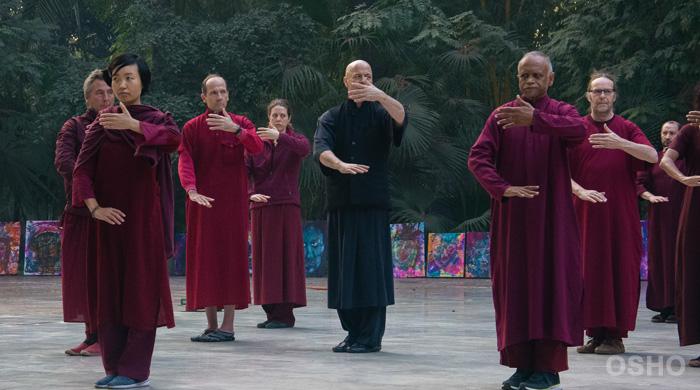
Always listen to the natural, instinctive mechanism within you. It is almost always correct.
Beautiful words, great indicators and pointers. Prayatna shaithilya -- relaxation of effort. The first thing, if you want to attain to the posture -- what Patanjali calls a posture -- is to be comfortable & steady. The body in such deep stillness that nothing moves, the body so comfortable that the desire to move it disappears. And when you start enjoying the feeling of comfort, it becomes steady. With the change of your mood, the body changes; with the change of the body, your mood changes.
Have you ever noticed watched when you go to a theater, a movie how many times you change your posture? Have you tried to correlate it? If there is something very sensational going on on the screen, you cannot sit leaning against the chair. You sit up, your spine becomes straight. If something boring is going on and you are not excited, you relax. Now your spine is no longer straight. If something very uncomfortable is going on, you go on changing your posture. If something is really beautiful there, even your eye-blinking stops. Even that much movement will be a disturbance. With no movement, you become completely steady, restful, as if the body has disappeared.
The first thing to attain to this posture is relaxation of effort, which is one of the most difficult things in the world to attain -- most simple, and yet most difficult. Simple to attain, if you understand. Very difficult to attain if you don't understand. It is not a question of practice; it is a question of understanding.

In the West, Émile Coué has discovered a particular law he calls the Law of the Reverse Effect. It is one of the most fundamental things in human mind. There are things, if you want to do them, please, don't try to do them. Otherwise, the reverse will be the effect.
For example, you are not falling asleep. Don't try to fall asleep. If you try, sleep will be farther and farther away. If you try too much it will be impossible to sleep, because your every effort goes against sleep. Sleep comes only when there is no effort. When you are not bothered about sleep, you are just lying down on your pillow, just enjoying the coolness of the pillow, or the warmth of the blanket, the dark, velvety surrounding encompassing you, you are just enjoying it, nothing else, you are not even thinking about sleep. Some dreams pass through the mind, and you look at them in a very, very sleepy way, not interested too much even in them, because if interest arises sleep disappears. You just, somehow, remain aloof, just enjoying, resting, not seeking any end -- sleep comes.
If you start trying so that sleep should come, once the "should" enters it is almost impossible. Then you can remain awake the whole night. If you fall asleep, that may be only because you get tired of the effort. When effort is no longer there -- because you have done everything and you give up -- then sleep comes in.
Émile Coué discovered, just in this century, the law of reverse effect. Patanjali must have known it, almost five thousand years before. He says: prayatna shaithilya -- relaxation of the effort. You would have assumed just the reverse -- that very much effort should be made in order to attain to the posture. Patanjali says, "If you make too much effort it will not be possible. No-effort allows it to happen."
Effort should be relaxed completely, because effort is part of the will and will is against surrender. If you try to do something, you are not allowing God, or Existence, to do it. When you give up and say, "Okay, let thy will be done. If you are sending sleep, perfectly good. If you are not sending sleep, that too is perfectly good. I have no complaints to make; I am not grumbling about it. You know better. If it is needful to send sleep to me, send it. If it is not needed, perfectly good -- don't send it. Please, don't listen to me! Your will should be done." This is how one relaxes effort.
Effortlessness is a great phenomenon. Once you know it, many millions of things become possible to you. Through effort the market; through effortlessness the God. Through effort you can never reach to nirvana -- you can reach lo New Delhi, but not to nirvana.
Through effort you can attain things of the world. They are never attained without effort, remember. So if you want to attain more riches, don't listen to me, because then you will be very, very angry with me. You will say, "This man disturbed my whole life. He was saying, 'Stop making efforts, and many things will become possible,' and I have been sitting and waiting, and the money is not coming, and nobody is coming with an invitation, saying, 'Please come and become the president of the country.'" And nobody is going to come. These foolish things are attained by effort.
If you want to become a president, you have to make a mad effort for it. Unless you go completely mad you will never become a president of a country. Remember, you have to be more mad than other competitors, because you are not alone there. Great competition exists; many others are trying also. In fact everybody else is trying to reach the same place. Much effort is needed. Don't try in a gentlemanly way, otherwise you will be defeated. No gentlemanliness is needed there. Be rude, violent, aggressive. Don't bother about what you are doing to others. Stick to your program. Even if others are killed for your power politics, let them be killed. Make everybody a ladder, a step. Go on walking on people's heads; only then do you become a president or a prime minister. There is no other way.
The ways of the world are the ways of violence and will. If you relax will, you will be thrown out, somebody will jump on you. You will be made a means. If you want to succeed in the ways of the world, never listen to people like Patanjali. Then it is better to read Machiavelli, Chanakya -- cunning, most cunning people of the world. They give you advice how to exploit everybody and not allow anybody to exploit you, how to be ruthless, without any compassion, just violent. Only then can you reach to power, prestige, money, things of the world. But if you want to attain to things of God, just the opposite is needed: no-effort. Effortlessness is needed, relaxation is needed.
It has happened many times....
I have many friends in the world of politics, in the world of money, market. They come to me and they say, "Teach us, somehow, to relax. We cannot relax." A minister used to come to me, and he always came with the same problem: "I cannot relax. Help me."
I told him, "If you really want to relax you will have to leave politics. This ministership cannot go with relaxation. If you relax, you lose. So you decide. I can teach you relaxation, but don't be angry then, because these two things cannot be possible together. So first be finished with your politics; then come to me."
He said, "That is not possible. I have come to learn relaxation so that I can work hard and become chief minister. Because of these tensions in the mind and continuous worries, I cannot work hard. And others -- they go on working. They are great competitors, and I am losing the battle. I have not come to leave politics."
Then I said, "Then, please, don't come to me. Forget about me. Just be in politics, get really tired, bored, be finished with it; then come to me."
Relaxation is a totally different dimension, just the contrary. You move in the world with will. Nietzsche has written a book, The Will To Power. That is the right scripture to read: The Will To Power.
Patanjali is not "will to power." It is surrender to the whole. The first thing: prayatna shaithilya -- effortlessness. You should simply feel comfortable. Don't make much effort about it, let the feeling do the work. Don't bring the will in. How can you force comfort on yourself? It is impossible. You can be comfortable if you allow comfort to happen. You cannot force it.
How can you force love? If you don't love a person, you don't love a person. What can you do? You can try, pretend, force yourself, but just the reverse will be the result. If you try to love a person, you will hate him more. The only result will be, after your efforts, that you will hate the person, because you will take revenge. You will say, "What type of ugly person is he, because I am trying so much to love and nothing happens?" You will make him responsible. You will make him feel guilty, as if he is doing something. And, he is not doing anything.
Love cannot be willed, prayer cannot be willed, posture cannot be willed. You have to feel these things. Feeling is a totally different thing than willing.
Buddha becomes a buddha not by will. He tried for six years continuously through will. He was a man of the world, trained as a prince, trained to become a king of a kingdom. He must have been taught all that Chanakya had said. Chanakya is the Indian Machiavelli, and even a little more cunning than Machiavelli because Indians have a quality of mind to go to the very roots. If they become Buddha, they really become Buddha. If they become Chanakya you cannot compete with them. Wherever they go, they go to the very root. Even Machiavelli is a little immature before Chanakya. Chanakya is absolute.
Buddha must have been taught; every prince has to be taught. Machiavelli's greatest book is named The Prince. Buddha must have been taught all the ways of the world because he was going to have to tackle with other people in the world. He has to cling to his power. But then he left. And, it is easy to leave the palace; it is easy to leave the kingdom. But, it is difficult to leave the training of the mind.
For six years he tried through the will to attain to God. He did whatsoever is humanly possible -- even inhumanly possible. He did everything. He left nothing undone. Nothing happened. The more he tried, the more he felt himself to be further away. In fact, the more he made the will and made the efforts through it, the more he felt that he was deserted -- "God is nowhere." Nothing was happening.
Then one evening he gave up. That very night he became enlightened. That very night prayatna shaithilya, relaxation of the effort, happened. He became a buddha not by willpower, he became a buddha when he surrendered, when he gave up.
I teach you meditations and I go on telling you, "Make every effort that you can make," but always remember, this emphasis to make all the efforts is just so that your will is torn apart, so that your will is finished and the dream with the will is finished. You are so fed up with will that one day, you simply give up. That very day you become enlightened.
But don't be in a hurry, because you can give up right now without making the effort and that will not help. That won't help. That will be a cunning thing, and you cannot win with God by being cunning. You have to be very innocent. The thing has to be allowed to happen, without your ego, without making an effort.
These are simply definitions. Patanjali is not saying, "Do it!" He is simply defining the path. If you understand it, it will start affecting you, your way, your being. Absorb it. Let it be saturated deep in you. Let it flow with your blood. Let it become your very marrow. That's all. Forget Patanjali. These sutras are not to be crammed. They should not be made part of your memory. They should become part of you. Your total being should have the understanding, that's all. Then forget about them. They start functioning.
Two points. First, relax effort. Don't force it. Allow it to happen. It is like sleep; allow it to happen. It is a deep let-go, allow it to happen. Don't try to force it, otherwise you will kill it. Second thing is: while the body is allowing itself to be comfortable, to settle in a deep rest, your mind should be focused on the unlimited.
The mind is very clever with the limited. If you think about money, the mind is clever; if you think about power, politics, the mind is clever; if you think about words, philosophies, systems, beliefs, the mind is clever. These are all limited. If you think about God, suddenly there is a vacuum. What can you think about God? If you can think, then that God is no longer God; it has become limited. If you can think of God as Krishna, it is no longer God. Krishna may be standing there singing on his flute, but there is a limitation. If you think of God as Christ -- finished. God is no longer there; you have made a limited being out of it. Beautiful, but nothing to be compared with the beauty of the unlimited.
There are two types of God. One, the God of belief -- Christian God, Hindu God, Mohammedan God. And second, the God of reality, not of belief. That one is unlimited. If you think about the Mohammedan God you will be a Mohammedan, but not a religious man. If you think about the Christian God you will be a Christian, but not a religious man. If you just bring your mind to God himself, you will be religious -- no longer Hindu, no longer Mohammedan, no longer Christian.
And that God is not a concept! A concept is a toy your mind can play with. The real God is so vast... That God plays with your mind, not your mind playing with God. Then God is no longer a toy in your hands; you are a toy in the hands of the divine. The whole thing has totally changed. Now you are no longer controlling. You are no longer in control. God has taken possession of you. The right word is "to be possessed," to be possessed by the infinite.
It is no longer a picture before your mind's eye. No, there is no picture. A vast emptiness. And in that vast emptiness you are dissolving. Not only God's definition is lost, boundaries are lost; when you come in contact with the infinite, you start losing your boundaries. Your boundaries become vague. Your boundaries become less and less certain, more flexible; you are disappearing like smoke in the sky. A moment comes, you took at yourself, and you are not there.
So Patanjali says two things: no effort, and consciousness focused on the infinite. That's how you attain to asana. And this is only the beginning, this is only the body. One has to go deeper.
Death to The Limited turiya
58 d
288

Tato dwandwa anabhighatah.
When the body is really in comfort, restful, the flame of the body is not wavering -- it has become steady, there is no movement -- suddenly, as if time has stopped, no winds blowing, everything still and calm and the body has no urge to move; it is settled, deeply balanced, tranquil, quiet, collected. In that state, dualities, and the disturbances caused by dualities, disappear.
Have you observed that whenever your mind is disturbed, your body fidgets more and you cannot sit silently? Or, whenever your body is fidgeting, your mind cannot be silent? They are together. Patanjali knows well that body and mind are not two things. You are not divided in two -- body and mind. The body and mind are one thing. You are psychosomatic: you are bodymind. The body is just the beginning of your mind and the mind is nothing but the end of the body. Both are two aspects of one phenomenon; they are not two. So whatsoever happens in the body affects the mind and whatsoever happens in the mind affects the body. They run parallel. That's why so much emphasis on the body, because if your body is not in deep rest, your mind also cannot be at rest.
It is easier to start with the body because that is the outermost layer. It is difficult to start with the mind. Many people try to start with the mind, and fail, because their body will not cooperate. It is always best to begin from A, B, C, and go slowly, in the right sequence. The body is the first, the beginning. One should start with the body. If you can attain to tranquility of the body, suddenly you will see the mind is falling in order.
The mind moves to the left and to the right, swings like a pendulum of an old grandfather clock, continuously, right to left, left to right. If you observe a pendulum, you will come to know something about your mind. When the pendulum is moving towards the left, visibly it is going to the left, but invisibly it is gaining momentum to go to the right. When the eyes say that the pendulum is going to the left, that very movement towards the left creates the momentum, the energy, for the pendulum to go to the right again. When it is going to the right it is again earning energy, gaining energy to go to the left.
So whenever you are in love, you are gaining energy to hate. Whenever you are in hate, you are gaining energy to love. Whenever you are feeling happy, you are gaining energy to feel unhappy. Whenever you are feeling unhappy, you are gaining energy to feel happy. This is how the momentum continues.
I have heard...

When India became independent in 1947, there was a beautiful elephant in Delhi. Before independence, the elephant was used in wedding processions and other things like that, but after the independence even political parties started using the elephant in their rallies, processions, protests. The elephant had something like a flaw. The legs on his left side were a little shorter, so when the elephant walked he would lean towards the left.
Communists were very happy, Socialists were very happy -- the elephant was leftist. So they paid money to the owner to borrow the elephant. They clapped, and their followers threw flowers on the elephant. Really, this is how an elephant should be -- a leftist. Of course, it was very difficult for the elephant to walk, but who bothers about the elephant? It was difficult because two legs were shorter, and the whole burden was falling on the left legs. An elephant carries much weight; it was difficult. Tons of weight have to be carried. But flowers, garlands were showered on the elephant. He was well received. Photographs were published in newspapers, and that this is a communist elephant.
Seeing that, that communists and socialists and other leftists have a beautiful elephant, even rightists, when their time of procession and rally came, they also borrowed the same elephant -- not knowing that the elephant is a leftist elephant. When the elephant went with the rightists they were very angry. This elephant was against them: he should lean towards the right. They started throwing old shoes, tomatoes, banana peels, and all rotten things. In short, they gave him a VIP treatment. They were very angry. They were angry at the owner also, and they told the owner, "Next time we take it, you make arrangements."
So the owner had to make arrangements because he lived on the elephant; that was his only earning. So he made big shoes. Then whenever it was a rightist procession he would put on the big shoes, and the animal would lean towards the right; and whenever it was a leftist procession, he would remove the shoes. Nobody bothered about the elephant. One day the elephant fell, just in Connaught Place, because it was too much to carry that big load with shoes. And it was so uncomfortable -- it was not an asana. It was really uncomfortable. He fell and died.
This is the situation of your mind also -- continuously moving from one extreme to another -- from leftist to rightist, from rightist to leftist -- never in the middle. To be in the middle is really to be. Both extremes are burdensome because you cannot be comfortable. In the middle is comfort, because in the middle the weight disappears. Exactly to be in the middle -- and you become weightless. Move to the left and the weight enters; move to the right and the weight enters. And go on moving... the farther away you move from the middle, the more weight you will have to carry. You will die someday in some Connaught Place.
Be in the middle. A religious man is neither leftist nor rightist. A religious man does not follow the extremes. He is a man of no extreme. And when you are exactly in the middle -- your body and your mind both -- all dualities disappear, because all dualities are because you are dual, because you go on leaning from this side to that.
Tato dwandwa anabhighatah.
And when there is no duality, how can you be tense? How can you be in agony? How can you be in conflict? When there are two within you, there is conflict. They go on fighting, and they will never leave you in rest. Your home is divided; you are always in a civil war. You live in a fever. When this duality disappears you become silent, centered, in the middle. Buddha has called his way majjhim nikaya -- the middle way. He used to tell his disciples, "The only thing to be followed is: Always be in the middle and don't go to the extremes."
There are extremists all over the world. Somebody is chasing women continuously -- a Romeo, a Majnu -- continuously chasing women. And then someday he becomes frustrated with all the chasing. Then he leaves the world; then he becomes a sannyasin. Then he teaches everybody to be against woman and goes on saying, "Woman is hell. Be alert! Only woman is the trap." Whenever you find a sannyasin talking against women you can know he must have been a Romeo before. He is not saying anything about women; he is saying something about his past. Now one extreme finished, he has moved to another extreme.
Somebody is mad after money. And many are mad, just obsessed, as if their whole life is to make bigger and bigger piles of money. That seems to be their only meaning to be here, that when they go to death they will leave big piles -- bigger than the others. That seems to be their whole significance. When such a man becomes frustrated he will go on teaching, "Money is the enemy." Whenever you find somebody teaching that money is the enemy, you can know that this man must have been mad after money. Still he is mad, but on the opposite extreme.
A really balanced man is not against anything, because he is not for anything. If you come and ask me, "Are you against money?" I can only shrug my shoulders. I am not against, because I have never been for it. Money is something, a utility, a medium of exchange. There is no need to be mad about it either way. Use it if you have it. If you don't have it, enjoy the nonhaving of it. If you have it, use it. If you don't have it, then enjoy that state. That's all a man of understanding will do. If he lives in a palace, he enjoys. If the palace is not there, then he enjoys the hut. Whatsoever is the case, he is happy and balanced. He is neither for the palace nor against it. A man who is for, or against, is lopsided; he is not balanced.
Buddha used to say to his disciples, "Just be balanced, and everything else will become possible of its own accord. Just be in the middle." And that is what Patanjali says when he is talking about the posture. The outer posture is of the body, the inner posture is of the mind. Both are connected. When the body is in the middle, restful, steady, the mind is also in the middle, restful, steady.
When the body is in rest, body-feeling disappears. When the mind is in rest, mind feeling disappears. Then you are only the soul, the transcendental, which is neither the body nor the mind.
Between body and mind, breath is the bridge. These three things have to be understood. Body posture, mind merging into the infinite, and the bridge that joins them together. These three have to be in a right rhythm. Have you observed? Whenever your mind changes, the breathing changes. The reverse is also true. Change your breathing, and your mind changes.
When you are deep in sexual passion have you watched how you breathe? Breathing is very nonrhythmic, feverish, excited. If you continue breathing that way you will be tired soon, exhausted. It will not give you life. In fact, in that state you are losing some life energy. When you are calm and quiet, feeling happy, suddenly one morning or evening looking at the stars, nothing to do, a holiday, just resting -- watch the breathing. The breathing is so peaceful. You cannot even feel it, whether it is moving or not. When you are angry, watch. The breathing changes immediately. When you feel love, watch. When you are sad, watch. With every mood the breathing has a different rhythm. It is a bridge.
When your body is healthy, breathing has a different quality. When your body is ill, the breathing is ill. When you are perfectly in health you completely forget about breathing. When you are not in perfect health the breathing comes again and again to your attention. Something is wrong.
These words breath control is not good; it is not a right rendering of the word pranayam. Pranayam never means breath control. It simply means the expansion of the vital energy. Prana-ayam: prana means the vital energy hidden in breath, and ayam means infinite expansion. It is not breath control. The very word control is a little ugly, because the very word control gives you the sense of being a controller. And with that the will enters, the ego comes in. Pranayam is totally different. It is the expansion of vitality, breathing in such a way that you become one with the breathing of the whole; breathing in such a way that you are not breathing in your own individual way, you are breathing with the whole.
It happens sometimes. Two lovers sitting by each other's side holding hands -- if they are really in love they will suddenly become aware that they are breathing simultaneously, they are breathing together. They are not breathing separately. When the woman inhales, the man inhales. When the man exhales, the woman exhales. Try it. Sometime, suddenly become aware. If you are sitting with a friend, you will be breathing together. If the enemy is sitting there and you want to get rid of him, or some bore is there and you want to get rid of him, you will be breathing separately; you will never breathe in rhythm.
Sit with a tree. If you are silent, enjoying, delighting, suddenly you will become aware that the tree, somehow, is breathing the same way you are breathing. And there comes a moment when one feels that one is breathing together with the whole, one becomes the breath of the whole, one is no longer fighting, struggling, one is surrendered. One is with the whole -- so much so, that there is no need to breathe separately.
In deep love people breathe together; in hatred never. I have a feeling that if you are inimical to somebody, he may be a thousand miles away.... This is just a feeling because no scientific research exists for it, but someday the scientific research is possible. But I have a very deep feeling that if you are inimical to somebody, he may be in America and you may be in India, you will breathe separately, you cannot breathe together. And your lover may be in China, you may be here in Poona -- you may not even have the address with you where your lover is -- but you will breathe together. This is how it should be, and I know it is that way, but no scientific proof exists. That's why I say this is just my feeling. Someday, somebody will prove the scientific thing also.
There are a few proofs which suggest.... For example, in Russia there have been a few experiments about telepathy. Two persons, separate, far away, hundreds of miles away: one person is the broadcaster, another is the receiver in telepathy. At a fixed time, twelve in the afternoon, one starts sending messages. He makes a copy of a triangle, concentrates on it, and sends the message that "I have made a triangle." And the other person tries to receive, just remains open, feeling, groping -- what message is coming. And scientists have observed that if he receives the triangle then they both are breathing in the same way; if he misses the triangle then they are not breathing in the same way.
In deep breathing together, something of deep empathy arises; you become one -- because breath is life. Then feeling can be transferred, thoughts can be transferred.
If you go to meet a saint, always watch his breathing. If you feel sympathetic, in deep love with him, watch your breathing also. You will suddenly feel that the nearer you come to him, your feeling, your breathing, fall with his system of breathing. Aware, unaware, that is not the point; but it happens.
This has been my observation. If I see that somebody has come and not knowing anything at all about breathing he starts breathing with me, I know he is going to become a sannyasin, and I ask him. If I feel that he is not breathing with me I forget about asking; I will have to wait. And sometimes I have tried, just for an experiment I have asked, and he will say, "No, I am not ready." I knew it, that he is not ready -- just to test whether my feeling is going right, whether he is in sympathy with me. When you are in sympathy you breathe together. It simply happens by itself, some unknown law functions.
Pranayam means to breathe with the whole. That is my translation, not the control of the breath, but to breathe with the whole. It is absolutely uncontrolled! If you control it, how can you breathe with the whole? So to translate pranayam as breath control is a misnomer. It is not only incorrect, inadequate, it is certainly wrong. Just the opposite is the case.
To breathe with the whole, to become the breath of the eternal and the whole is pranayam. Then you expand. Then your life energy goes on expanding with trees and mountains and sky and stars. Then a moment comes, the day you become a buddha. You have completely disappeared. Now you no longer breathe, the whole breathes in you. Now your breathing and the whole's breathing are never separate. They are always together. So much so that it is now useless to say that "This is my breath."
When you breathe in, there comes a moment when the breath has completely gone in and for a certain second breathing stops. The same happens when you exhale. You breathe out: when the breath is completely released, for a certain second, again, breathing stops. In those moments you face death, and to face death is to face God. To face death is to face God -- I repeat it -- because when you die, God lives in you. Only after the crucifixion is there resurrection. That's why I say Patanjali is teaching the art of dying.
When the breathing stops, when there is no breathing, you are exactly in the same stage as you will be in when you will die. For a second you are in tune with death -- breathing has stopped. The whole of The Book of Secrets, Vigyan Bhairav Tantra, is concerned with it -- emphatically concerned with it -- because if you can enter into that stoppage, there is the door.
It is very subtle and narrow. Jesus has said again and again, "Narrow is my way. Straight, but narrow, very narrow." Kabir has said, "Two cannot pass together, only one." So narrow that if you are a crowd inside, you cannot pass. If you are even divided in two -- left and right -- you cannot pass. If you become one, a unison, a harmony, then you can pass.
Narrow is the way. Straight, of course; it is not a crooked thing. It goes directly to the temple of the divine, but very narrow. You cannot take anybody with you. You cannot take your things with you. You cannot take your knowledge. You cannot take your sacrifices. You cannot take your woman, your children. You cannot take anybody. In fact you cannot take even your ego, even yourself. You will pass through it, but everything else other than your purest being has to be left at the door. Yes, narrow is the way. Straight, but narrow.
And these are the moments to find the way: when the breath goes in and stops for a second; when the breath goes out and stops for a second. Attune yourself to become more and more aware of these stops, these gaps. Through these gaps, God enters you like death.
Somebody was telling me, "In the West, we don't have any parallel like Yama, the god of death." And he was asking me, "Why do you call death a god? Death is the enemy. Why should death be called a god? If you call death the devil it is okay, but why do you call it a god?"
I said, "We call it a god very consideredly because death is the door to God. In fact death is deeper than life -- life that you know. Not the life that I know. Your death is deeper than your life, and when you move through that death you will come to a life which doesn't belong to you or me or to anybody. It is the life of the whole. Death is the God.
A whole Upanishad exists, Kathopanishad. The whole story, the whole parable is that a small child is sent to Death to learn the secret of life. Absurd, patently absurd. Why go to Death to learn the secret of life? Looks like a paradox, but it is reality. If you want to know life -- real life -- you will have to ask Death, because when your so-called life stops, only then real life functions.
So when you inhale, hold it a little longer so that the gate can be felt. When you exhale it, hold it outside a little longer so that you can feel the gap a little more easily; you have a little more time.
Or, anytime, stop the breath suddenly. Walking on the road, stop it -- just a sudden jerk, and death enters. Anytime you can stop the breath suddenly, anywhere, in that stopping, death enters.
The more you do these stoppages, these gaps, the more the gate becomes a little wider and you can feel it more. Try it. Make it a part of your life. Whenever you are not doing anything, let the breath go in... Stop it. Feel there; somewhere there is the door. It is dark, you will have to grope. The door is not immediately available. You will have to grope, but you will find it.
Whenever you will stop the breath, thoughts will stop immediately. Try it. Suddenly stop the breath and immediately there is a break. Thoughts stop because thoughts and breaths both belong to life -- this so-called life. In the other life, the divine life, breathing is not needed. You live; there is no need to breathe. Thoughts are not needed. You live & thoughts are not needed. Thoughts and breath are part of the physical world. No-thought, no-breath, are part of the eternal world.
Patanjali says these three: stopping inside, stopping outside, stopping suddenly. And there is a fourth which is internal. That fourth has been emphasized by Buddha very much. He calls it Anapanasati Yoga. He says, "Don't try to stop anywhere. Simply watch the whole process of breath." The breath coming in -- you watch, don't miss a single point. The breath is coming in -- you go on watching. Then there is a stop, automatic stop, when the breath has entered you -- watch the stop. Don't do anything; simply be a watcher. When the breath starts for the outer journey -- go on watching. When the breath is completely out, it stops -- watch that stop also. The breath goes on coming in, going out, coming in, going out -- you simply watch. This is the fourth. And just by watching, you become separate from the breath.
When you are separate from the breath you are separate from the thoughts. In fact, the breath is the parallel process in the body to thoughts in the mind. Thoughts move in the mind, breath moves in the body. They are parallel forces, two aspects of the same coin. Patanjali also refers to it, although he has not emphasized the fourth. He simply refers to it, but Buddha has completely focused his whole attention on the fourth; he never talks about the three. The whole Buddhist meditation is the fourth.
That is of witnessing.
But Patanjali is really very scientific. He never uses the fourth, but he says that it is beyond the three. Must be Patanjali didn't have as beautiful a group of disciples as Buddha had. Patanjali must have been working with more body oriented people, and Buddha was working with more mind oriented people. He says that the fourth goes beyond the three, but he himself never uses it -- he goes on saying all that can be said about Yoga. That's why I say he is the alpha and the omega, the beginning and the end: he has not left out a single point. Patanjali's Yoga Sutras cannot be improved.
There are only two persons in the world who created a whole science alone. One is Aristotle, in the West, who created the science of logic -- alone, with nobody's cooperation. And for these two thousand years nothing has been improved; it remains the same. It remains perfect. Another is Patanjali, who created the whole science of Yoga -- which is many times, a million times greater than logic -- alone.
And it could not be improved; it has not been improved; and I don't see any point how it can be improved any day. The whole science is there, perfect, absolutely perfect.
Enough for today.
fetched in 0.6406 sec, IP =172.69.58.234, y=1