-
Expand this whole thread (2 messages)
Breath - The Vital Bridge Connecting the Body, Min... turiya
35 h
12
Turiya Files
turiya
35 h
12
Turiya Files
Breath - The Vital Bridge Connecting the Body, Mind & Universe

Osho viewed breath as the vital bridge connecting the body, mind, and the universe, essential for life and consciousness, suggesting that deep, natural breathing releases suppressed emotions and brings vitality, while shallow breathing dulls life; his techniques emphasize using breath (like in Dynamic Meditation) to feel the body's unity, explore inner gaps in breath, and ultimately merge with existence, transforming body-mind tension into spiritual awareness and healing.
Core Concepts:
- Bridge to Existence: Breath links your physical body to the universe and your inner world; shallow breath blocks aliveness, while deep breath opens it.
- Body-Soul Unity: Osho taught that the body and soul aren't separate but a single, living unit; the body is the visible soul, the soul the invisible body, both needing acceptance and love.
- The Inner Fire: Deep breathing fuels the "inner fire" of life; shallow breathing makes life dull, while deep, conscious breathing keeps you truly alive.
- Gaps in Breath: Watching the natural breath reveals gaps between inhale and exhale, which are doorways to deeper consciousness, where the self can experience stillness beyond the mind.
How It Works in Meditation:- Dynamic Meditation: Uses intense, chaotic breathing (Stage 1) to break patterns, followed by catharsis, mantra, silence, and dancing, releasing repressed energy.
- Breath Awareness: Techniques involve simply observing the natural rhythm, feeling the body's response, and using the outgoing breath to "drop a bucket into the universe".
- Emotional Release: By breathing into discomfort, you can process and release emotions stuck in the body, fostering freedom and joy.
Key Takeaway:Through conscious breathwork, you heal the body-mind split, release emotional blocks, and experience yourself as part of the one living universe, moving from effort to effortless presence
-
No technique, no effort — just awareness.
turiya
9 h
9
This is a reply to # 2,468,671
No technique, no effort — just awareness.
Osho's vision is to create a 'new' man, one who becomes a master of his own mind, one who can use the mind to create greater values of truth, beauty & joy. To use the mind to create a more loving world & not for destructive purposes. Osho shares the simplest method of meditation: Simply watching your breath.
Click Image"Universities have to wake up.
Every university has to fight, and every intelligent person who is around the world doing any kind of creative work has to join hands and create such an atmosphere around the earth that the politicians start feeling ashamed of what they are doing, that they start feeling guilty. And it is not difficult. When it is a question of life and death [because of the threat of nuclear holocaust], it can be done. Then everything is easy. And I have enough sannyasins around the world, whom I can make available to every university, to every college. And we can train people, more people; they can send their people and we can train them. And there is no need to teach all kinds of meditations, just one method I can choose which can be the simplest, easiest, and applicable to all. And just that one method can be spread all over the world."
WHICH MEDITATION COULD THAT BE?"It is what I call witnessing the breath. It is a very simple method. Just in your silent moments when you are sitting, or traveling in a train or in a plane, close your eyes and watch your breath. Going in, you go with it; coming out, you come outward.
As you go in, come out, you will become aware of two points. As you go in, there is a small, fragment of a moment when the breath stops before it starts moving outward. And the same happens outside: before it has moved outward, for a split second the breathing stops, before it again moves in. These two points are very significant, because as you become more and more aware, these points will become more and more clear, longer. One breath goes in and then there is a pause, breathing stops. And in that pause there is so much beauty, so much bliss. And the same happens outside; again the breathing stops. And these gaps go on becoming bigger and bigger, bigger and bigger.
There comes a time, which has been calculated for almost ten thousand years, and has been found to be exactly the same by all meditators who have used the method... the pause is of forty-eight minutes. You have arrived home. Then all that meditation can give to you will be available to you.
Now this is the simplest method that I have found. I have tried all the methods that have been tried down the ages by all the traditions and I have made my own methods. But this seems to be the simplest - and done without anybody knowing about it. Somebody can be sitting by your side and he will not know what you are doing. It need not be done at a particular time, you can do it any time. You can do it as many times in the day as is possible - sometimes just for two minutes; sometimes for longer periods, sometimes just for one or two minutes. Sometimes you are not feeling sleepy and you are just lying on the bed; don't bother about sleep, just do the method. It will do both jobs; it will give you a deep meditative silence, and just by doing it... you will only know in the morning when you wake up that somewhere sleep came in.
But the strange thing is, if you meditate and fall into sleep, you will wake up meditating. That means in a subtle way, in your deep unconscious, the method continued; your whole night became a meditation. Now that is the longest period you can get. And your sleep will be of a different quality - more silent, more relaxed, more rejuvenating.
And for six and eight hours, subliminally the witnessing continues. In the morning when you become aware that you are awake, you will be surprised: you are witnessing your breath.
This is the simplest method which can be spread to all kinds of people, to all ages of people. The smallest child who can understand this much language can do it. And the oldest man, who is just on his deathbed, can do it, because it does not need any physical exercise, does not need any physical posture. And if the man who is on the deathbed can go on doing it and die doing it, he will have his best experience of life, in death. And he will wake up in the new womb witnessing his breath. That continuity even goes on when your consciousness leaves one body and moves into another womb. Its riches are innumerable.
(Tape side C)
But every scientist compulsorily must be meditative, and then it is only a question of twenty years. till the new generation takes over and we can create the science of the inner. Then science has two dimensions: the science of the outer and the science of the inner. And all these hocus-pocus religions will disappear of their own accord; there is no need even to do anything about them."
Link: The Last Testament Vol.4, Chapter 2 (Page 16 of 277)
-
Crazy For You by Miten
 turiya
4 d
16
Turiya Files
turiya
4 d
16
Turiya Files
Crazy For You by Miten
Nov 18, 2025
Flowerrain
-
Expand this whole thread (5 messages)
What is new ? Vulcanel 83 d 102 Iodine VWTWhat is new ?
To the old-timers of this forum from 18 years ago or so, .... how are you ?? !!!! :)-
Well this is crazy. Happened to pop into curezone...
drhii
6 d
41
This is a reply to # 2,468,620
Well this is crazy. Happened to pop into curezone after, have no idea how long. A decade plus years? Dunno. But saw this message from vulcanel and thought to reply. Was also curious about thi ....
Well this is crazy. Happened to pop into curezone after, have no idea how long. A decade plus years? Dunno. But saw this message from vulcanel and thought to reply. Was also curious about this site. And the Iodine group. Looks like no one else dropped by. Oh well... time ticks on. Not sure if this message will be posted. A lot of extra click boxes to send a post. Never saw these the last time I was on CZ. Also had to relog in as password retrieval did not work and system admin never approved a return. So a new account. -
Spent the last many minutes rooting around cz afte...
drhii
6 d
37
This is a reply to # 2,468,620
Spent the last many minutes rooting around cz after not having been here for god knows how long. The date/time stamps are not tracking, not logical, so is impossible to get a sense of who’s who f ....
Spent the last many minutes rooting around cz after not having been here for god knows how long. The date/time stamps are not tracking, not logical, so is impossible to get a sense of who's who from when? Was looking around to see if any old names still post and given the date/time stamps on messages being fractured, impossible to tell.
Was poking around to see what may have happened to:
newport
spudlydoo
wombat
trapper
And of course saw a msg from vulcanel that I vaguely recall the username.
Soooo, anyone comment on what happened to these user/peeps? I do see trapper all over the place and recall when I dropped off many moons ago, there was an avalanche of jewish hatred and Conspiracy stuff that seemed to erupt. And from what I can tell... that continues? Seems like an awful long time to keep that up but as I am recalling, there was a lot of back and forth from users getting on each other. A bummer because the newness, the learning and discovery of the Iodine people was pretty cool. At the time.
Anywayz... Am curious if anyone has comments on knowledge about the users I mentioned. Did people pick up and go somewhere else?
-
What is new ?_
turiya
5 d
38
This is a reply to # 2,468,665
What is new ?_

Newport, as you may have known, had a prosthetic of some sort. I believe he went off to meet the Big Guy in the Sky, or perhaps it was Sauron.
I was aware that Trapper had an issue with his heart. His obsession with anything & everything Jewish perhaps had finally come to its ultimate endpoint.
Not certain what happened to Wombat. She was a good one for sure.
Golfeggs showed up a couple months ago to say hello. He said he just stopped by to find something. I know he has a had a Facebook acount for some time now.
Most have probably migrated to some social media platform of some kind.
Be & stay well.
-
Ah... thank you for the response. I came here to ...
drhii
4 d
25
This is a reply to # 2,468,668
Ah... thank you for the response. I came here to check on something too and saw vulcanel msg reaching out. Ended up poking around, reminding myself of the people and culture. A little of that c ....
Ah... thank you for the response. I came here to check on something too and saw vulcanel msg reaching out. Ended up poking around, reminding myself of the people and culture. A little of that came back.
Figured newport had moved on, up. Read his stuff years ago. And yes, wondered about wombat as she was a good one. Dunno who Golfeggs is. Had come back years ago andwas gobsmacked by thistrapper and jews. Never saw any of that before. Read backwards just now... decades of hatred it looks like?? Man... curezone let that continue? Don't want to know.
Anywayz, other personalities coming back like spudlydoo, ginagirl. Oh well. Time passes. Tx for mentioning what you know.
-
Ah... thank you for the response. I came here to ...
drhii
4 d
25
-
What is new ?_
-
Well this is crazy. Happened to pop into curezone...
drhii
6 d
41
-
Expand this whole thread (5 messages)
OSHO: I Leave You My Dream
turiya
18 d
70
Turiya Files
OSHO: I Leave You My Dream
Poster 9 Years ago
OSHO International
DESCRIPTION:
Over time Osho had his disciples well prepared for his departure. "It has been always a great moment in the lives of disciples when the master leaves the body. And it is possible because the master can know when he is going to leave the body – he can collect all those who have been his fellow travelers moving in the same way. Now that he is leaving he would like to give you his last gift."
.
This video shows the events and celebrations around his departure. Amrito, Osho’s long term personal physician, shares in a beautiful statement how Osho leaves the body and shares a message for his people: “I am preparing my people to live joyously, ecstatically. So when I am not in my body, it won't make any difference to them. They will still live the same way – and maybe my death will bring them more intensity.” "My presence here will be many times greater without the burden of my tortured body. Remind my people that they will feel much more, they will know immediately."
.
At 23:22 Amrito is disrupted by a rooster crowing - an hourly reminder at the Osho International Meditation Resort, installed on Osho's request as an hourly reminder to stay aware.
.
After decades of speaking, Osho had created in the last year of his life the "Meeting of the White Robed Brotherhood" – the evening meditation event. He taught his people that this meditation will continue without his daily evening talks, without his speaking - by introducing the recorded videos of his talks as center part of this evening meditation. Now as a second step he showed that the meditation will continue without his physical presence.
.
Osho himself had created the marble inscription: "OSHO Never Born, Never Died - Only Visited this Planet Earth between Dec 11 1931 - Jan 19 1990" already months before his departure.
-
OSHO: "I Have Been Poisoned by Ronald Reagan’s Ame...
turiya
14 d
69
This is a reply to # 2,468,652
OSHO: "I Have Been Poisoned by Ronald Reagan’s American Government"
Osho: I Have Been Poisoned by Ronald Reagan’s American Government Government sponsored, or initiated poisoning to incite fear is not a new phenomenon. The poisoning of a former Russian spy and his daughter in the UK is not a first – poisoning se ... [Image Embedded Here] [This message is long. Retrieve the whole message] -
OSHO - A Rebellious Child
turiya
11 d
51
This is a reply to # 2,468,652
OSHO - A Rebellious Child

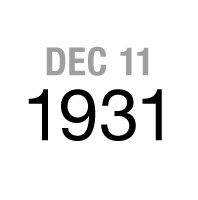
Osho is born in Kuchwada, a small rural village in the state of Madhya Pradesh, central India, on December 11, 1931.
He is the eldest of 11 children of a Jaina cloth merchant. He is described as independent and rebellious as a child, questioning the social expectations and religious beliefs his family and teachers try to impose on him. As a youth he experiments with meditation techniques from many different traditions.
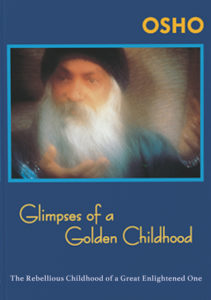
See here for some stories about his unusual childhood. He talks about these years in his book Glimpses of a Golden Childhood.
-
OSHO - University Years
turiya
7 d
33
This is a reply to # 2,468,652
OSHO - University Years
Osho Osho attends two university colleges. He is asked to leave the first when his logics professor complains to the Vice-Chancellor that he cannot teach because Osho will not stop asking questions. A ... [Image Embedded Here] [This message is long. Retrieve the whole message] -
OSHO - Professor and Controversial Speaker
turiya
5 d
17
This is a reply to # 2,468,652
OSHO - Professor and Controversial Speaker
Aged 26, he is appointed Professor of Philosophy at the University of Jabalpur, where he teaches until 1966.
Described as a ‘brilliant but unorthodox professor’, even his teaching methods create controversy. However, he is immensely popular and his lectures have to be moved to the largest hall in the university.
A powerful and passionate debater, he also travels widely in India during these years, challenging orthodox religious leaders in public debates, speaking on the radio, and addressing large public gatherings.

The press report:
An exciting and entertaining speaker, he is initially invited to address many prestigious conferences. However, his delight in controversy, and his endless and uncompromising attacks on any and every deeply-rooted belief that he feels is not based on truth or logic, soon make him an enemy of the establishment. He tears into organised religion, delivering a scathing indictment of the Shankaracharya of Puri, the high priest of Hinduism, at the Second World Hindu Religion Conference at Patna. He vehemently attacks India’s long-standing love affair with poverty, condemning the revered Gandhi for crippling India with his anti-modern, anti-technology thinking. Gandhi’s preoccupation with the poor, he says, has hindered their liberation from poverty. What India needs to escape its backwardness is capitalism, science, modern technology and birth control.
In the same vein, he lashes out at another national hero, Mother Teresa, for manipulating the orphan problem in order to create more converts to Catholicism. Her stance against birth control, he says, shows that she is not trying to fight poverty, merely trying to create more Hindu babies which she can ‘save’ for Catholicism, winning a Nobel Prize in the bargain. Poverty can only be eradicated, he maintains, through ‘absolute’ birth control and education. He insists that wealth is a necessary precursor to spiritual seeking, poor people being too preoccupied with food and other survival basics to think about spiritual needs. In a country where poverty and renunciation are blindly associated with sainthood, these views are not surprisingly considered shocking.
A few years later he causes further outrage when he begins to lecture that sex is a path to enlightenment.
-
OSHO: "I Have Been Poisoned by Ronald Reagan’s Ame...
-
3i Atlas's Real Reason For Coming to Our Solar Sys...
twll
6 d
22
Solar System
3i Atlas's Real Reason For Coming to Our Solar System
Join us as we delve into the mysterious world of 3i Atlas, a phenomenon that has left scientists and experts baffled. What is 3i Atlas, and what is actually happening with this enigmatic entity? Where is 3i Atlas now, and what does its presence in our solar system signify? NASA has revealed some information, but what did they leave out? What are the real reasons behind 3i Atlas's arrival, and why do some scientists fear what it might bring? Psychic and medium, Lisa Salvatore, shares her insights and future predictions, shedding light on the possible implications of 3i Atlas's presence.
Is 3i Atlas a sign of things to come, or is it just a natural phenomenon? Tune in to find out more about 3i Atlas and its potential impact on our world. -
Is glutamate an antihelminthic?
Caravaggio
7 d
12
Parasites (Alt.)
Is glutamate an antihelminthic?
Recently I researched glutamate (glutamic acid) because I noticed positive effects of beef salami which had added MSG. The effects being improved digestion (less constipation) and improved connective tissue. I also noticed these improvements back when I still consumed soy yogurt.
I found that glutamate seems to improve immunity:
https://pubmed.ncbi.nlm.nih.gov/31721650/ ("Exogenous Treatment with Glutamate Induces Immune Responses in Arabidopsis")
For this reason glutamate seems to be a problem for helminths:
https://pubmed.ncbi.nlm.nih.gov/35357756/ ("A Good Day for Helminths: how parasite-derived GDH suppresses inflammatory responses")
They use an enzyme called glutamate dehydrogenase (GDH) that converts glutamate to ammonia and α-ketoglutarate so they can suppress the immune response.
Maybe this is the reason why Mono-Sodium-Glutamat (Natrium Glutamat) causes negative symptoms in many people and why some people want to ban it?
In another thread somebody called "ibuprofen, benzos, alcohol, etc." glutamate blockers (https://www.curezone.org/forums/fm.asp?i=2373912#i) and nobody plans on banning these. -
A Conversation with Devageet, Osho's Personal Dent...
turiya
8 d
23
Turiya Files
A Conversation with Devageet, Osho's Personal Dentist - Part 1
3 months ago
NirvanaRoadStories
.
DESCRIPTION:
.
This is part one of a series of conversations with Swami Devageet, Osho's personal dentist. This conversation was recorded in 2013 in Santa Fe, NM as part of the promotion for the book "Osho: First Buddha in the Dental Chair".
- First
<< Prev
94265Next >> Last
 Mosaic Image Gallery
 Last 30 Uploads
Add This Forum To Your Favorites!
Forum Stats:
forum viewed 121,774,739 times
2,387,428 messages
565,591 topics
topics per page limited to: 6
average number of messages per page: 25
94,265 pages
CureZone Newsletter is distributed in partnership with www.netatlantic.com
Copyright 1999 - 2025 curezone.com