 H1N1 vaccine
  needie
15 y
2,110
Take it or Not?
needie
15 y
2,110
Take it or Not?
Would staying on the moreless protocol be sufficient enough without the vaccine?- Re: H1N1 vaccine refreshed
15 y
2,188
This is a reply to # 1,511,417I didn't find a reply from ML about H1N1 but I have a feeling the answer may very well be the same as these post.
http://www.curezone.com/forums/fm.asp?i=1053396
moreless
Maybe we should understand what vaccines are 1st before making an informed choice as to use them or not ?
They have been sold as the answer to many health problems, but could it add to some health problems, even leading to Death ?
Generally the vaccine may be a dilute solution of the Disease in question, which is injected into ones body based upon the idea that if the amount injected is small enough, that then the bodys immune system will build up immunity to it, thus prevent one from getting the Disease in question ?
Now, consuder the cautions, which are given that if one has a low immune system etc, that one may should "Not" have the vaccine in the 1st place ?
And then the Fact that a small percentage of folks who choose to get vaccines, end up Dieing from the very vaccine, which is supposed to cure them from getting Sick from the Disease in question?
So, as to your question as to what I think about vaccines?
I have very little faith in the use of vaccines as a way to Better Health !
For, if one eats correctly and is able to learn to supply foods, which help Alkalize ones body and learn to supply extra Alkalizing Minerals in the cases when one becomes too Acidic, to correct this problem of too much Acids, then one may be much Better off than those choosing to get vaccines and continue to live a Junk food Lifestyle !!!!!
I never allowed my children to get "ANY" vaccines when they were growing up !!!!
And they turned out "ALL" Healthier than their peers and my Daughters had Less child rearing problems, than their Peers !
To me, vaccines are for folks who are not willing to take their own Health into their own hands, but are willing to support the Drug companies profit bottom line !
I can hear it already, this man is crazy, why we need vaccines and vaccines have saved many lives, etc !
But, the Funny thing is that for anyone who has a Back bone and is willing to do the research, it may surprise you to find that thru the ages, that those folks who helped in hospitals etc during epedimics of Disease and got enough sleep and ate Healthy so as to keep themself Healthy, which would have ment that they prevented their own Lymphatic Fluids from becomming too Acidic, that they never came down with the Sickness or Disease in question !
It was always those who did not get enough Sleep and rest or never ate Healthy so as to keep their own body from getting too Acidic, who were those who got the Disease !
But, if "YOU" want to inject the very Disease into your own body, which is in question, then have at it !
Smile Tis your choice.
Interesting posts.
http://www.curezone.com/forums/fm.asp?i=1053401
http://www.curezone.com/forums/fm.asp?i=1490904
More
- Flu: From Moreless, Cayce and some S... Will_I_Ever_Learn
15 y
2,322
This is a reply to # 1,511,447Advertisement
9 Day Fasting Program
Complete with herbs and clay to eliminate hunger and cleansing reactions.
Good post Refreshed!
Some comments about the flu and vaccinations:There is no doubt in my mind that alkalizing help prevent or fight the flu. In one of my testimonials I talked about the last winter. In the area I work most got the flu, and it was a very tough one to get rid of. http://curezone.com/forums/fm.asp?i=1387117#i I was probably the only one who did not get it. And I did not get the seasonal flu vaccine. I never get it.You may find other testimonials from others like imaxfli, or JustinL
From moreless
--Beginning of quote----Untold story of Vaccines--Frankenstein--Hi Ya'll,What many may not know is that vaccines are grown on a media.Many times this may be a Protein media from a plant or worse an Animal source.What could be wrong with this?Animals have Different frequencies for their body Tissues!This means that when these scientist or Doctors inject Humans with a vaccine grown on animal proteins, we now may end up with a Frankenstein!Consider the chicken Flu virus!The Only way a person can get a chicken virus may be that this person has been injected with body fluids of a Sick and Diseased chicken!One may become infected if they handled Sick and Diseased chickens and had an open wound and the chicken fluids could enter this way also.Thus chicken flu vaccines grown on chicken protein automatically infects each person who takes this vaccine!Why should it be any different with a Swine flu vaccine?These Crimminals are trying to Exterminate the public!Reminds me of one of those who worked with these vaccines, when asked if he would be willing to be injected with the vaccine: Absolutely Not was his reply!Frankenstein Medicine!Cause and Effect!Smile Tis your choice.--end of quote--Vitamin D--Beginning of quote----Flu shots--is there a Better option ?--Hi Ya'll,In the Fall of the year many people line up to get Flu shots, "WHY" ?"WHY" do people have more problems with Flu as Fall time comes around ?What is Different between the Fall and Winter and the Spring and Summer ?Could it be that people may get Less sunshine in the Fall and Winter months, than in the Spring and Summer months ?What does Sunshine have to do with the Health of the body ?Could it be that the Sunshine provides the body with Vit D, which helps the body to utilize Calcium Better ?So, could it be that because the Vit D enables the body to utilize Calcium Better, that then you do not have to take so much Calcium, "IF" you are getting enough Vit D ?What is Vit D ?Could it just be an Acid which is bound with oils ?So where can you get Vit D in the months of the year when you do not have Sunshine ?Where did the Eskimos get their Vit D from when they would not get Sunshine for months at a time ?Could it be that you can get Vit D from Wild Cold water Ocean Fish, and thus supply yourself the Vit D needed along with the Calcium from the Fish ?So, you may take all the Calcium you want, but "IF" you are not Causing it to be able to React against some Acid, then you may not get any use from it !The Moreless Alkalizing Drink may provide some weak Acids from the ACV and Lemon juice to react against the Lime water to provide you with Electro-magnetic Energy of the Calcium form and you may take some Vit D, if you need an extra Boost or have in the past had problems with getting the Flu, and you may eat some Wild Cold water Ocean Fish like Sardines and Alaskan Salmon as canned fish, which may provide you with the Vit D in oil form !So, "IF" you learn to increase you Calcium uptake during the Winter months or the time period of the year when you may have more problems with the Flu, then you may learn to avoid getting the flu, without worrying with Flu shots, which may not be the Best choice to make !I know of several people around 75 years or older who used to get their flu shots each year and now have changed to seeing about getting more Vit D to go along with the Calcium they are getting and they have not been having "ANY" problems with flu like everyone else, for the past several years !Are you willing to see that your body may get the needed Calcium during the winter months, even by taking extra Vit D if you need to, so that your body may be able to utilize the Calcium you are taking ?The body needs Natural oils of some kind, and "IF" you are not willing to eat a small amount of Wild Cold Water Ocean Fish like Sardines or Salmon each day, then maybe you should consider some form of Vit D to enable your body to be able to utilize your Calciums better ?Smile Tis your choice.--end of quote--
Edgar Cayce
--BEGINNING OF QUOTE--P R E S E N TEdgar Cayce; Gertrude Cayce, Conductor; Gladys Davis, Steno.R E A D I N GTime of Reading 11:10 to 11:55 A. M. Eastern Standard Time.1. GC: You will have before you the human ailment known as the common cold. You will give information, advice and guidance as to how people may so conduct themselves as to avoid the common cold, or - having contracted a cold - to cure it. You will then answer the questions, as I ask them:2. EC: Yes.3. As we find, much has been written in many places respecting such, and much has been given through these channels respecting the various stages and the cure - or helpful applications.4. For, it is a universal consciousness to the human body. Thus it is almost as individual as all who may contract or even come in contact with such.5. Each body, as so oft considered, is a law unto itself. Thus what would be beneficial in one for prevention might be harmful to another; just as what might have beneficial effects upon one might prove as naught to another.6. The cold is both contagious and infectious. It is a germ that attacks the mucous membranes of nasal passages or throat. Often it is preceded by the feeling of flushiness or cold sensations, and by spasmodic reactions in the mucus membranes of the nasal passages.7. Then, precautionary or preventative measures respecting the common cold would depend upon how this may be fully judged in the human body, or as to what precautionary measures have been taken and as to what conditions exist already in the individual body.8. First: A body is more susceptible to cold with an excess of acidity OR alkalinity, but MORE susceptible in case of excess acidity. For, an alkalizing effect is destructive to the cold germ.9. When there has been at any time an extra depletion of the vital energies of the body, it produces the tendency for an excess acidity - and it may be throughout any portion of the body.10. At such periods, if a body comes in contact with one sneezing or suffering with cold, it is more easily contracted.11. Thus precautions are to be taken at such periods especially.12. To be sure, this leaves many questions that might be asked:13. Does draft cause a cold? Does unusual change in dress? Does change in temperature? Does getting the clothes or the feet damp? Etc.14. All of these, to be sure, AFFECT the CIRCULATION; by the depletion of the body-balance, the body-temperature or body-equilibrium. Then at such times if the body is tired, worn, overacid or overalkaline, it is more susceptible to cold - even by the very changes produced through the sudden unbalancing of circulation, as from a warm room overheated. Naturally when overheated there is less oxygen, which weakens the circulation in the life-giving forces that are destructive to ANY germ or contagion or such.15. Then if there is that activity in which the body becomes more conscious of such conditions, this of itself USES energies oft that produces PSYCHOLOGICALLY a susceptibility!16. Consequently, as we find, this is one of the most erratic conditions that may be considered as an ill to the human body.17. Much at times may also depend upon the body becoming immune to sudden changes by the use of clothing to equalize the pressures over the body. One that is oft in the open and dresses according to the general conditions, or the temperatures, will be LESS susceptible than one who often wraps up or bundles up too much - UNLESS - UNLESS there are other physical defects, or such conditions in the system as to have reduced the vitality locally or as a general condition through the system.18. So much, then, as to the susceptibility of an individual or body to colds.19. Then, precautions should be taken when it is known that such tendencies exist; that is, weakness, tiredness, exhaustion, or conditions arising from accidents as of draft, dampness of clothes, wet feet or the like, or contact with those suffering with a cold.20. As is known, all vital forces are activities of the glandular system; and these are stimulated by specific glandular activity attributed to the functioning of certain portions of the system.21. Then, when exposed to such - under the conditions as indicated, or the many other phases of such that make up the experience of an individual, these would be the preventative measures:22. The use of an ABUNDANT supply of vitamins is beneficial, of ALL characters; A, B, B-1, D, E, G and K.23. Vitamins are not as easily overcrowded in the system as most other boosters for a general activity. For, these are those elements that may be STORED - as it were - in their proper relationships one to another, to be called into use when needed or necessary.24. This does not mean that it may not be overdone as a preventative, or in cases where infection already exists. For, that which may be helpful may also be harmful - if misapplied, - whether by the conscious activity in a body or by an unconscious activity in the assimilating forces of a system. If this were not true, there would never be an unbalancing of ANY portion of the functioning system; neither would there be the lack of coordination or cooperation with the various organs in their attempt to work together.25. It is true that the functioning system (assimilating, distributing and eliminating system) attempts to create that necessary for a balance. Yet it can only use that it has at hand. Thus, with a deficiency of any structural building, blood building or tissue building influence, it may cause weakness by drawing on that necessary to supply the needed conditions for the system's balance.26. For instance, if there is a bone fracture the body of itself creates that element to knit this fracture or broken area. Yet it does not supply or build as much of such element during the periods when the fracture does not exist. Hence when it exists, unless there is an abundant supply of that needed - by or from that assimilated - other portions of the body will suffer.27. Know that the body must function as a unit. For, one may get one's feet wet and yet have cold in the head! One may get the head wet and still have cold in the head! The same is true in any such relationships. For, the circulation carries the body forces in same, in the corpuscles, the elements or vitamins needed for assimilation in every organ. For, each organ has within itself that ability to take from that assimilated that necessary to build itself. One wouldn't want a kidney built in a lung; neither would one want a heart even in the head (yet it is necessary to function mentally that way often!).--END OF QUOTE----BEGINNING OF QUOTE--THE COMMON COLDThe information contained in the Edgar Cayce Health database should not be regarded as a guide to self-diagnosis or self-treatment. The cooperation of a qualified health care professional is essential if one wishes to apply the principles and techniques described in this database.I. Physiological ConsiderationsThe common cold - also known as coryza, rhinitis, and upper respiratory infection - is an acute infection of the upper respiratory tract by a filterable virus, which is then often followed by invasion of the respiratory tract by pathogenic organisms. It is considered to be highly contagious, although it is usually mild, of short duration, and endemic. The onset is marked by a chilly sensation followed by sneezing, watering of the eyes, nasal discharge, cough, and is often accompanied by a mild fever. Much has been written about this most common of all diseases.In the Cayce readings much has also been given respecting the common cold, including a complete reading, 902-1, which is included in this File. It is an excellent commentary and worthy of study.The balance of the body probably plays the most important part in preventing the beginning of a cold. Although Cayce stated that "it is a universal consciousness to the human body" (902-1) - yet a cold develops in the presence of an acid condition within the body and nearly always only when that condition pertains. An alkalizing effect is destructive to the cold germs themselves. The question of acidity-alkalinity is discussed in another Circulating File and seems to be a difficult concept to understand fully. Yet Cayce answered the question whether there were any special precautions to be taken against colds by the simple words, "keep alkalized." (480-45)Whenever the fine balance of the body in its acid-base relationship is disturbed, then an individual is susceptible to a cold. Any condition - draft, wet feet, change in temperature, or any similar condition - that causes a change in circulation through affecting the body balance, the body temperature or the body equilibrium, can cause a cold if the body is susceptible. Susceptibility comes when there has been extra depletion of the vital energies of the body, which in turn produces a tendency for an excess acidity. Or, psychologically, if an individual becomes aware of a detrimental change in body temperature or environment, this uses energies and makes him thus more susceptible. Loss of sleep; excess emotional turbulence, such as anger, resentment or contention; excess activity leading to extreme tiredness - all these create either a marked depletion of the body's energies or a pouring out of poisons from the glandular system into the lymph circulation, preparing the system so that it blocks the circulation to the eliminating channels, creating again an acidity and a disturbance which predisposes to a cold.The glands, of course, secrete according to impulse from the emotional system. With anger these secretions poison the body. "Thus you can take a bad cold from getting mad. You can get a bad cold from blessing out someone else, even if it is your wife." (849-75)An Acid-reacting diet - such as too much of meat and starches - creates a susceptibility to colds within the body. Likewise, incorrect eating does the same thing. Food should be thoroughly masticated. "Bolting food, or swallowing it by the use of liquids produces more colds than any one activity of a diet." (808-3) 1Overheated rooms, for instance, lessen the oxygen available which weakens the circulation of life-giving forces that destroy any germ. Tiredness, overacidity, or overalkalinity all contribute at times to the production of a cold.Physiologically we can see that each body is indeed a law unto itself, due to the varying activities of physiological processes which are brought about by the many factors playing a part in each person's body. "Consequently, as we find, this [condition, the cold] is one of the most erratic conditions that may be considered as an ill to the human body." (902-1)--END OF QUOTE--
Scientific Articles
--BEGINNING OF QUOTE--Effect of M1 protein and low pH on nuclear transport of influenza virus ribonucleoproteins.M Bui, G Whittaker, and A HeleniusYale University School of Medicine, New Haven, Connecticut 06510, USA.AbstractInfluenza virus enters its host cell by receptor-mediated endocytosis followed by acid-activated membrane fusion in endosomes. The viral ribonucleoprotein particles (vRNPs) delivered into the cytosol then dissociate from the matrix protein, M1, and from each other, after which they are individually imported into the nucleus via the nuclear pores. For some time, it has been believed that the low pH in endosomes may, in some way, trigger the capsid disassembly events necessary for nuclear transport. This report provides direct evidence that the association of M1 with vRNPs is sensitive to mildly acidic pH within the infected cell. Recombinant M1, expressed in cultured cells, was found to associate with vRNPs and inhibit their nuclear import. Brief acidification of the cytosolic compartment eliminated the interfering activity and allowed the incoming vRNPs to enter the nucleus. Newly assembled progeny M1-vRNP complexes in the cytosol of infected cells were also dissociated by brief acidification. Acidic pH was thus found to serve as a switch that allowed M1 to carry out its multiple functions in the uncoating, nuclear transport, and assembly of vRNPs.--END OF QUOTE----BEGINNING OF QUOTE--The influenza hemagglutinin precursor as an acid-sensitive probe of the biosynthetic pathway.F Boulay, R W Doms, I Wilson, and A HeleniusDepartment of Cell Biology, Yale University School of Medicine, New Haven, CT 06510.AbstractThe hemagglutinin of influenza virus (HA), an acid-activated membrane fusion protein, is synthesized in the endoplasmic reticulum and transported through the Golgi complex to the cell surface of infected cells as an uncleaved, fusion-incompetent precursor, HA0. The mature, proteolytically activated HA is known to undergo a rapid, irreversible, acid-induced conformational change which mediates membrane fusion and virus penetration. On the basis of antigenic modifications and the acquisition of trypsin susceptibility, we demonstrate here that HA0, while unable to cause fusion, is acid sensitive. It undergoes irreversible conformational changes quite similar to those of HA at mildly acidic pH (pH less than 6.0). The ectodomain of HA0 does not, however, acquire hydrophobic properties and the changes occur in a less concerted manner (the pH dependence is much broader and the rate of conversion slower). These differences are likely to account for the inability of acid-treated HA0 to trigger membrane fusion. It was shown, moreover, that HA0 acquired its acid-sensitive properties immediately following trimerization in the endoplasmic reticulum. Since HA0 did not convert to the acid form at any point during its intracellular transport, we concluded that the trans-Golgi compartment, known to be more acidic than the cytosol and involved in constitutive membrane transport, is not likely to have a pH less than 6.0.--END OF QUOTE--From--BEGINNING OF QUOTE--Influenza HemagglutininEric Mazur and David Marcey© 2005...III. Membrane FusionAfter binding to sialic acid residues of receptor proteins on host cells, the influenza virus is brought into the cell by endocytosis. The low pH of the resulting endosome, between pH 5 and pH 6, activates a conformational change in the structure of the hemagglutinin molecule. This "fusion-active" state of hemagglutinin triggers the fusion of the viral membrane and the endosome membrane, releasing the viral nucleocapsid into the cytosol of the host cell.A soluble fragment of hemagglutinin at low pH has been isolated and characterized (Bullough, et al., 1994). This fragment (TBHA2) is prepared at pH 5.0 by digestion with trypsin and thermolysin and contains the first 27 residues of HA1 and residues 38-175 of HA2. Although many of the original hemagglutinin residues are lost in this digestion, the major conformational change caused by the acidic environment in the endosome is clear when one compares the conformation of the original HA2 subunit (BHA-left) to that of TBHA2 (right). The subunits are colored in rainbow from amino to carboxy. Residues 55-76 in BHA are recruited to an a-helix in TBHA2 which extends the a-helix of residues 40-55 in BHA 100 Å towards the endosome membrane in TBHA2 (endosome membrane is up). The a-helix of BHA is also moved slightly away from the viral membrane in TBHA2 and the b-sheet/a-helix structure of BHA follows towards the endosome membrane. The functional consequence of the endosomal refolding is a translocation of residues at the end of the a-helix (not shown) to the endosome membrane, where they fuse with it. The resulting a-helix (110 Å) in TBHA2 is one of the longest known in any protein.--END OF QUOTE-WIELAdvertisement
Hulda Clark Cleanses
Wormwood, Clove, Clarkia, Turmeric, Epsom Salt, Uva Ursi, Goldenrod
More
- Flu Vaccine: 3 Articles from Dr. R. ... Will_I_Ever_Learn
15 y
2,563
Feel Vibrant Again!
My skin glows with youth!
Hulda Clark Cleanses
Wormwood, Clove, Clarkia, Turmeric, Epsom Salt, Uva Ursi, Goldenr...
This is a reply to # 1,511,6093 Articles from Dr. R. YoungThis posted by chrisb1 http://www.curezone.com/forums/am.asp?i=1510643 titled Death By VaccinesAlso--Beginning of quote--Does The Swine Flu Virus Cause The Flu?The following is an email exchange between Matt Schweder and Dr. Robert O. Young concerning the so-called Swine Flu Virus and whether or not it is the cause of the so-called Swine Flu.I am hopeful that this will clear up several questions that:1) The Swine Flu virus does not exist.2) The Swine Flu is NOT contagious, and3) The Swine Flu virus does not cause flu symptoms.Kindest regards,Dr. Robert O. Young-----Original Message-----From:Sent: Fri, Oct 16, 2009 3:27 amSubject: RE: Keeping Yourself Healthy During a So-Called Flu PandemicI believe and love these emails and the pH information....but if flu has nothing to do with germs, how come it can be passed from person to person? I have been trying to ask this question for months and no one will ever answer me. Please.I'm doing battle with my local newspaper and our county schools superintendent and trying to share information with other people and this is the one question that I get that I can't answer.Thanks.Matt SchwederLexington, KY--------------------------------------------------------------Dear Matt:Most people on this planet are living an acidic lifestyle and eating the same acidic foods and are therefore subject to the same acidic detox symptoms. The flu is the body's way of eliminating excess acid from the blood and tissues through the orfaces of the body caused by acidic lifestyle and dietary choice - not from germs! Germs are the effect of cellular transformation or degeneration not the cause!... Read MoreIf you go to a party and everyone is drinking alcohol excessively the majority of those drinking this acidic beverage will get drunk , will get sick to their stomach, have flu-like symptoms and will have a hang-over the next morning. Same symptoms from the same cause! The contagion was the acidic choice of drinking alcohol - a dietary choice - not a germ.... Read MoreThe same thing applies to flu symptoms. The flu symptom is the body removing excess metabolic and/or dietary acidity from the blood and tissues from over-ingesting too much meat, alcohol, sugar, bread, grains, high sugar fruit, acidic condiments, etc. during a season of time called the "Holiday Season" or "I eat and drink too much acidic crap dis-ease Season."People across the world are eating and drinking the same acidic food and living a similar acidic lifestyle and experiencing the same acidic detox symptoms, medical science calls the flu. This then gives people the illusion that there is a pandemic or that there is some so-called germ that is contagious causing this so-called flu. The theory that germs cause dis-ease or so-called disease is a scientific fraud! There is NO SWINE FLU VIRUS that is causing people to get sick. It is fear that is contagious! It is anger! It is regret! It is pride! It is acidic food! It is acidic drink! It is acidic drugs including antidepressants to birth control pills, to antibiotics, and now to toxic poisonous flu shot vaccines. It is the lack of pure clean alkaline water. It is the lack of exercise! It is the lack of oxygen. It is the lack of non-processed salt. It is the lack of healthy oils. It is the lack of chlorophyll from green foods and drinks. It is the lack of an alkaline lifestyle and diet. These are the viruses that are contagious that are the TRUE cause of excess acidity in the body that make us sick, tired, under-weight and over-weight that caused the body to purify itself with a flu. NOT SOME Phantom Flu Virus created by Big Pharma and Big Government for BIG Money!Once again viruses or germs DO NOT KILL but acidic lifestyle and dietary choice will KILL! The flu is the body's natural defense remove excess acidity to save your life from acidic choice!Keep in mind Matt that healthy alkaline body's Do Not have flu symptoms because they DO NOT need to detox their body's from excess acid from ingesting alcohol, bread, beef, chicken, fish, sugar, grains, vinegar, high sugar fruit, stress, etc. or from doing acidic emotions like fear and anger.There is a saying that All roads lead to Rome, Italy. Eat and live an acidic lifestyle and diet and you will find yourself on the road to Rome with detox flu symptoms trying to save your sorry acidic ass. No GERM here Matt - just people who make poor ass lifestyle and dietary choices choking on their own acidic waste!If I sound passionate here - I am. I am trying to wake people up from their acidic stupor or mind blindness. The majority of people living on this planet are intoxicated or drunk from their acidic lifestyles and diets. WAKE UP PEOPLE! WAKE UP WORLD! YOU ARE ASLEEP AND DO NOT KNOW IT!Save your life and say NO to the Swing Flu vaccine SHOT. Say NO TO TOXIC ACIDIC DRUGS and BIG Pharma and BIG Government! SAY NO TO A TOXIC ACIDIC LIFE! WAKE UP! It only takes one shot to kill and it already has!In love and light,Dr. Robert O. Young--end of quote--......--Beginning of quote--Swine Flu: The Realityby Ross on July 21, 2009The whole Swine Flu thing is picking up pace again in the news, with the Daily Doom Mail, in particular, running with a series of quite alarmist, but paper-selling ’stories’.I have two issues with Swine Flu:1. It is flu. Flu is everywhere. Globally there are over 1 billion cases of flu diagnosed each year. Swine or not, flu is an issue for a lot of people. So is malaria. Over 1 million people die of it each year. Where is the crazy reporting about malaria. Or alcohol related deaths. Or those from smoking. There were 13.4 alcohol-related deaths per 100,000 in the UK in 2006. This year there are 0.05 swine-flu related deaths per 100,000 in the UK. At the moment you are 278 times more likely to die of an alcohol related disease than swine flu.Or would we rather head to the pub for a pint and a cigarette and have a chat about it instead?This ridiculously alarmist reporting of ‘Swine’ flu is causing an obscene amount of worry, Government spending and panic in the general public.Yes, it might be a problem for a very small number of the population, but how much more productive would it be to focus on prevention?2. The answer seems to be drugs & pumping people full of vaccines and antibiotics. MILLIONS OF PEOPLE HAVE FLU ALL YEAR ROUND. Every year. All the time. Why do we suddenly need to vaccinate everyone?!Oh, of course, to earn Roche and GlaxoSmithKlein a healthy fat pocket.Let’s focus on prevention rather than waiting and then drugging. It is really, really easy to give your body everything it needs to successfully fight flu. Swine or not!The Real Swine Flu PictureSo the papers all picked up on the potential 64,000 cases story. Here is what one of the UK’s leading Flu experts makes of it all:“A potential death rate of one in 200 cases has been mentioned but that is for the really serious cases. The real rate will probably be less than one in 1,000 and the people who are badly affected will be incredibly unlucky. Many people won’t even realise they have swine flu - around 30 per cent of those who get it won’t have any symptoms at all.Most people will only have mild symptoms - the body’s natural defences will take care of the flu and natural antibodies will prove to be the best prevention. But it’s worth remembering that seasonal flu can kill 10,000 people every year in this country, although they tend to be the weak or elderly.Note:* The body’s natural defences will take care of the flu* NATURAL antibodies will prove to be the best prevention* Many people won’t even realise they have Swine Flu* 10,000 people die from flu EVERY YEAR in the UK10,000 every year. So far, in the 3 months since we’ve been hearing about Swine Flu, 29 people in the UK have died of H1N1 related illnesses. Not necessarily directly because of the flu strain itself, but they died while the strain was in their body.However, that does not mean that there is no danger. I am not claiming us to all be invincible - BUT there are things we should be doing to prevent ourselves from contracting ANY SICKNESS OR DISEASE! Swine Flu, normal flu, heart disease, cancer, diabetes or any other sickness or disease.There are 61,000,000 million people in the UK and 29 have died from Swine Flu so far. That gives you a 0.0000048% chance of dying from it so far. But I imagine that you are the sort of person who wants to have a strong immune system, loads of energy, strong bones, strong muscles, and a big strong heart regardless of this global obsession with one strain of influenza.Steps to Protect Yourself From Illnesses (influenza included)To really give your immune system a boost and protect yourself from illness you just need to do the simple things. The same simple things that will help you lose weight, have more energy, get rid of Irritable Bowel Syndrome, increase your mental clarity, lose the need for afternoon naps, clear your skin, clear your head etc.You just need to start looking after yourself, properly.1. Start hydrating. Really hydrating. Most people try to follow the Government advice of 8 glasses per day. Firstly, I really believe that this is nowhere near enough (even if you are really sedentary your body uses more than that each day just keeping you alive) and secondly most people only get to 3 or 4 glasses. You should be aiming for at least 2.5 litres per day, and potentially up to 4 litres. Make it good, clean, filtered water.2. Start eating well. By ‘eating well’ I mean loads of greens, vegetables, salads, low sugar fruits, healthy oils, nuts, seeds, complex carbs etc. Give your body the simple tools it needs to look after you.3. Stop eating sh*t. By ‘eating sh*t’ I mean chocolate, crisps, chips, sweets, sugars, caffeine, dairy, fatty meat, alcohol, excessive bread, pasta and other white stuff, biscuits, puddings, fried food, refined food, microwaved food etc. Stop polluting your body with crap. And cigarettes. Nothing surpresses your immune system like 20 Bensons, half a dozen pints and a packet of crisps.4. Start exercising. If you don’t do a lot of it then start really light, but get out there, get some fresh air, get your body and your blood pumping. At least start walking. This gives your blood and lymphatic system a flush through and keeps your immune system nice and strongThis is all common sense, easy stuff. Even if you only do this 50-70% of the time then you’re really moving in the right direction and giving your body everything it needs to keep you happy and healthy.Dr Young has spent quite a bit of time blogging on this subject too and his advice is ALWAYS worth following! Here is a selection of his advice:* This (Swine Flu) is a scientific illusion. Viruses do not kill, acids kill. All viruses are nothing more than dietary and/or metabolic acid. The word virus in Latin means poison or acid. All flu’s or acids by definition effect only the gastrointestinal tract due to acidic foods and drinks ingested - not viruses.So the Mexican Swine Flu Virus that has been reported by the CDC to have killed over 1000 Mexicans is the result of an excess of gastrointestinal acid from the ingestion of acidic foods and drinks that have not been properly buffered by the stomach with alkaline salts or eliminated through the four channels of elimination - lungs, bowels, bladder and/or skin. For these unfortunate Mexicans or others in the US or around the world that have died, the cause of death was due to an excess of acidic foods and drinks, including Tequila, beer, beans, rice, corn, peanuts, yeast, soy sauce, high sugar fruit, processed sugar, artificial sugar, dairy products, chicken, turkey, beef and of course the biggest acid of all - SWINE. That’s right, the acids from PORK can kill.So 1000 Mexicans did not die from a phantom Mexican Swine Flu Virus but they died from a dis-ease I call, “I Ate and Drank TOO Much Acidic Crap Disease.” The simple solution for protecting you from an excess of gastrointestinal acid from an acidic diet and lifestyle that can and does kill is to increase your alkaline buffering mineral salts. All flu’s or acid outbreaks can be prevented and reversed with sodium, magnesium, potassium and calcium bicarbonate. YES, it is that simple! You can prevent gastrointestinal acidosis that can lead to stomach flu, vomiting, dehydration, diarrhea, constipation, and even death. No need to fear a pandemic, just the acidic foods and drinks you are ingesting. You can protect yourself and your family with the pH Miracle Lifestyle and Diet I call, “Young Living.” That is why I created the products pHour Salts, puripHy salts, pHlavor salts and pHlush salts.[note: these alkaline salts are heavily concentrated in green foods, vegetables, salads, low-sugar fruits etc i.e. alkaline foods]* There is no such thing as a flu virus and therefore there is no need for a poisonous acidic flu vaccine made with chicken embryos, formaldehyde, mercury, detergent, and alcohol. The flu is the body in preservation mode increasing body temperature to activate the lymphatic system to remove excess dietary and/or metabolic acids in the tissues via respiration, perspiration, defecation and urination. The key to reversing the symptoms of the Flu is hydration with alkaline fluids and sweating with infrared sauna or exercise.* Antibiotics do not kill bacteria. Even the medical community realizes that antibiotics don’t do what they are supposed to do. We say with alarm that disease is becoming resistant to antibiotics. They are not “resistant” because they have never been operative or effective. Antibiotics are the acidic waste products of fermentation. To make an antibiotic, you need a yeast or mold and some sugar for the yeast or mold to ferment. The bi-product of the yeast or mold fermenting the sugar is the acidic antibiotic. The acids from antibiotics DO NOT KILL BACTERIA. They only force the bacteria to change. Into what does bacteria change? Into yeast and mold. That is why when you take antibiotics you end up with a yeast infection! That’s the antibiotic causing the bacteria to change from one form to another. I call this process of change “biological transformation” and the reason why you should NEVER take antibiotics.He advocates living alkaline (surprised?) as a way to keep your body fit, healthy and strong - warding off flu (no matter what the media call it, swine, avian (remember that one?) alongside all other sickness and disease.In particular, you need to make sure your body has got an ample supply of alkaline mineral salts to buffer the acids you consume, and that your body produces in it’s daily work. I’ve blogged extensively on this in the past (here is my favourite article) - if you read that article you’ll understand a lot more of what I am talking about.I also think this extract from my interview with Ravi of sethigherstandards.com is useful here:Your body HAS to keep the pH of your blood, cells and other fluids at just slightly alkaline (pH 7.365) and it will do ANYTHING it has to in order to maintain this pH balance. To do this, your body calls upon its store of alkaline buffers, which it draws upon to neutralize the acids we ingest or create through bodily processes. This store of buffers is very easily depleted because most of us eat and drink such strong acids. To put this in context, the pH scale is logarithmic – so pH 6 is 10x more acidic than pH 7, meaning pH 5 is 100x times more acidic than pH 7 and pH 4 is 1000x more acidic. Coke has a pH of between 2 and 3. So you can see how a diet filled with meats, dairy, fizzy drinks, alcohol etc would quickly deplete these buffers.And when we deplete these buffers and still ingest more acids…what happens? The body is forced into drawing upon the alkaline minerals it has to buffer which causes havoc in the body – for instance, if the body is constantly drawing calcium to neutralize the acids we consume then the symptoms of osteoporosis emerge (hence the recent research articles linking cola consumption with osteoporosis).This is just one example. Another outcome is that the body also hangs onto excess fat to protect our body/organs from the damage caused in an acidic state. Another outcome is that we ingest high levels of sugar, the sugar ferments in the blood, creating more acids, which creates acid wastes, which feeds the sugar which has fermented into bacteria, yeast, fungus which create more acid wastes etc and a vicious cycle of acid creation further depletes the alkaline buffers resulting in skin conditions, yeast infections, mood and emotional problems, diabetes and a whole heap of other symptoms.By eating 70-80% alkaline foods we not only take this stress away from the body, but we also flood our body with vitamins, fiber, minerals, nutrients, good fats, proteins, antioxidants etc. which build the blood, cleanse our system and ultimately make us feel great.Still, the simple explanation is the one I prefer – eat lots of great, fresh foods and treat treats as a treat.And there it is…your blueprint for staying fit, healthy and vital. Eat your greens and look after yourself, and you’ll find that your body is pretty good at keeping you well. It’s how we’ve been designed.Or put it this way. Were you worried about dying from flu this year anyway? If not, then your chances have only slightly increased. The actual Government prediction that was less-news-paper-sales-worthy publicised is that there will most likely be 3,100 H1N1 flu-related deaths this year. A 30% increase on the normal 10,000 flu related deaths each year, sure, but out of the 61 million of us in the UK, I think you need to be MUCH more worried about looking both ways before you cross the road.You should aim to keep yourself healthy regardless of any one particular illness. Look after yourself and protect yourself against ALL illness and disease! And keep smiling.Ross--end of quote--WIEL-
 Flu and Vitamin D From Dr Mercola Will_I_Ever_Learn
15 y
3,307
This is a reply to # 1,511,618Advertisement
Flu and Vitamin D From Dr Mercola Will_I_Ever_Learn
15 y
3,307
This is a reply to # 1,511,618Advertisement
9 Day Fasting Program
Complete with herbs and clay to eliminate hunger and cleansing reactions.
Flu and Vitamin D From Dr MercolaMy older post on Vitamin D
Vitamin D not flu shotsSimple Trick to Treat the Cold or FluDr. John Cannell on vitamin D
Article from Dr. Mercola--Beginning of quote--Back in 2005, The Federal Advisory Committee on Immunization Practices (ACIP) recommended that all children between 6 months and 5 years old receive flu shots each year. Now they have expanded their guidelines to include children up to 18 years, which means everyone except those between the ages of 19-49, who are in good health, are urged to get a flu shot.It should come as no surprise to find out that a majority of the ACIP members who came up with these guidelines have financial ties to the vaccine industry, and stand to gain personally for every additional person getting a yearly injection. It’s actually the only explanation that makes any sense for recommendations as insane as these.Three Reasons to Reconsider Flu ShotsThere are three major reasons why this government push to vaccinate 84 percent of the U.S. population with a yearly flu vaccine is so incomprehensible:1. The majority of flu shots contain 25 micrograms of mercury; an amount considered unsafe for anyone weighing less than 550 pounds! And which groups are most sensitive to the neurological damage that has been associated with mercury? Infants, children, and the elderly.2. No studies have conclusively proven that flu shots prevent flu-related deaths among the elderly, yet this is one of the key groups to which they’re pushed.3. If you get a flu shot, you can still get the flu (or flu-like symptoms). This is because it only protects against certain strains, and it’s anyone’s guess which flu viruses will be in your area.So why would you take a flu shot – EVERY YEAR -- that has NEVER been proven to be effective, that can give you the very illness you’re trying to prevent, and has potential long-term side effects that are far worse than the flu itself?The powers that be have done an excellent job of instilling fear into the population so they believe that they must get a shot to stay healthy, but the simple reality is it’s doing you more harm than good.And, even if the flu vaccine could effectively prevent the flu, there have been several examples in past years where government health officials have chosen the incorrect influenza strains for that year’s vaccine. In 2004, the National Vaccine Information Center described how CDC officials told everyone to line up for a flu shot that didn't even contain the influenza strain causing most of the flu that year.Two-Thirds of This Year’s Flu Vaccines Contain a Full-Dose of MercuryAccording to Dr. Donald Miller, MD, two-thirds of this year’s flu vaccines contain 25 micrograms of thimerosal. Thimerosal is 49 percent mercury by weight.Each dose of these flu vaccines contains more than 250 times the Environmental Protection Agency’s safety limit for mercury.By now, most people are well aware that children and fetuses are most at risk of damage from this neurotoxin, as their brains are still developing. Yet the CDC still recommends that children over 6 months, and pregnant women, receive the flu vaccine each year.In addition to mercury, flu vaccines also contain other toxic or hazardous ingredients like:* Formaldehyde -- a known cancer-causing agent* Aluminum -- a neurotoxin that has been linked to Alzheimer’s disease* Triton X-100 -- a detergent* Phenol (carbolic acid)* Ethylene glycol (antifreeze)* Various antibiotics: neomycin, streptomycin, gentamicin – which can cause allergic reactions in some peopleThe Evidence Against Flu VaccinesFor those of you who are still unconvinced, know that there’s plenty of scientific evidence available to back up the recommendation to avoid flu vaccines – if nothing else, then for the simple reason that they don’t work, and don’t offer any real benefit to offset their inherent health risks. For example:* A brand new study published in the October issue of the Archives of Pediatric & Adolescent Medicine found that vaccinating young children against the flu had no impact on flu-related hospitalizations or doctor visits during two recent flu seasons. The researchers concluded that "significant influenza vaccine effectiveness could not be demonstrated for any season, age, or setting" examined.* A study published in the Lancet just two months ago found that influenza vaccination was NOT associated with a reduced risk of pneumonia in older people. This supports a study done five years ago, published in The New England Journal of Medicine.* Research published in the American Journal of Respiratory and Critical Care Medicine last month also confirms that there has been no decrease in deaths from influenza and pneumonia, despite the fact that vaccination coverage among the elderly has increased from 15 percent in 1980 to 65 percent now.* Last year, researchers with the National Institute of Allergy and Infectious Diseases, and the National Institutes of Health published this conclusion in the Lancet Infectious Diseases: “We conclude that frailty selection bias and use of non-specific endpoints such as all-cause mortality have led cohort studies to greatly exaggerate vaccine benefits.”* A large-scale, systematic review of 51 studies, published in the Cochrane Database of Systematic Reviews in 2006, found no evidence that the flu vaccine is any more effective than a placebo in children. The studies involved 260,000 children, age 6 to 23 months.Might Influenza be Little More Than a Symptom of Vitamin D Deficiency?Vitamin D, “the sunshine vitamin,” may very well be one of the most beneficial vitamins there is for disease prevention. Unfortunately it’s also one of the vitamins that a vast majority of people across the world are deficient in due to lack of regular exposure to sunshine.Published in the journal Epidemiology and Infection in 2006, the hypothesis presented by Dr. John Cannell and colleagues in the paper Epidemic Influenza and Vitamin D actually makes a lot of sense.They raise the possibility that influenza is a symptom of vitamin D deficiency!The vitamin D formed when your skin is exposed to sunlight regulates the expression of more than 2,000 genes throughout your body, including ones that influence your immune system to attack and destroy bacteria and viruses. Hence, being overwhelmed by the “flu bug” could signal that your vitamin D levels are too low, allowing the flu virus to overtake your immune system.At least five studies show an inverse association between lower respiratory tract infections and 25(OH)D levels. That is, the higher your vitamin D level, the lower your risk of contracting colds, flu, and other respiratory tract infections:1. A 2007 study suggests higher vitamin D status enhances your immunity to microbial infections. They found that subjects with vitamin D deficiency had significantly more days of absence from work due to respiratory infection than did control subjects.2. A 2009 study on vitamin D deficiency in newborns with acute lower respiratory infection (ALRI) confirmed a strong, positive correlation between newborns’ and mother’s vitamin D levels. Over 87 percent of all newborns and over 67 percent of all mothers had vitamin D levels lower than 20 ng/ml, which is a severe deficiency state.Newborns with vitamin D deficiency appear to have an increased risk of developing ALRI, and since the child’s vitamin D level strongly correlates withits mother’s, the researchers recommend that all mothers’ optimize their vitamin D levels during pregnancy, especially in the winter months, to safeguard their baby’s health.3. A similar Indian study published in 2004 also reported that vitamin D deficiency in infants significantly raised their odds ratio for having severe ALRI.4. A 2009 analysis of the Third National Health andNutrition Examination Survey examined the association between vitamin D levelsand recent upper respiratory tract infection (URTI) in nearly 19,000 subjectsover the age of 12.Recent URTI was reported by:·17 percent of participants with vitamin D levels of 30ng/ml or higher·20 percent of participants with vitamin D levels between 10-30 ng/ml.·24 percent of participants with vitamin D levels below 10ng/mlThe positive correlation between lower vitamin D levels and increased risk of URTI was even stronger inindividuals with asthma and chronic obstructive pulmonary disease.5. Another 2009 report in the journal Pediatric Researchstated that infants and children appear more susceptible to viral rather thanbacterial infections when deficient in vitamin D. And that, based on the available evidence showing a strong connection between vitamin D, infections, and immune function in children, vitamin D supplementation may be a valuable therapy in pediatric medicine.How to Prepare For Flu Season Without Getting a Flu ShotI often find that some of the simplest explanations are the truest, and this sounds about as simple as it gets. And, getting appropriate amounts of sunshine (or taking a vitamin D supplement when you can’t get healthy amounts of sun exposure) is one of my KEY preventive strategies against the cold and flu, as it has such a strengthening effect on your immune system.Interestingly, last week the American Academy of Pediatrics doubled its recommended dose of vitamin D. Unfortunately this is still a woefully inadequate recommendation as the dose should be TEN times larger. Rather than going from 200 to 400 units per day, it should have increased to about 2,000 units per day.For most of you reading this it is “vitamin D winter,” which means there simply isn’t enough sunshine to make significant amounts of vitamin D, so you will need to use a tanning bed or take oral supplements.Although supplements are clearly inferior to sunlight or safe tanning beds, I am becoming more convinced of the value of vitamin D supplements as they are less potentially toxic than my initial impression, and they are certainly more convenient and less expensive than a tanning bed.For those in the winter with no or very limited exposure to sunshine, 4,000-5,000 units per day would seem appropriate for most adults. If you are very heavy you may need to double that dose, and for children the dose can be half that.The key though is to make sure you monitor your vitamin D levels by blood testing, to make sure your levels are therapeutic and not toxic.I advocate getting your vitamin D levels tested regularly, but as I reported recently, you now need to beware of where you’re getting your test done. For an in-depth explanation of what you MUST know before you get tested, please read my updated article Test Values and Treatment for Vitamin D Deficiency.You can also use vitamin D therapeutically to TREAT the flu. But please understand that if you are taking the above doses of vitamin D the odds of you getting the flu are VERY remote. The dose of vitamin D you can use would be 2,000 units per kilogram of body weight (one pound is 0.45 kg). The dose would be taken once a day for three days.This could be a very large dose if you were very heavy (2-300,000 units per day) This is the dose that Dr. John Cannell, founder of the Vitamin D Council, has been using very successfully for a number of years.I have not received a flu shot nor had the flu in over 20 years. Here are the other “secrets” I use to keep the flu (and other illnesses) at bay:* Eat right for your nutritional type, including avoiding sugar* Eliminate sugar from your diet* Eat garlic regularly* Consume a high-quality krill oil daily* Exercise* Get adequate sleep* Address emotional stress* Wash your hands regularly (but not excessively)Another useful supplement you could try, should you come down with a case of the flu, is olive leaf extract, which you can find in most any health food store.Olive leaf extract has been found to be a potent broad-spectrum antiviral agent, active against all viruses tested, including numerous strains of influenza and para-influenza viruses.--end of quote--WIELAdvertisement
Hulda Clark Cleanses
Wormwood, Clove, Clarkia, Turmeric, Epsom Salt, Uva Ursi, Goldenrod
- Re: Flu and Vitamin D and K2 paraboy
15 y
2,422
This is a reply to # 1,511,623
Hi WIEL,
I would just like to add as an adjunt that there appears to be a toxicity factor to taking high doses of Vitamin D.
However, Weston Price provides that a deficiency of K2 can cause A and D toxicity.
QUOTE:
The synergism Weston Price observed between vitamins A, D and K2 now has a solid mechanism. In a nutshell, vitamins A and D signal the production of some very important proteins, and K2 is required to activate them once they are made. Many of these proteins are involved in mineral metabolism, thus the effects Price saw in his experiments and observations in non-industrialized cultures. For example, osteocalcin is a protein that organizes calcium and phosphorus deposition in the bones and teeth. It's produced by cells in response to vitamins A and D, but requires K2 to perform its function. This suggests that the effects of vitamin D on bone health could be amplified greatly if it were administered along with K2. By itself, K2 is already highly protective against fractures in the elderly. It works out perfectly, since K2 also protects against vitamin D toxicity.
http://wholehealthsource.blogspot.com/2008/06/vitamin-k2-menatetrenone-mk-4.html
What foods conatin K2:
FOODVITAMIN K2 (MCG/100G) Natto1103.4 (0% MK-4) Goose Liver Paste369.0 (100% MK-4) Hard Cheeses76.3 (6% MK-4) Soft Cheeses56.5 (6.5% MK-4) Egg Yolk (Netherlands)32.1 (98% MK-4) Goose Leg31.0 (100% MK-4) Curd Cheeses24.8 (1.6% MK-4) Egg Yolk (United States)15.5 (100% MK-4) Butter15.0 (100% MK-4) Chicken Liver14.1 (100% MK-4) Salami9.0 (100% MK-4) Chicken Breast8.9 (100% MK-4) Chicken Leg8.5 (100% MK-4) Ground Beef (Medium Fat)8.1 (100% MK-4) Bacon5.6 (100% MK-4) Calf Liver5.0 (100% MK-4) Sauerkraut4.8 (8% MK-4) Whole Milk1.0 (100% MK-4) 2% Milk0.5 (100% MK-4) Salmon0.5 (100% MK-4) Mackerel0.4 (100% MK-4) Egg White0.4 (100% MK-4) Skim Milk0.0 Fat-Free Meats0.0 http://www.westonaprice.org/basicnutrition/vitamin-k2.html#fig1
Also, there is evidence that K2 aka activatorX can decalcify arteries, glands and enhances calcium absorbtion.
- Re: Flu and Vitamin D and K2 Will_I_Ever_Learn
15 y
2,091
This is a reply to # 1,512,294Hi Paraboy
Vitamin K2, activatorX, I guess we learn everyday!
Thanks
WIEL
- Re: Flu and Vitamin D and K2 Will_I_Ever_Learn
15 y
2,091
- Re: Flu and Vitamin D and K2 paraboy
15 y
2,422
-
- Flu Vaccine: 3 Articles from Dr. R. ... Will_I_Ever_Learn
15 y
2,563
- Flu: From Moreless, Cayce and some S... Will_I_Ever_Learn
15 y
2,322
- Re: H1N1 vaccine Paul DeGaul
15 y
2,358
This is a reply to # 1,511,417Advertisement
9 Day Fasting Program
Complete with herbs and clay to eliminate hunger and cleansing reactions.
There is concern in the scientific community, even by the discoverer of Tamiflu, that H1N1 vaccine is engineered and is not a vaccine at all. It's a vector to introduce live viruses and adjuvants for unknown purposes.
It's been proven that the virus is mutating much faster than a vaccine can be produced. That means that at the least, the vaccine is useless as the virus it is meant to block has gone extinct and is already replaced by a new one.
Most people don't realize that all vaccines are contaminated by live viruses (the word contaminated is not an exaggeration or a mistake.) Where do the viruses come from? From the tissues, like kidney tissue, of the animals, like African Green Monkeys, used to culture the vaccine. It's impossible to kill the viruses. They will be injected into hosts with the vaccine. In the case of polio vaccine there are FORTY known viruses in it, as well as live cancer cells. The virus known as SV40 (Simian Virus 40) is deadly when injected into lab animals, but this information has been thoroughly suppressed. Therefore, it's OK to inject it into humans, explode the cancer rate, and pump up the coffers of the cancer research community, and nobody in a position of enough power to stop it will get off their asses.
They keep talking a good talk about hope and change though. BLAH BLAH BLAH.
Advertisement
Hulda Clark Cleanses
Wormwood, Clove, Clarkia, Turmeric, Epsom Salt, Uva Ursi, Goldenrod
-
 Re: H1N1 vaccine - here is the proof paraboy
15 y
2,421
This is a reply to # 1,512,301
Re: H1N1 vaccine - here is the proof paraboy
15 y
2,421
This is a reply to # 1,512,301Here is the proof that our vaccines are engineered with diseases by Merck on purpose.
Listen to the video very carefully, over and over.
http://curezone.com/forums/fm.asp?i=1474743#i
I would also, like to add this little tid bid of stats.
What do you all notice about the following?
* 1947 Salk is recruited by the University of Pittsburgh to develop a virus research program.
* 1948-49 Scientists from four universities confirm there are only three strains of poliovirus. Weller and Robbins grow poliovirus in live cells--Nobel Prize
* 1952 The worst recorded polio epidemic in United States history occurs, with 57,628 reported cases.
* 1954 Dr. Salk and associates develop a potentially safe injectable vaccine against polio, (IPV) given to nearly 15,000 Pittsburgh-area subjects (most were children) in pilot trials, 1952-1954.http://www.cdc.gov/vaccines/events/polio-vacc-50th/downloads/timeline.pdf
Polio was already on the decline in 1951. Do I smell a scam?
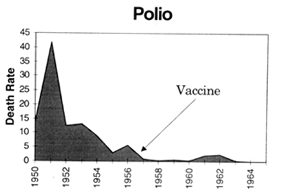
Also, note that only those that invent destruction, get the nobel peace prize.
Thanks,
Paraboy
-
- Re: H1N1 vaccine refreshed
15 y
2,188
fetched in 0.2813 sec, IP =172.71.255.124, y=1