What Adrenal Fatigue Really Is - General Adaptation Syndrome
There is lots of information on here with symptoms, methods of treatment etc, but there is a lot of overlap on here with conditions such as CFS, ME, Candida etc I thought it would be useful to outline what Adrenal Fatigue really is (thanks to Feo66 for firstly pointing this out!) for new posters.
Unfortunately the term coined by Dr James Wilson for his book, 'Adrenal Fatigue' is often misleading and misunderstood. Adrenal Dysfunction would be a closer terminology, however AF at least has given the world more of an understanding of the condition.
The correct term for the condition is General Adaptation Syndrome, which is a genuine medical condition, yet one that is not often taught in 21st century text books.
http://en.wikipedia.org/wiki/General_adaptation_syndrome#General_adaptation_s...
Below extract taken from
http://medical-dictionary.thefreedictionary.com/general+adaptation+syndrome
General Adaptation Syndrome
Definition
General adaptation syndrome, or GAS, is a term used to describe the body's short-term and long-term reactions to
stress.
Stressors in humans include such physical stressors as
starvation, being hit by a car, or suffering through severe weather. Additionally, humans can suffer such emotional or mental stressors as the loss of a loved one, the inability to solve a problem, or even having a difficult day at work.
Description
Originally described by Hans Selye (1907–1982), an Austrian-born physician who emigrated to Canada in 1939, the general adaptation syndrome represents a three-stage reaction to stress. Selye explained his choice of terminology as follows: "I call this syndromegeneral because it is produced only by agents which have a general effect upon large portions of the body. I call it adaptive because it stimulates defense…. I call it a syndrome because its individual manifestations are coordinated and even partly dependent upon each other."
Selye thought that the general adaptation syndrome involved two major systems of the body, the nervous system and the endocrine (or hormonal) system. He then went on to outline what he considered as three distinctive stages in the syndrome's evolution. He called these stages the alarm reaction (AR), the stage of resistance (SR), and the stage of exhaustion (SE).
Stage 1: alarm reaction (ar)
The first stage of the general adaptation stage, the alarm reaction, is the immediate reaction to a stressor. In the initial phase of stress, humans exhibit a "fight or flight" response, which prepares the body for physical activity. However, this initial response can also decrease the effectiveness of the immune system, making persons more susceptible to illness during this phase.
Stage 2: stage of resistance (sr)
Stage 2 might also be named the stage of adaptation, instead of the stage of resistance. During this phase, if the stress continues, the body adapts to the stressors it is exposed to. Changes at many levels take place in order to reduce the effect of the stressor. For example, if the stressor is starvation (possibly due to anorexia), the person might experienced a reduced desire for physical activity to conserve energy, and the absorption of nutrients from food might be maximized.
Stage 3: stage of exhaustion (se)
At this stage, the stress has continued for some time. The body's resistance to the stress may gradually be reduced, or may collapse quickly. Generally, this means the immune system, and the body's ability to resist disease, may be almost totally eliminated. Patients who experience long-term stress may succumb to heart attacks or severe infection due to their reduced immunity. For example, a person with a stressful job may experience long-term stress that might lead to high blood pressure and an eventual
heart attack.
Stress, a useful reaction?
The reader should note that Dr. Selye did not regard stress as a purely negative phenomenon; in fact, he frequently pointed out that stress is not only an inevitable part of life but results from intense joy or pleasure as well as fear or
anxiety. "Stress is not even necessarily bad for you; it is also the spice of life, for any emotion, any activity, causes stress." Some later researchers have coined the term "eustress" or pleasant stress, to reflect the fact that such positive experiences as a job promotion, completing a degree or training program, marriage, travel, and many others are also stressful.
Selye also pointed out that human perception of and response to stress is highly individualized; a job or sport that one person finds anxiety-provoking or exhausting might be quite appealing and enjoyable to someone else. Looking at one's responses to specific stressors can contribute to better understanding of one's particular physical, emotional, and mental resources and limits.
Causes and symptoms
Stress is one cause of general adaptation syndrome. The results of unrelieved stress can manifest as
fatigue, irritability, difficulty concentrating, and difficulty sleeping. Persons may also experience other symptoms that are signs of stress. Persons experiencing unusual symptoms, such as hair loss, without another medical explanation might consider stress as the cause.
The general adaptation syndrome is also influenced by such universal human variables as overall health and nutritional status, sex, age, ethnic or racial background, level of education, socioeconomic status (SES), genetic makeup, etc. Some of these variables are biologically based and difficult or impossible to change. For example, recent research indicates that men and women respond somewhat differently to stress, with women being more likely to use what is called the "tend and befriend" response rather than the classical "fight or flight" pattern. These researchers note that most of the early studies of the effects of stress on the body were conducted with only male subjects.
Selye's observation that people vary in their perceptions of stressors was reflected in his belief that the stressors themselves are less dangerous to health than people's maladaptive responses to them. He categorized certain diseases, ranging from cardiovascular disorders to inflammatory diseases and mental disorders as "diseases of adaptation," regarding them as "largely due to errors in our adaptaive response to stress" rather than the direct result of such outside factors as germs, toxic substances, etc.
Dr Lam and Dr Wilson actually manipulate some of the graphs drawn up to show GAS, and the link between the two. This one shows the four stages.
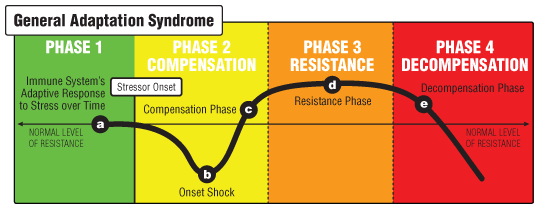
This is a good example to show the High cortisol states of early AF, and then the low cortisol states of low AF
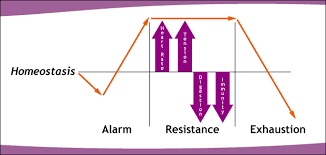
Dr Lam obviously utilises this information and puts his own spin on it, well he did trademark his name afterall, and he has those lovely offices to pay! But this hopefully takes away alot fo the questions of new posters wondering if they have AF (GAS) or not, hopefully anyway!!
 What Adrenal Fatigue Really Is - General Adaptation Syndrome
 R Educational wiredgeneration
11 y
8,412
R Educational wiredgeneration
11 y
8,412